


10 Anti-Mainstream Destinations in Bali Worth Exploring in 2026



Bali is one of the world's most-visited islands, yet beyond the well-worn paths of Kuta and Sanur, there is an entirely different side to this pulau dewata — the Island of the Gods — waiting to be discovered. These anti-mainstream destinations reward curious travellers with dramatic scenery, quieter atmospheres, and far more authentic encounters with Balinese nature and culture. Whether you are drawn to cascading waterfalls, hidden cliff beaches, or encounters with rescued elephants, Bali's lesser-known corners deliver experiences you will not find on a standard tour bus itinerary. This guide reveals ten of the island's most compelling off-the-beaten-track spots, all confirmed and ready to visit.
Planning a Bali escape starts with finding the right place to stay, and there is no shortage of options across the island's varied regions. From boutique hotels perched above river gorges to breezy coastal retreats in Canggu, your accommodation choice shapes the whole trip.
1. Tibumana Waterfall
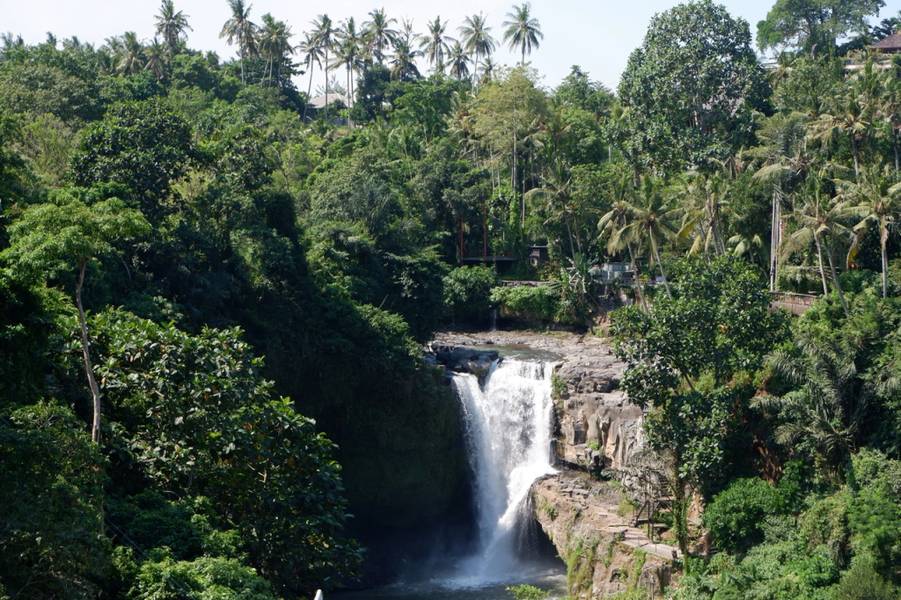
Twin Falls in the Heart of Bangli
Tucked away in Apuan village within Bangli Regency, Tibumana Waterfall is one of Bali's most photogenic twin cascades, yet it sees a fraction of the visitors that crowd the more famous waterfalls near Ubud. The falls plunge into a wide natural pool framed by jungle-draped cliffs, creating a setting of layered greens and white rushing water that feels genuinely remote despite being reachable by a short walk from the road. Entrance costs around IDR 25,000–30,000 per person, and the site is open from 7 AM to 6 PM daily. You can swim in the pool at the base, though the current near the falls themselves is strong, so exercise caution.
The trek down to the waterfall takes roughly fifteen minutes through a lush valley path, passing through terraced farmland and bamboo groves typical of Bali's interior highlands. There are locker facilities on site for around IDR 5,000, and parking is available nearby for a small additional fee. The best light for photography falls in the morning hours before midday, when sunlight angles through the canopy and catches the mist rising from the pool. Arriving early on a weekday almost guarantees you have the falls entirely to yourself, which is a rare luxury in Bali.
2. Lemukih Water Slide
Bali's Natural Rock Slide in North Bali
In Lemukih Village, Sawan District, Buleleng Regency, a smooth natural rock formation polished over millennia by flowing water creates a 25-metre natural slide that has become one of North Bali's most thrilling eco-tourism experiences. Operators provide safety equipment including helmets, elbow guards, and inflatable rings before your ride, and staff conduct a safety briefing so you feel confident before launching down the chute. The surrounding landscape of lush rice terraces, clear streams, and towering jungle creates a vivid backdrop that makes the journey to the slide just as enjoyable as the activity itself. The site operates from 8 AM to 5 PM, and the area near the famous Sekumpul and Fiji Waterfalls means you can easily combine multiple attractions in one day trip to North Bali.
The experience is best suited to adventurous travellers who are comfortable getting thoroughly soaked and navigating a short trek through natural terrain. Water levels and slide conditions vary by season, with the wet season delivering a faster, more exhilarating ride while the dry season offers calmer, more controlled conditions. Guides from the village lead groups through the adjacent rice fields and streams, giving the outing a genuine community-tourism feel rather than a commercial theme park atmosphere. It is worth bringing a dry bag for your phone and a change of clothes, as the slide ends in a natural pool that is deep enough for swimming.
3. Taman Dedari, Ubud
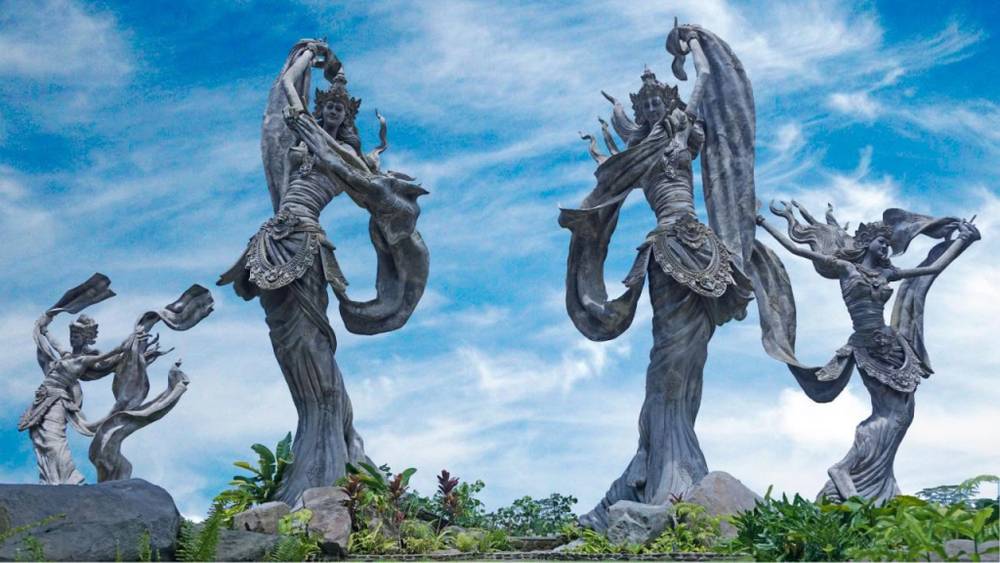
The Garden of Angels on the Ayung River
Set along the banks of the sacred Ayung River in Kedewatan, Ubud, Taman Dedari — literally the Garden of Angels — spans 1.5 hectares of tropical garden adorned with towering statues inspired by Balinese mythology. Unlike the rice terrace viewpoints that draw enormous queues nearby, this garden offers a peaceful wander through manicured grounds, stone carvings, and flowering tropical plants, with the river gorge providing a dramatic natural frame. Entry costs around IDR 50,000 for adults and IDR 30,000 for children, and the garden is open from 10 AM to 11 PM, making it one of the few outdoor Bali attractions worth visiting after dark. In the evening, the garden's stone sculptures and lush canopy take on a mysterious quality under low lighting that feels distinctly otherworldly.
The location in Kedewatan places Taman Dedari within easy reach of central Ubud while offering sweeping valley views that the town centre itself cannot match. Visitors have enough space to find quiet corners even when the garden has other guests, and the open-air design ensures a constant natural breeze from the gorge below. The mix of cultural iconography and natural landscape makes this a compelling stop for travellers who want to engage with Balinese artistic traditions without joining a crowd at one of the island's more famous temples. Photography conditions are exceptional both at golden hour and after dark, when the garden takes on a very different character.
4. Taman Ujung Water Palace, Karangasem
Royal Heritage in East Bali
Far from the tourist belt of South Bali, Taman Ujung — also known as the Ujung Water Palace — stands in Tumbu village, Karangasem Regency, as one of the island's most strikingly preserved examples of royal Balinese architecture. Built in 1909 by the last King of Karangasem, the palace complex features a series of ornate pavilions, tiered water features, and stone bridges set within reflecting pools that mirror the surrounding mountains and sky. The site is open from 7 AM to 7 PM daily, and the remote location in East Bali means visitor numbers remain far lower than comparable heritage sites elsewhere on the island. Mount Agung's brooding silhouette forms the backdrop on clear mornings, adding a layer of grandeur that no amount of landscaping could replicate.
The palace was damaged by the eruption of Mount Agung in 1963 and restored in the early 2000s, so the structures you see today blend original stonework with faithful reconstruction that honours the original design intent. Walking the causeway that links the pavilions across the main pool, you gain a sense of the theatrical scale the Karangasem royals intended — the complex was designed to impress visitors arriving from the sea. The surrounding area of Karangasem offers additional cultural and natural attractions including the hilltop temple of Lempuyang and the pristine coastline around Amed, making Taman Ujung a worthy centrepiece of a dedicated East Bali itinerary. Bring comfortable walking shoes, as the terraced garden paths involve a fair amount of stair-climbing.
Bali rewards those who venture beyond the obvious, and there is no better way to discover the island's hidden corners than through curated activities that take you off the standard tourist trail.
5. Diamond Beach, Nusa Penida
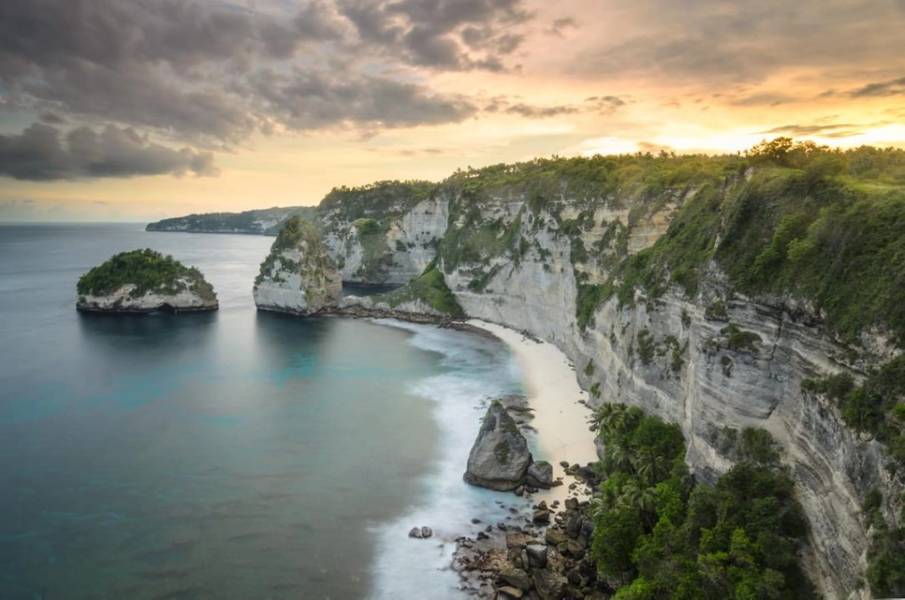
Dramatic Cliff Descent to White Sand
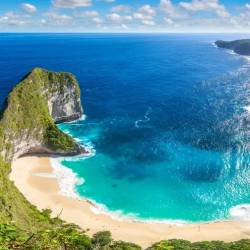
Diamond Beach on the eastern tip of Nusa Penida is one of Bali's most breathtaking coastal formations, framed by sheer white limestone cliffs and lapped by vivid turquoise water with the kind of clarity that makes the seafloor visible from the cliff top. Reaching the beach requires descending a steep staircase carved into the cliff face — the lower section has been reinforced but remains narrow and demands careful footing, so proper closed-toe shoes are essential. The entrance fee is approximately IDR 35,000 per person including parking, and the site opens from 6 AM to 6 PM. Despite growing interest from travellers, the physical difficulty of the descent naturally limits visitor numbers and keeps the beach relatively uncrowded compared to mainland Bali's most popular shores.
The beach itself is a crescent of fine white sand bordered by dramatic rock formations that catch the light differently throughout the day, shifting from pale gold in the morning to deep amber at sunset. Swimming is possible but conditions change with the season and the direction of swell, so check with local guides before entering the water. Adjacent Atuh Beach can be visited on the same trip with a combined ticket of around IDR 45,000, doubling the scenic reward for a single outing. Getting to Nusa Penida from mainland Bali requires a fast boat crossing from Sanur Harbour, typically taking around 30 to 45 minutes depending on sea conditions.
6. Gunung Payung Beach, Kutuh
Bali's Staircase to Seclusion
Gunung Payung Beach in Kutuh Village, Badung Regency, earns its place among Bali's most secluded coastal spots through the very feature that keeps it quiet: a descent of approximately 300 steep stairs from the cliff top to the shoreline below. The white sand beach at the bottom is sheltered by dramatic limestone cliffs and backed by natural sea caves, creating a scene of raw coastal beauty that feels entirely removed from the resort strip just a short drive to the north. The beach takes its name from Pura Gunung Payung, an important Hindu temple perched on the clifftop above, and the sacred setting adds a layer of spiritual significance to what is already a visually striking location. Entry fees are modest at around IDR 8,000–15,000 per person, and the site is open from 7 AM to 6 PM.
The cliff-top parking area provides a sweeping panoramic view of the Indian Ocean and the bay below before you begin the descent, and many visitors find this vantage point alone worth the trip. The beach is suitable for swimming in calm conditions, and the surrounding cliff caves can be explored on foot at low tide. A shuttle service is sometimes available to take visitors closer to the beach entrance, which is helpful for those who find the full stair descent daunting. Gunung Payung pairs naturally with a visit to the Uluwatu area, which is less than twenty minutes away, making it easy to combine a cultural temple visit with an afternoon of cliff-side beach exploration.
7. Kanto Lampo Waterfall, Gianyar
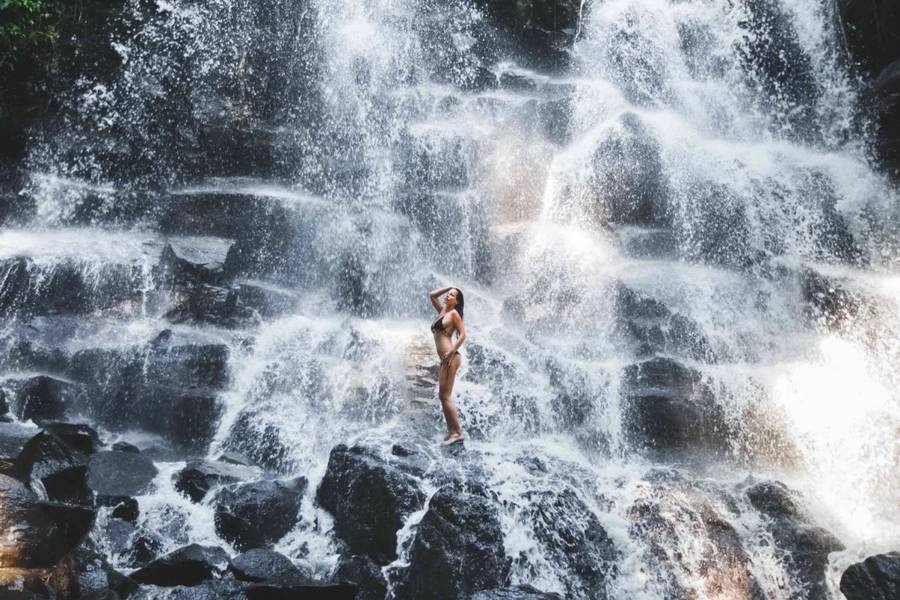
A Tiered Cascade Near Ubud
Just twenty minutes from central Ubud in the tranquil village of Beng, Gianyar, Kanto Lampo Waterfall is one of Bali's most accessible yet undervisited cascades. A manageable five-minute walk down a steep path leads to the waterfall, where water spills in a wide curtain across a series of mossy rock tiers before gathering in a shallow pool ideal for wading. The entrance fee is IDR 25,000, parking is free, and the site opens from 6:30 AM to 5:30 PM. Unlike some of Bali's more remote waterfalls, the short walk and well-maintained path make Kanto Lampo genuinely family-friendly, and there are changing facilities on site for swimmers.
The visual appeal of Kanto Lampo lies in the way water fans out across the wide layered rock face rather than plunging in a single narrow jet, which produces a panoramic curtain effect that is quite different from Bali's other celebrated cascades. The surrounding jungle amplifies the ambient sound of rushing water, creating an immersive natural atmosphere that makes it easy to forget you are only a short drive from one of the world's most visited tourism hubs. Early morning visits reward those who make the effort, as the low-angle light catching the mist above the pool creates an atmospheric haze that disappears once the sun climbs higher. Late afternoons are equally appealing as the jungle canopy filters the light into softer, golden tones.
8. Bali Funtastic, Tegallalang
Adventure and Culture in the Rice Terrace Region
Located in Tegallalang, Gianyar, Bali Funtastic is an outdoor attraction that combines cultural experiences, nature activities, and adventure pursuits in a setting overlooking the famous Tegallalang rice terraces. The park is open from 8 AM to 10 PM, making it one of the few activity venues in the area that remains accessible well into the evening, and its elevated position provides sweeping views across the valley that are hard to match in this part of Central Bali. Activities range from swings and tunnels with rice terrace backdrops to traditional Balinese cultural performances and artisan demonstrations, giving visitors both adrenaline and cultural enrichment in a single visit. The extended evening hours mean you can stay on to watch the valley landscape transition from golden afternoon light to the soft glow of dusk, a genuinely memorable natural spectacle in this part of the island.
The Tegallalang area itself is worth exploring beyond the main attraction, with local warung cafes along the ridge offering freshly brewed Balinese coffee and traditional snacks with unobstructed views across the terraces. Bali Funtastic differs from the increasingly commercial swing experiences that have proliferated elsewhere in Ubud by integrating cultural programming alongside the visual draw, giving visitors more reasons to linger. The venue is a reasonable drive from central Ubud, and hiring a car or car rental for the day allows you to combine Bali Funtastic with Kanto Lampo Waterfall and the Tegallalang rice terrace walk for a comprehensive Central Bali day out. Children and adults alike tend to find plenty to keep them engaged across the full range of activities on offer.
9. Mason Elephant Park, Taro
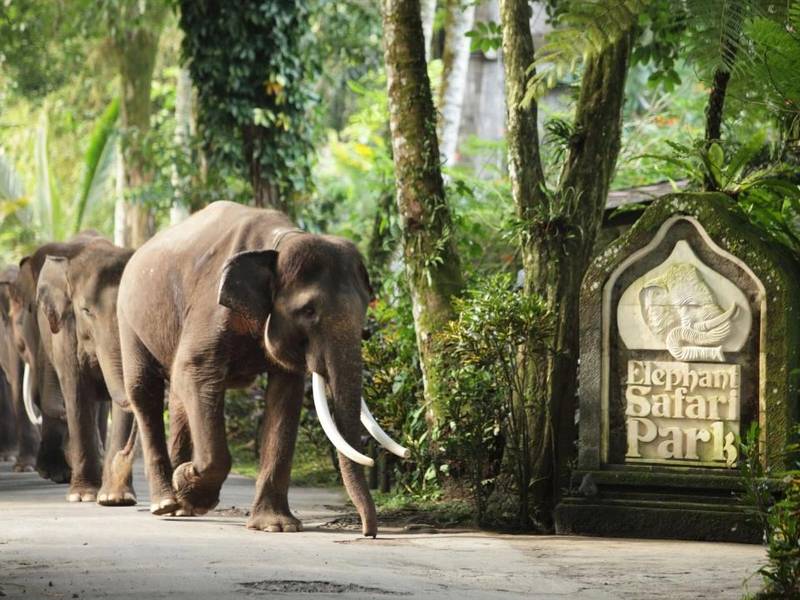
Ethical Wildlife Encounters in the Jungle
Set in Taro Village, Tegallalang, roughly 30 minutes north of central Ubud, Mason Elephant Park is one of Southeast Asia's most respected sanctuaries for Sumatran elephants, a critically endangered species. The park takes an educational approach to wildlife tourism, with its extensive program of elephant care, feeding, and bathing experiences designed to promote conservation awareness rather than performance-based entertainment. General admission starts from around IDR 356,000 per adult when booked online, with the park open daily from 9 AM to 5 PM, and the surrounding jungle setting adds a genuine sense of remoteness that makes the encounter feel immersive rather than artificially staged. Activities such as the jumbo wash — a hands-on bathing session with the elephants in a natural river — are among the most memorable wildlife interactions available anywhere in Bali.
The park is set within dense tropical forest, which keeps temperatures cooler than South Bali's coastal strip and creates a rich natural environment that the elephants clearly enjoy exploring. A resident naturalist team leads tours and shares detailed knowledge about the individual elephants' histories, many of whom were rescued from deforestation in Sumatra. The on-site restaurant serves traditional Indonesian food with views over the elephant enclosures, making it a good spot to spend a full half-day rather than rushing through. Booking in advance is recommended during peak season, as group sizes are intentionally kept small to minimise stress on the animals and maximise the quality of each visitor's experience.
10. Batu Bolong Beach, Canggu
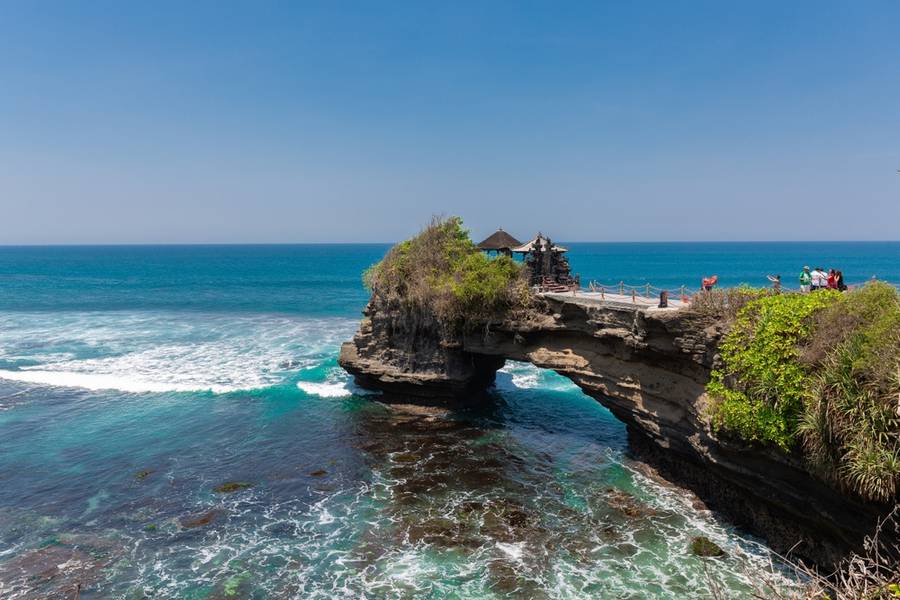
Shutterstock.com
The Soul of Canggu's Coastline
Batu Bolong Beach in Canggu, Badung, takes its name from the ancient Hindu temple — Pura Batu Bolong — that sits on a volcanic rock formation at the northern end of the beach, its black stone arch framing views of the Indian Ocean beyond. The beach is open around the clock and free to access, and it serves as the social and cultural heartbeat of Canggu, one of Bali's most dynamic and creative neighbourhoods. Batu bolong translates literally as "the hole in the rock," a reference to the natural arch visible at low tide, and watching the sky ignite above that silhouette at sunset is one of Bali's most evocative free experiences. The volcanic black sand underfoot is typical of Bali's western coastline and holds the warmth of the day long after the sun drops below the horizon.
The surf break at Batu Bolong is well regarded for its consistency and its accessibility to beginner and intermediate surfers, with several reputable surf schools operating along the beachfront offering board hire and lessons by the hour. Beyond surfing, the beach's surrounding lanes are packed with independent cafes, local warungs, and gallery spaces that reflect Canggu's reputation as a hub for Bali's creative community. Unlike the more polished resort beaches further south, Batu Bolong retains an unpretentious, neighbourhood feel where surfers, families, and locals share the same stretch of sand without any sense of social division. The temple itself is an active place of worship, so visitors are asked to dress respectfully and observe ceremonies from a respectful distance when prayers are taking place.
Reaching Bali from Australia is straightforward, with direct flights available from major cities, and booking early typically delivers the best fares. An airport transfer pre-arranged through a reliable platform ensures a smooth arrival at Ngurah Rai International Airport, getting you to your accommodation without the stress of negotiating transport at the kerb.
Discover Flights With Traveloka
Mon, 26 Oct 2026

Jetstar
Sydney (SYD) to Bali / Denpasar (DPS)
Start from AU$286.29
Wed, 30 Sep 2026

Batik Air Malaysia
Melbourne (MEL) to Bali / Denpasar (DPS)
Start from AU$273.90
Mon, 19 Oct 2026

Virgin Australia
Canberra (CBR) to Bali / Denpasar (DPS)
Start from AU$373.34
Plan Your Trip with Southeast Asia's #1 Travel App
Traveloka is Southeast Asia's leading travel platform, trusted by over 100 million users across the region to plan and book every element of their journeys. For Australian travellers heading to Bali, the app brings together flights, hotels, activities, car rental, eSIM, and travel insurance in a single seamless experience, so you can move between planning and booking without ever leaving the one platform.
One of Traveloka's most practical strengths for a destination as varied as Bali is the breadth of its hotel inventory, which spans everything from heritage villas in Ubud and family resorts in Nusa Dua to surf-adjacent guesthouses in Canggu — all searchable with real-time pricing and verified guest reviews. The activities catalogue is equally comprehensive, covering guided tours to anti-mainstream destinations like those featured in this article alongside iconic cultural experiences, water sports, and wildlife encounters, all bookable in advance so your itinerary is locked in before you land. Check the latest Traveloka promotions before you confirm your bookings, as seasonal deals on flights and accommodation can significantly reduce the total cost of your trip.
Download the Traveloka app before your next Bali adventure and access the full suite of travel tools — from pre-departure eSIM activation and travel insurance to on-the-ground car rental and activity bookings — all managed from your phone with 24-hour customer support. For a destination that rewards those who venture beyond the mainstream, having a platform that makes spontaneous day trips and last-minute booking changes effortless is genuinely invaluable.

Tags:
bali

Recommended Articles

How to Get Around Bali: Every Transport Option Explained
Diamond Beach: A Scenic Adventure Beyond Bali’s Main Island

Kuta Shopping Centre Guide: How to Bargain in Bali's Busiest Strip

Skip the Malls: Why Badung Market Is the Most Authentic Shopping Experience in Bali
From Water Sports to Shows: Things to Do in Nusa Dua with Family

Things to Do in Seminyak with Family: 8 Best Activities for All Ages


