7 Best Historical Sites in Italy: From Ancient Rome to Sicily's Greek Temples


Italy's historical legacy spans nearly three millennia and encompasses contributions to architecture, philosophy, religion, and governance that continue to shape the world today. From the ruins of the Roman Empire scattered across the city that created it to the medieval piazzas of Florence, the Gothic palaces of Venice, and the Greek colonial temples of Sicily, Italy offers a concentration of world-class historical monuments that no other country can match. The country holds more UNESCO World Heritage Sites than any nation on Earth, and many of them can be visited within a single week-long trip.
This guide covers seven of Italy's most significant historical sites, each one representing a distinct chapter in over 2,500 years of continuous civilisation, with practical details on entry fees, opening hours, and the best way to experience each one.
1. The Colosseum and Roman Forum, Rome
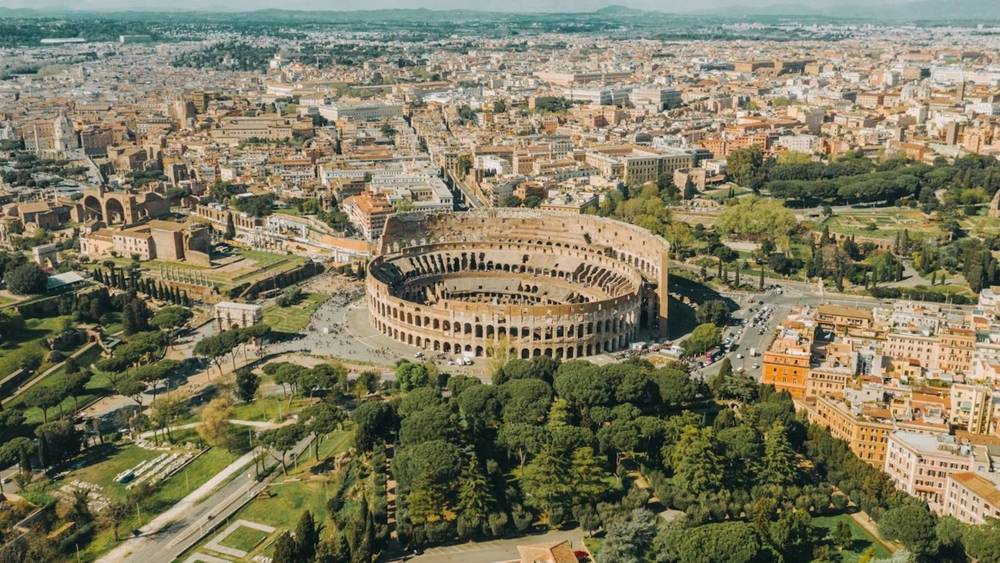
The Colosseum is the most iconic surviving structure of ancient Rome and the largest amphitheatre ever built. Constructed between 72 and 80 AD under the emperors Vespasian and Titus, the Flavian Amphitheatre could hold between 50,000 and 80,000 spectators in tiered seating arranged by social rank, with the emperor in his private box and the lowest classes in the uppermost rows. The exterior of four storeys uses all three classical orders — Doric, Ionic, and Corinthian — stacked in ascending sequence, a design that has influenced stadium architecture for two thousand years. UNESCO inscribed the Historic Centre of Rome, which includes the Colosseum, as a World Heritage Site in 1980.
Engineering and Architecture
The Colosseum's structural sophistication set a standard that was not matched in Europe until the 19th century. The elliptical arena floor, now largely absent and revealing the network of underground chambers below, was made from wooden planking over a system of vaults and corridors where animals, gladiators, and stage machinery were held before performances. The 80 barrel-vaulted entrance arches allowed up to 80,000 people to enter and exit the building within minutes, a feat of crowd management that modern stadium designers still study. The outer walls still standing represent approximately one-third of the original structure; the rest was dismantled during the medieval period when the Colosseum served as a quarry for travertine and marble.
The Games
The Colosseum hosted gladiatorial combats, animal hunts (venationes), public executions, and dramatic re-enactments of famous battles for approximately four centuries. The gladiatorial games were as much a political institution as an entertainment, with emperors using their generosity in funding spectacles as a form of popular governance. The arena saw the deaths of an estimated several hundred thousand people and over a million animals over four centuries of use. The tradition of holding public spectacles at the Colosseum formally ended in 523 AD under the Ostrogothic king Theodoric the Great.
Entry and Opening Hours
A standard ticket costs €18 and includes timed entry to the Colosseum plus unrestricted access to the Roman Forum and Palatine Hill, the hilltop above the Forum where Rome's emperors built their palaces. Children under 18 enter free of charge. The site opens daily at 9:00 AM; between April and September the site closes at 7:00 PM. Tickets must be booked in advance with a reserved time slot through the official Parco Colosseo website, as on-the-day entry is not guaranteed during peak months. Arranging an airport transfer from Rome Fiumicino International Airport ensures a smooth arrival before heading into the city — the airport sits 32 kilometres southwest of central Rome.
Rome is served by two international airports with connections across Europe, the Middle East, and Asia. Compare flights to Rome early to lock in the best fares and departure times before peak season demand sets in.
Discover Flights With Traveloka
Sat, 3 Oct 2026

Air China
Jakarta (CGK) to Rome (FCO)
Start from AU$424.85
Thu, 24 Sep 2026

Oman Air
Jakarta (CGK) to Rome (FCO)
Start from AU$466.15
Sun, 11 Oct 2026

China Eastern Airlines
Seoul (ICN) to Rome (FCO)
Start from AU$357.94
2. Vatican City, Rome

Vatican City is the world's smallest sovereign state and the spiritual centre of the Roman Catholic Church, but for visitors of any background it is also one of the greatest repositories of art, architecture, and history in the world. St. Peter's Basilica, completed in 1626 after more than a century of construction, is the largest church in the world by interior volume, its nave stretching 187 metres beneath Michelangelo's dome, which at 136 metres from the floor remains one of the tallest in the world. The sweeping colonnaded piazza in front of the basilica, designed by Gian Lorenzo Bernini, frames the approach with a geometry of 284 Doric columns that has defined the theatrical potential of public space ever since. Entry to St. Peter's Basilica is free.
The Vatican Museums contain one of the world's finest collections of classical sculpture and Renaissance painting, assembled by the papacy over five centuries and concluding at the Sistine Chapel, where Michelangelo's ceiling was painted between 1508 and 1512 with nine scenes from the Book of Genesis above the space used for the election of popes. Entry to the Vatican Museums costs €20; a timed advance booking is available for a supplement and is strongly recommended between April and October, when queues at the entrance can extend for hours. UNESCO inscribed Vatican City as a World Heritage Site in 1984.
3. Pompeii, Near Naples

Pompeii is one of the most extraordinary archaeological sites in the world — a Roman city of approximately 11,000 inhabitants buried under four to six metres of volcanic ash and pumice when Mount Vesuvius erupted on 24 August 79 AD. The burial preserved buildings, streets, frescoes, household objects, food remains, and the plaster casts of human figures in their final moments with an intimacy and completeness no other ancient city can match. Rediscovered in the 18th century and excavated across several centuries, Pompeii covers approximately 66 hectares, of which around 44 hectares have been excavated. UNESCO inscribed the archaeological areas of Pompeii, Herculaneum, and Torre Annunziata as a World Heritage Site in 1997.
Walking the stone streets of Pompeii — with their deep cart ruts, stepping stones for flood water, and the original painted electoral notices still visible on the walls — provides a level of immersion in ancient Roman life that no museum can replicate. The Forum, the amphitheatre, the bathhouses, and the villas of the wealthy are all accessible, and the ongoing excavations in the Regio V area regularly produce new finds that make Pompeii one of the most actively researched sites in the world. Entry starts at €23 for a self-guided visit or €32 with an audio guide; children under 18 enter free. The site opens daily at 9:00 AM, with last entry at 5:30 PM from April to October and 3:30 PM from November to March.
Rome's accommodation ranges from centuries-old palazzos converted into boutique hotels to modern properties within steps of the Colosseum — browse hotels in Rome to find the ideal base for exploring the city's monuments and making day trips across the country.
4. Piazza del Duomo, Florence

The Piazza del Duomo in Florence contains one of the most remarkable concentrations of medieval and Renaissance architecture in the world, assembled over three centuries on a single city block. The Cathedral of Santa Maria del Fiore, whose construction began in 1296, is crowned by Filippo Brunelleschi's dome, completed in 1436 and spanning 44 metres in diameter, making it the largest brick dome ever constructed. Brunelleschi's achievement was technically unprecedented — no one had successfully built a dome of such scale since antiquity — and the engineering methods he invented to raise it without a conventional wooden scaffold changed construction practice permanently. UNESCO inscribed the Historic Centre of Florence as a World Heritage Site in 1982.
The Baptistery of San Giovanni, which stands directly in front of the cathedral and predates it by several centuries, is celebrated for its three sets of bronze doors, including the East Door by Lorenzo Ghiberti — completed in 1452 after 27 years of work and called the "Gates of Paradise" by Michelangelo. Entry to the cathedral itself is free; timed tickets are required to climb Brunelleschi's dome or Giotto's adjacent bell tower, both of which offer exceptional views across the terracotta rooftops of Florence. All tickets are purchased through the Opera del Duomo's official booking system, and early booking is essential in summer months when slots fill quickly.
5. Palazzo Ducale, Venice

The Doge's Palace is the masterpiece of Venetian Gothic architecture and the seat of power of the Most Serene Republic of Venice for over five centuries. The main structure was built primarily in the 14th and 15th centuries, its pink and white marble exterior of delicate tracery and open arcades concealing an interior of state rooms decorated with paintings by Tintoretto, Veronese, and Giovanni Bellini. The palace housed the Doge, the Council of Ten, the Senate, and the criminal courts, making it simultaneously a royal residence, a government building, and a judicial institution on a scale unmatched in medieval Europe. UNESCO inscribed Venice and its Lagoon as a World Heritage Site in 1987.
The interior culminates in the Great Council Chamber, the largest room in Europe at the time of its completion, with a ceiling of enormous gilded canvases and a frieze of portraits of 76 doges who governed Venice from the republic's foundation to its fall in 1797. The Bridge of Sighs, the enclosed white limestone bridge connecting the palace to the adjacent prison, takes its name from the tradition that condemned prisoners looked through its grated windows for a last view of Venice before beginning their sentences. Entry requires a ticket available through the Musei Civici Veneziani booking system; advance purchase is strongly recommended in summer. Venice is most easily reached from the mainland by train to Santa Lucia station or by waterbus from Marco Polo Airport.
6. Piazza dei Miracoli, Pisa

The Piazza dei Miracoli in Pisa is one of the most extraordinary medieval architectural ensembles in the world, containing four major monuments built in the Romanesque style across a single grassed precinct: the Cathedral, the Baptistery, the Camposanto monumental cemetery, and the Leaning Tower. The Cathedral of Santa Maria Assunta, begun in 1063, was one of the earliest and most influential Romanesque buildings in Italy, its striped marble exterior and arcaded galleries setting a template for church architecture across Tuscany. The Baptistery, the largest in Italy, was begun in 1153 and took over 200 years to complete. UNESCO inscribed the Piazza dei Miracoli as a World Heritage Site in 1987.
The Leaning Tower, begun in 1173, acquired its famous tilt almost immediately due to the soft, unstable subsoil on the south side — a problem that slowed construction for nearly 200 years and ultimately prevented the tower from toppling under its own weight. The tower stands 56 metres tall and currently leans approximately 3.97 degrees from vertical, a value reduced from a peak of nearly 5.5 degrees by stabilisation work completed in 2001. Climbing the tower via its 294 steps requires a timed ticket booked in advance through the Opera della Primaziale Pisana, with visitor numbers strictly limited to protect the structure. From Colosseum access to Vatican Museums tours and full-day excursions to Pompeii, booking your activities in advance ensures you don't miss the Rome experiences that sell out fastest.
7. Valley of the Temples, Agrigento, Sicily

The Valley of the Temples in Agrigento is one of the finest examples of Greek colonial architecture in the world and the best-preserved collection of ancient Greek temples outside Greece itself. The city of Akragas — modern Agrigento — was established as a Greek colony in the early 6th century BC and used its agricultural wealth to build a series of magnificent Doric temples along a ridge south of the city between approximately 480 and 430 BC. The site contains the remains of seven ancient temples, the most famous being the Temple of Concordia, which survives substantially intact because it was converted into a Christian church in the 6th century AD — one of the luckiest accidents of architectural history. UNESCO inscribed the Archaeological Area of Agrigento as a World Heritage Site in 1997.
Walking the Valle dei Templi at dusk, when floodlighting transforms the honey-coloured sandstone columns against the darkening sky and the lights of modern Agrigento flicker in the hills above, is one of the most affecting historical experiences in Europe. The site is spread across a three-kilometre ridge south of Agrigento town, and a car rental is the most practical way to explore it — a private vehicle lets you combine the temples with the Regional Archaeological Museum above the town and reach the more remote western temples that see far fewer visitors. The site is open daily; advance tickets are available through the official Parco Archeologico Valle dei Templi booking system.
Book Your Trip with Traveloka
Italy's historical sites span from Rome to Sicily, and managing flights, accommodation, and experiences across multiple destinations is far simpler when everything is booked in one place. Traveloka, Southeast Asia's leading travel platform trusted by over 100 million users, covers international flights into Rome and connections to Naples, Florence, Venice, and Palermo, hotels across Italy at every price point, guided tours of the Colosseum and the Vatican, car rentals for exploring Pompeii and the Sicilian temples, eSIM data plans, and travel insurance — all within a single app.
Watch for Traveloka promotions for deals on international flights and hotels for Italy. Download the Traveloka app — top-rated on the Google Play Store and Apple App Store across Southeast Asia — to start planning your Italian journey today.

In This Article


Recommended Articles

Free Things to Do in Rome in 2026: 10 Unmissable Experiences That Cost Nothing

Italy 7 Days Itinerary: Rome & Florence Highlights
Italy 10 Days Itinerary: Rome, Florence & Tuscany
Italy 14 Days Itinerary: Rome, Florence, Venice & Amalfi
Travel to the Italian F1 GP at Monza: Where Passion and Speed Collide

Jordan's 7 Greatest Historical Sites: Nabataean Temples, Roman Ruins, and Desert Rock Art