Where to Stay in Singapore: 7 Neighbourhoods Compared


Singapore's compact size and near-universal MRT coverage mean almost any neighbourhood works logistically, so the real decision comes down to what kind of trip you're planning. Seven areas below cover everything from postcard skyline views to a residential café district few first-time visitors think to check.
Compare flights into Changi before settling on a neighbourhood to base yourself in.
Discover Flights With Traveloka
Tue, 29 Sep 2026

Scoot
Tokyo (HND) to Singapore (SIN)
Start from 22,478円
Fri, 16 Oct 2026
Scoot
Tokyo (NRT) to Singapore (SIN)
Start from 21,558円
Mon, 28 Sep 2026

Peach Airline
Osaka (KIX) to Singapore (SIN)
Start from 19,725円
1. Marina Bay
The obvious pick for a first visit, Marina Bay puts Marina Bay Sands, the Supertrees at Gardens by the Bay, and the Merlion all within walking distance of most hotels here. The trade-off is cost: this is Singapore's most expensive district, and the atmosphere leans resort-like rather than reflecting the city's everyday character. It's the right base for travellers prioritising the postcard sights over neighbourhood immersion.
A hotel right in Marina Bay puts the Supertrees, the Merlion, and the skyline views within a short walk of the room itself.
2. Orchard Road
Twenty-two malls sit within walking distance along Orchard Road, alongside the island's best MRT connections, making this the natural choice for shopping-focused travellers and families who value convenience above all else. What it gains in accessibility, it loses in local character, functioning more as a shopping corridor than a neighbourhood with its own distinct identity. Families appreciate the concentration of amenities even if the area itself feels less distinctly Singaporean.
3. Chinatown
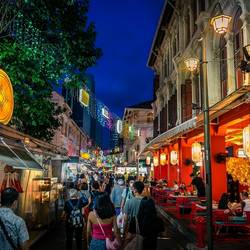
Maxwell Food Centre, restored shophouses, and a genuine concentration of temples and hawker markets make Chinatown the strongest pick for travellers prioritising food, culture, and heritage over resort polish. Its central location and good MRT access via Chinatown station keep it well connected despite the more local feel. Evenings here run considerably quieter than Marina Bay or Clarke Quay, suiting travellers who'd rather wind down after a day of sightseeing.
4. Kampong Glam
Character and creativity define Kampong Glam, anchored by Sultan Mosque and the boutiques lining Haji Lane, with street art scattered through the surrounding lanes. It holds the best concentration of halal dining across multiple cuisines anywhere in the city, a genuine draw for Muslim travellers and food-focused visitors alike. Bugis MRT keeps the area well connected despite its narrower, more intimate streets.
5. Clarke Quay and Robertson Quay
These two riverside districts sit close together but carry noticeably different energy: Clarke Quay runs loud and lively, especially Thursday through Saturday nights, while Robertson Quay stays quieter and more polished just a short walk upriver. Light sleepers should factor in Clarke Quay's weekend noise before booking a room directly on the strip. Robertson Quay works better for travellers wanting riverside atmosphere without the nightlife crowd.
6. Tiong Bahru
Art deco architecture and a genuine independent café scene set Tiong Bahru apart from anywhere else on this list, closer in feel to a residential neighbourhood than a tourist district. Tiong Bahru Market adds a proper hawker centre to the area's café culture, giving both ends of Singapore's food scene within one neighbourhood. It suits repeat visitors or anyone who's already covered Marina Bay and Chinatown on a previous trip.
7. Katong and Joo Chiat
Peranakan heritage runs deepest here, with pastel shophouses, laksa specifically associated with the neighbourhood, and East Coast Park's cycling paths all within reach. It sits further from the main tourist circuit than the other six areas on this list, which is exactly the appeal for travellers who've already done the standard Singapore itinerary. A slower pace defines the neighbourhood generally, more suited to a relaxed few days than a packed sightseeing schedule. Katong's Peranakan restaurants, several run by the same families for multiple generations, give the area a genuine sense of continuity that newer developments elsewhere in the city can't replicate.
Matching a Neighbourhood to Your Trip
First-Time Visitors
Marina Bay or Orchard Road both cover the essential sights and shopping with minimal transit planning required.
Food and Culture Travellers
Chinatown and Kampong Glam both deliver considerably more local character and food variety than the two districts above.
Return Visitors
Tiong Bahru and Katong both reward travellers who've already covered the headline sights and want a genuinely different side of the city.
MRT Connectivity Across All Seven
Every neighbourhood on this list sits within 30 to 40 minutes of the others by MRT, meaning the choice of base matters less for pure logistics than it does for the character of evenings spent in and around the hotel. Chinatown's NE4/DT19 interchange and Kampong Glam's Bugis EW12/DT14 station both offer particularly strong connections across multiple lines. Even Katong, the furthest from the main tourist circuit, stays a reasonable MRT ride from central Singapore.
A Chinatown heritage and hawker food tour, bookable through Traveloka's activities listings, suits travellers basing themselves there specifically.
Booking Considerations
Peak Season Pricing
Marina Bay and Orchard Road both see the steepest price jumps during peak travel periods, while Chinatown, Kampong Glam, and Tiong Bahru tend to hold steadier rates year-round.
Budget Flights In
Regional carriers running routes from nearby cities in Indonesia and Malaysia often price well under USD 100 one-way, worth checking regardless of which neighbourhood you end up basing yourself in.
Mixing Two Neighbourhoods
Travellers staying five nights or more sometimes split the trip across two bases, a few nights in Marina Bay for the skyline and a few more in Chinatown or Kampong Glam for a change of pace, rather than committing to just one area the whole stay.
A car rental adds little value given Singapore's MRT coverage, though an airport transfer from Changi is worth arranging ahead for a smooth arrival into whichever neighbourhood you choose.
Plan Your Singapore Stay with Traveloka
Seven distinct neighbourhoods means the right base depends entirely on what kind of trip you're planning. Comparing a Marina Bay room against a Tiong Bahru option takes one search on the Traveloka app rather than several separate ones, with activities, car rental, eSIM, and travel insurance covered in the same place. Over 100 million travellers across Southeast Asia already use it as the region's leading platform, with promotions worth checking before you commit to a neighbourhood.


Recommended Articles
10 Must-Try Chinatown Singapore Food Stops: A Foodie's Guide

Best Accommodation Near Universal Studios Singapore

Bukit Panjang LRT: A Scenic Route Guide to Hidden Gems Along the Way

Top Tanjong Pagar Food Guide: Where to Eat in 2026

Universal Studios Singapore 2026: Complete Guide to Zones, Tickets, and Getting the Most from Your Day

Singapore Night Festival 2026: Dates, Venues, and What to See