

7 Famous Festivals Around the World: Complete Travel Guide for 2026


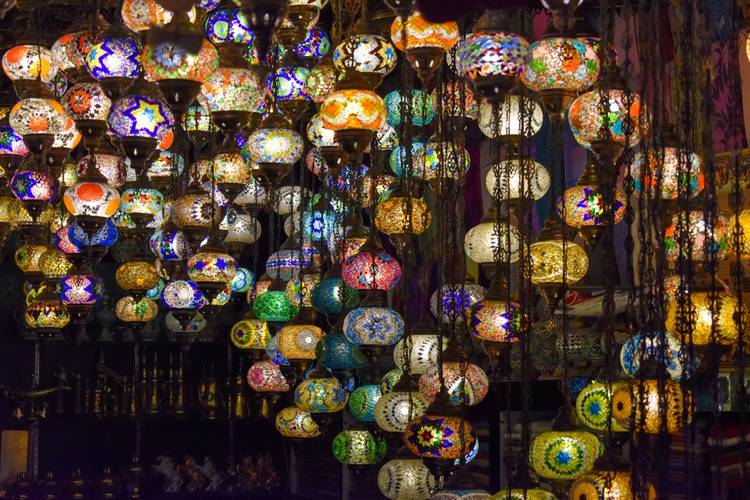
The world's greatest festivals are not just parties — they are windows into a culture's deepest values: its relationship to the seasons, to the divine, to community, and to joy. A Sambadrome parade at Rio Carnival. The moment a Songkran water cannon hits you in 35°C Bangkok heat. The first sip of a Maß inside a packed Oktoberfest tent while a brass band plays. The eruption of colour at Holi in Jaipur. These are the experiences that travel is made for. This guide covers seven of the world's most celebrated festivals, what they mean, when they happen, and how to plan the visit properly. Book your flights, hotels, and a ctivities to every festival destination on Traveloka, Southeast Asia's leading travel platform trusted by over 100 million users.
Discover Flights With Traveloka
Wed, 30 Sep 2026

Air China
Seoul (ICN) to Beijing (PEK)
Start from 158,816원
Wed, 30 Sep 2026

Korean Air
Busan (PUS) to Beijing (PEK)
Start from 150,984원
Thu, 1 Oct 2026
Air China
Seoul (GMP) to Beijing (PEK)
Start from 207,349원
1. Rio Carnival, Rio de Janeiro, Brazil
What It Is
Rio Carnival (Carnaval do Rio de Janeiro) is the world's largest carnival, held annually in the days leading up to Ash Wednesday. Rio Carnival 2026 runs from 13 to 21 February, with the peak Sambadrome competition nights on 15 and 16 February. Approximately one million visitors arrive in Rio during Carnival week. The festival has roots in both Portuguese colonial tradition and the African cultural influence that arrived with the slave trade — the samba schools (escolas de samba) that compete at the Sambadrome are predominantly based in Rio's favela communities and represent a profound expression of Afro-Brazilian identity and pride.
What to Experience
The festival divides into two distinct experiences. The Sambadrome parade (Marquês de Sapucaí) is a ticketed spectacle in which 12 elite samba schools — each with 3,000 to 5,000 performers — parade in sequence over two competition nights. Seats range from grandstand bleachers to private camarote (corporate boxes) with catering. The blocos de rua (street parties) are free, city-wide, and often more joyful — over 400 registered blocos operate across every neighbourhood, each with its own brass band or DJ and its own loyal following. The Cordão do Bola Preta bloco in the city centre regularly attracts over 2 million attendees. Both experiences are essential for a complete Carnival.
Planning and Booking Tips
Sambadrome tickets sell out months in advance — book as early as possible through official channels. Flights and hotels for Carnival dates fill six to twelve months ahead. Note that Brazil requires an e-Visa for many nationalities — check requirements and apply before booking. The best strategy is to combine two Sambadrome nights with three or four days of street blocos. Book an airport transfer from Galeão Airport to your hotel to avoid taxi chaos on arrival during Carnival week.
Rio has hotels across every category — from hostels in Santa Teresa and Lapa close to the best blocos to luxury properties in Ipanema and Copacabana. Book early for Carnival dates as accommodation fills faster than anywhere else in the world. Browse available options on Traveloka.
Sambadrome parade tickets, Christ the Redeemer visits, Rio city tours, and stadium experiences are all bookable through Traveloka's activities platform.
2. Songkran Water Festival, Thailand
What It Is
Songkran is the Thai New Year festival, officially observed from 13 to 15 April annually, with celebrations extending up to a week in major cities. In 2026, Songkran runs from Monday 13 April to Wednesday 15 April, with Chiang Mai extending its celebrations from 12 to 16 April. The festival marks the solar new year in the traditional Thai calendar and is rooted in water rituals of purification and renewal — water is poured over Buddha images and elders' hands as a gesture of respect and merit-making. In recent decades, the merit-making rituals have been joined by the largest water fight on earth, with millions of people taking to the streets with water guns, buckets, and hoses.
Where to Celebrate
Bangkok hosts the most intense urban celebrations, centred on Khao San Road, Silom Road, and Sanam Luang. Silom Road is closed to traffic and packed from morning to evening, with fire trucks providing industrial-grade soaking. The S2O Songkran Music Festival transforms the celebration into a full-scale electronic music event with world-class DJs — in 2026, it runs 11 to 14 April. Chiang Mai offers the most traditional and extended Songkran, centred on the Old City moat, Thapae Gate, and the parade on 13 April where the sacred Phra Sihing Buddha image is carried through the streets. For cultural depth, Chiang Mai is unmatched; for pure spectacle and party energy, Bangkok is in a different league.
Visitor Tips
Waterproof everything — phones, cameras, and documents should be in sealed waterproof pouches. Wear light, quick-drying clothes. Leave valuables in the hotel safe. The BTS Skytrain and MRT Metro remain operational and are the most reliable way to move between celebration zones in Bangkok. Book accommodation two to three months ahead — hotels in Chiang Mai's Old City and Bangkok's Silom and Khao San Road areas sell out for Songkran. Check Traveloka promotions for deals on flights to Bangkok (BKK/DMK) and Chiang Mai (CNX).
Bangkok's hotel options range from budget guesthouses in the Khao San area to international five-star properties in Sukhumvit. Chiang Mai has boutique hotels inside and outside the Old City moat. Compare and book across both cities on Traveloka.
3. Oktoberfest, Munich, Germany
What It Is
Oktoberfest is the world's largest Volksfest (folk festival) — a combination of beer festival, cultural celebration, and fairground held in Munich every autumn since 1810. Oktoberfest 2026 runs from Saturday 19 September to Sunday 4 October, across 16 days at the Theresienwiese (Wiesn), a 42-hectare fairground in central Munich. The festival draws approximately six million visitors annually, consumes around seven million litres of beer, and generates over EUR 1 billion for the Munich economy. The opening ceremony on 19 September includes the tapping of the first keg by Munich's Lord Mayor — only after the first Maß (one-litre stein) is poured can beer service begin across all tents.
What to Experience
The heart of Oktoberfest is its 14 large tents (Festzelte), each operated by one of Munich's six major breweries — Augustiner, Hofbräu, Löwenbräu, Paulaner, Hacker-Pschorr, and Spaten. Each tent has its own personality: the Hofbräu tent is the most internationally famous and busiest; the Augustiner tent is favoured by locals for its traditional atmosphere. Inside the tents, a Maß costs approximately EUR 14.50 to EUR 15.80 depending on the brewer. Traditional Bavarian food — roast chicken (Hendl), pork knuckle (Schweinshaxn), pretzels, and Obatzda cheese — is served throughout. The fairground outside includes over 350 rides, from historic carousels to modern thrill rides.
Booking and Getting There
Entry to the Oktoberfest grounds is free. Tent reservations are essential for evenings and weekends — contact individual tents through their official websites months in advance. Unreserved seats are available at tables near tent entrances during weekday mornings, typically filling by 10am. The Theresienwiese is served by U-Bahn lines U4 and U5 — the Theresienwiese station is directly at the festival entrance. Use a car rental to explore the wider Bavaria region — Neuschwanstein Castle, the Bavarian Alps, and Salzburg are all within two hours of Munich.
Munich has a strong hotel market across all price points, from the Oktoberfest and Springfest camping concept directly at the festival grounds to international five-star properties in the city centre. Browse the full range on Traveloka and book early — Munich hotels during Oktoberfest are among the first to sell out in Europe.
4. Holi, the Festival of Colours, India
What It Is
Holi is the Hindu festival of colours, celebrated across India to mark the arrival of spring and the triumph of good over evil. The main Holi date in 2026 falls on Wednesday 4 March, preceded by Holika Dahan (the bonfire ritual) on the evening of 3 March. The festival has its deepest roots in the Braj region of Uttar Pradesh — in Vrindavan and Mathura, celebrations begin a week before the main day and include temple rituals of extraordinary beauty. In Jaipur, Rajasthan, the celebration takes on a royal character, with elephant parades, folk performances, and colour battles in the courtyards of heritage palaces.
What to Experience
In Vrindavan, the Phoolon ki Holi (Festival of Flowers) at the Banke Bihari Temple is a moving ritual in which priests shower worshippers with fresh flower petals — it lasts only 30 minutes and draws enormous crowds, so arrive very early. The main Holi day in Vrindavan and Mathura is a full-immersion colour experience in the streets, with no possibility of escaping the gulal (dry colour powder) or coloured water. In Jaipur, Holi celebrations at Rambagh Palace grounds and other heritage venues offer a curated experience with folk music, cultural performances, and a more accessible setting for first-time visitors.
Practical Tips
Wear old clothes that can be discarded after the festival — most colours are washable but some synthetic dyes can stain permanently. Protect hair and skin with oil beforehand to prevent colour from fully bonding. Wear sunglasses or goggles to protect your eyes. Jaipur is 270 kilometres from Delhi and approximately 5 hours by train — book ahead for early March as Holi in Jaipur attracts enormous numbers of both domestic and international visitors.
Jaipur offers one of India's most diverse hotel markets, from tented camps and heritage havelis to palace hotels and international business properties. Rambagh Palace and The Oberoi Rajvilas are among the most celebrated heritage stays in Asia. Browse the full range on Traveloka.
5. Hanami Cherry Blossom Season, Japan
What It Is
Hanami (literally "flower viewing") is the centuries-old Japanese tradition of gathering beneath blooming cherry trees (sakura) to appreciate their beauty. The practice dates to at least the 8th century and is deeply embedded in Japanese culture as a symbol of mono no aware — the poignant awareness of the transience of beautiful things. The cherry blossom season is not a single festival with a fixed date but a natural event that moves northward across Japan from late January in the subtropical south to May in Hokkaido. In Tokyo, the 2026 cherry blossom season is forecast to begin around 21 March, with full bloom expected around 25 to 27 March and petals lasting approximately two weeks.
Best Viewing Spots
In Tokyo, the finest hanami locations include Ueno Park, with over 1,000 trees and the most famous hanami picnic atmosphere in Japan; Chidorigafuchi, where rowing boats weave beneath a tunnel of blossoming branches overhanging the Imperial Palace moat; Shinjuku Gyoen National Garden, which has the most diverse variety of sakura species and the longest bloom period of any major park; and Meguro River, a canal lined with around 800 trees whose branches form one of the most photogenic cherry blossom corridors in the city. Beyond Tokyo, Kyoto's Maruyama Park and the Philosopher's Path are the definitive hanami settings. Hirosaki Castle in Aomori (mid to late April) offers the most dramatic castle-and-sakura combination in Japan.
Practical Tips
Full bloom (mankai) lasts approximately one week — plan your Tokyo visit for late March to early April and check updated forecasts from Japan Meteorological Corporation before booking, as timing varies by up to two weeks year to year. Hanami picnics at Ueno Park on weekends at peak bloom require staking out a spot by 9am. The best photography light is early morning before 8am and the hour before sunset. Book hotels three to four months ahead for late March to mid-April dates.
Tokyo has an enormous range of hotels from budget capsule hotels and ryokan guesthouses to international luxury properties. Staying in Shinjuku or Ueno puts you within minutes of the best hanami spots. Browse and book on Traveloka for the best available rates.
6. La Tomatina, Buñol, Spain
What It Is
La Tomatina is a one-hour tomato fight held annually on the last Wednesday of August in the town of Buñol, in the Valencia region of Spain. La Tomatina 2026 falls on Wednesday 26 August. The event began in 1945 and has since grown into one of the world's most photographed and most unusual festivals. Participation is capped at 20,000 people, with official tickets required since 2013. Over 100 metric tonnes of overripe tomatoes are trucked into the town centre and the fight begins when a brave soul successfully retrieves a ham from the top of a greased pole.
What to Expect
The tomato battle lasts exactly 60 minutes, ending when a second cannon fires. The streets of Buñol run red — literally up to knee depth in crushed tomato pulp. The town has permanent hose-down facilities, and participants typically rinse off in the nearby Buñol River before catching transport back to Valencia. The atmosphere is extraordinarily good-natured. Rules include: squash tomatoes before throwing (never throw whole), no tearing of other participants' clothing, and stop immediately when the horn sounds. The night before La Tomatina, a festival with live music, parades, and a paella cooking competition fills Buñol with a warm-up celebration.
Tickets and Getting There
Official Tomatina tickets cost EUR 15 per person for entry only, with packages including bus transfer from Valencia starting from approximately EUR 45. Tickets typically go on sale in January or February and sell out by early summer — book the moment they are released. Buñol is approximately 38 kilometres west of Valencia city centre; organised bus transport from Valencia is the standard way to attend. Valencia is served by Valencia Airport (VLC). Check Traveloka promotions for deals on flights to Valencia before booking your Tomatina trip.
Hotels in Valencia city are the standard base for La Tomatina visitors. The Valencia Province also has rural properties and coastal resorts in Gandia. Browse available options on Traveloka.
7. Galungan and Kuningan, Bali, Indonesia
What It Is
Galungan is the most sacred festival in the Balinese Hindu calendar, celebrating the victory of dharma (good) over adharma (evil) and the return of ancestral spirits to earth. It occurs every 210 days on the Balinese Pawukon calendar — in 2026, Galungan falls on Wednesday 17 June, with Kuningan (the closing ceremony) on Saturday 27 June. The festival brings the whole of Bali to life: every family compound prepares elaborate offerings, every temple holds ceremonies, and every road on the island is lined with penjor — tall bamboo poles bent at the top and decorated with woven palm leaves, offerings, and fruits — transforming Bali's landscapes into a natural cathedral of living art.
What to Experience
Galungan is not a festival to observe from a distance — it is a religious period that permeates everyday Balinese life for the entire 10-day cycle. The most atmospheric areas are Ubud, Sidemen, and Gianyar, where the penjor are densest and the ceremony energy is most concentrated. Visitors who have been invited to witness family compound ceremonies may observe offerings, prayers, and ritual meals — always respectfully, wearing a sarong and sash, and following the guidance of your host. The Balinese gamelan plays almost continuously during Galungan and Kuningan in temples and family courtyards. Visiting Pura Taman Saraswati (the Water Temple of Ubud) during the festival period shows the temple at its most active and beautifully decorated. The Tegalalang Rice Terraces north of Ubud are visually extraordinary against the backdrop of Galungan decorations.
Practical Tips
Dress appropriately at all times — a sarong and sash are required at any temple or ceremony, and many families will offer these to visitors. Photography at family compounds should only be attempted if explicitly invited and welcomed. Some restaurants and shops may have limited hours during peak ceremonial days as staff observe rituals with their families — plan accordingly. Ubud is the ideal base for experiencing Galungan. Book an airport transfer from Ngurah Rai International Airport to your Ubud property to start the journey smoothly.
Ubud is the ideal base for experiencing Galungan — its rice terrace landscapes, dense concentration of temples, and traditional Balinese artistic community make it the spiritual heart of the festival. Browse and book a wide range of Ubud properties on Traveloka.
Ubud cultural temple tours, Tanah Lot sunset experiences, Tegalalang Rice Terrace visits, and Bali full-day cultural itineraries are all bookable through Traveloka's activities platform.
Plan Your Festival Journey with Traveloka
Every festival on this list rewards travellers who arrive prepared — with accommodation booked months in advance, event tickets secured before they sell out, and a genuine understanding of what they are participating in. The Sambadrome at Rio Carnival, the tents at Oktoberfest, the streets of Vrindavan at Holi, the moat of Chiang Mai at Songkran, the cherry blossoms at Chidorigafuchi, the tomato-soaked streets of Buñol, and the penjor-lined lanes of Ubud at Galungan: each of these experiences is defined as much by the people around you as by the spectacle itself.
Traveloka brings every element of festival travel together in one app. Southeast Asia's largest online travel platform, trusted by over 100 million users and available across Asia and beyond — from Indonesia to Japan, Korea, and Australia — Traveloka covers flights, hotels, activities, car rentals, travel insurance, and eSIM all in one place. Download the Traveloka app, set price alerts for your festival dates, and start building the experience of a lifetime today.
Tags:
destinations
Explore the Best of World

World
Recommended Articles

7 best theme parks in Australia with epic rides

2026 Toyota AFL Grand Final: The Complete Melbourne Guide for Visitors

TCS Sydney Marathon 2026: The Complete Guide for Runners
Free Things to Do in New Zealand in 2026: Auckland and Queenstown's Best No-Cost Experiences
10 Beautiful Mosques in Singapore Worth Visiting All Year Round
Balmoral Beach Sydney: The Complete Guide to the North Shore's Best Family Beach