


Aurora Australis in Tasmania: 5 Best Spots to See the Southern Lights


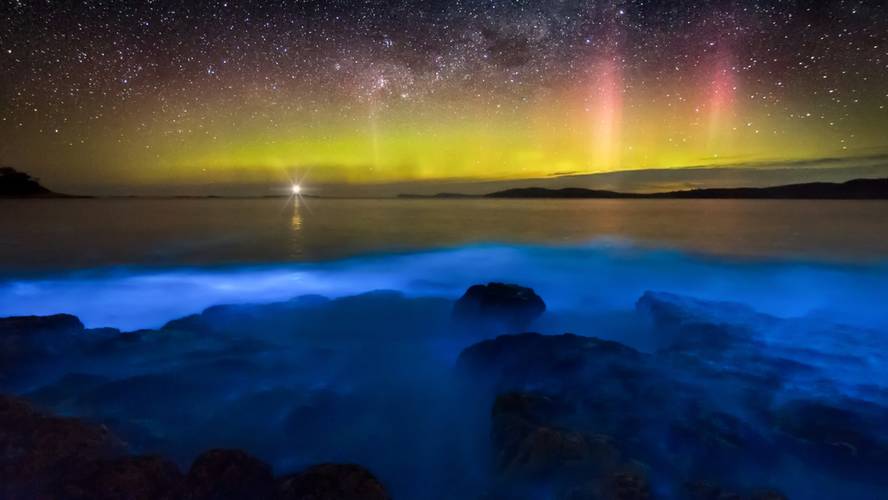
Few natural spectacles rival the aurora australis — a sweeping curtain of colour that ripples across the southern sky in shades of green, red, purple, and pink. Tasmania is one of the finest places on Earth to witness it. The island's pristine wilderness, clean air, and proximity to the South Magnetic Pole combine to make it a front-row seat for the Southern Lights.
Whether you are a seasoned aurora chaser or planning your very first dark-sky adventure, this guide covers everything you need: the best time to visit, five outstanding viewing locations, and practical tips to maximise your chances of a sighting. Read on, then start planning your Tasmanian escape.
What Is the Aurora Australis?
The aurora australis, Latin for ""southern dawn,"" is the Southern Hemisphere's answer to the famous Northern Lights. The phenomenon occurs when charged particles carried by solar winds collide with gases in Earth's atmosphere, releasing energy as vivid light displays. Tasmania's geographic position — far south and blessed with exceptionally dark skies — makes it one of the most reliably rewarding aurora destinations in the world.
The colours you see depend on which atmospheric gases are energised and at what altitude. Oxygen at higher altitudes produces reds, oxygen at lower altitudes glows green, and nitrogen contributes blues and purples. On a strong night, the entire sky can shift through several hues within minutes, making each sighting entirely unique.
Best Time to See the Aurora Australis in Tasmania
The Southern Lights can appear at any time of year, but your best window is the Tasmanian winter, from May to August. During these months the nights are at their longest and darkest, giving the aurora the most time to perform. Solar activity follows an approximately 11-year cycle, and during periods of heightened activity sightings can occur further north and appear far more intense.
New moon phases are ideal for aurora viewing because a bright moon can wash out fainter displays. Keeping an eye on real-time space-weather forecasts and aurora alert communities — including dedicated groups on social platforms — will give you the best advance notice of an incoming event. Flexibility in your travel dates is the single biggest advantage an aurora chaser can have.
Tasmania is well connected to mainland Australia, and flights into Hobart make reaching the island straightforward. Book your flights to Hobart early during the peak winter season to secure the best fares.
Discover Flights With Traveloka
Fri, 2 Oct 2026

Shandong Airlines
Jakarta (CGK) to Beijing (PEK)
Start from ₱ 8,686.23
Fri, 25 Sep 2026

Shenzhen Airlines
Bangkok (BKK) to Beijing (PEK)
Start from ₱ 6,408.68
Tue, 29 Sep 2026
Shenzhen Airlines
Singapore (SIN) to Beijing (PEK)
Start from ₱ 7,550.45
5 Best Places to Watch the Aurora Australis in Tasmania
Tasmania offers a remarkable variety of aurora-watching locations, from highland lakes to coastal headlands. Here are the five spots that consistently deliver the clearest, darkest skies for a Southern Lights sighting.
1. Cockle Creek
Cockle Creek, at the far southern tip of Tasmania, is the southernmost point on the island accessible by road — and that geographic privilege translates directly into exceptional aurora viewing. The minimal light pollution here means the night sky is as dark as it gets, giving the aurora a pristine black canvas to paint against. Colours from delicate pinks to deep mauves and electric greens have all been recorded over these waters.
The location sits within the South West National Park, so the surrounding wilderness adds a dramatic foreground to any photograph. Arrive before sunset to stake out a clear sightline toward the southern horizon and let your eyes adjust fully to the darkness. The remoteness of Cockle Creek also means a peaceful, crowd-free experience that makes an aurora sighting feel genuinely personal.
2. South Arm Peninsula
Just a short drive from Hobart, the South Arm Peninsula is one of the most accessible dark-sky locations in southern Tasmania. Its coastal position offers an unobstructed southern horizon — exactly what aurora chasers need — and the surrounding farmland keeps light pollution to a minimum. The beaches at Clifton and Calvert's Hill are particularly popular among stargazers and photographers.
What sets South Arm apart from more remote locations is the balance it strikes between accessibility and quality. You can leave Hobart after dinner, drive out to the peninsula, and be watching for the aurora within 45 minutes. The open coast also means a sea breeze keeps the sky clear on many nights, adding to the reliability of a good view.
3. Goat Bluff
Goat Bluff sits on the South Arm Peninsula approximately 35 km southeast of Hobart, and it has earned a strong reputation among local aurora enthusiasts for its low light pollution and expansive southern views. The elevated position above the coast provides a wide panoramic sweep of sky, which is valuable when the aurora is spread across a large arc rather than concentrated in one band.
The terrain around Goat Bluff is rugged, so it rewards visitors who come prepared. Wear sturdy footwear, bring a torch, and allow extra time to navigate the area before full darkness falls. The effort is well worth it: on an active night, the combination of ocean, headland, and aurora overhead makes for an extraordinary setting.
4. Kunanyi / Mount Wellington
Kunanyi, also known as Mount Wellington, rises 1,271 metres above sea level and stands as the dramatic backdrop to the city of Hobart. The summit offers panoramic views that sweep across the city, out into the Tasmanian wilderness, and south toward the open seas — all in a single glance. On a clear night with active solar conditions, the aurora can appear to arc directly over the mountain.
The elevated altitude brings you above much of the low-lying haze that can soften the aurora at sea level, and the wide-open summit plateau removes any horizon obstructions. The road to the summit is accessible by car, making this one of the most convenient high-altitude aurora spots available anywhere in Australia. Temperatures drop sharply at the top, so pack extra warm layers regardless of how mild the evening feels in the city below.
5. Cradle Mountain
Cradle Mountain, set within the Tasmanian Wilderness World Heritage Area in the state's central highlands, offers a distinctly different aurora experience to the coastal locations further south. The still, dark waters of Dove Lake provide a mirror-like reflection of the aurora above, creating double the spectacle in a single frame. It is no surprise that Cradle Mountain has become a favourite among aurora photographers specifically for this reason.
The highland setting means the skies here are remarkably clear and free from light interference. The surrounding peaks and ancient pencil pine forests lend a sense of timeless wilderness to any night spent watching the Southern Lights. Plan to arrive well before dusk, explore the lake boardwalk, and find your spot before the aurora appears — the walk in the dark on unfamiliar ground is best avoided once the display begins.
There is no shortage of comfortable accommodation close to the best aurora-viewing sites across Tasmania. These hotels put you within easy reach of dark-sky locations so you can get out quickly when conditions look promising.
Aurora Chasing Tips for Tasmania
Seeing the aurora australis involves some preparation and a fair amount of patience, but the right approach dramatically improves your odds. The tips below are drawn from experienced aurora watchers who regularly chase the Southern Lights across Tasmania.
Monitor Real-Time Aurora Alerts
Space-weather forecasting has improved enormously, and dedicated aurora alert communities share real-time updates on sighting conditions across southern Australia. Joining an active community on social platforms connects you with local observers who post the moment the lights appear. Set up notifications so you are ready to move at short notice — the aurora can develop quickly and fade within an hour.
Dress for the Cold
Tasmanian winter nights are genuinely cold, and locations like the summit of Kunanyi or the exposed coast at Cockle Creek amplify that chill considerably. Thermal underlayers, a wind-resistant outer jacket, gloves, and a beanie are essential. A thermos filled with a hot drink is a small comfort that makes a long wait in the dark far more enjoyable, and the warmth helps you stay focused and patient.
Set Up Your Camera Before Dark
Photographing the aurora australis requires a camera that handles long exposures well. A DSLR or mirrorless camera with manual controls gives you the flexibility to dial in settings for the specific conditions. Mount your camera on a sturdy tripod, set a high ISO (try starting at ISO 1600 or 3200), open the aperture as wide as it will go, and experiment with exposure times between 10 and 25 seconds. Faint aurora activity that your eyes can barely detect often shows up clearly in longer exposures, so it is worth shooting even when the display seems subtle to the naked eye.
Choose a Dark Location Away from Town
Light pollution is the aurora chaser's greatest enemy. Even modest streetlighting can bleach the faintest colours from the sky. Always move well away from towns and cities, turn off all lights around you including your phone screen during observation, and give your eyes at least 20 minutes to fully dark-adapt before looking for the aurora. The difference between a light-polluted and a truly dark site is remarkable.
While you wait for the lights to appear, Tasmania's extraordinary range of day activities — from wilderness walks to wildlife encounters — keeps every hour of your trip rewarding. These experiences are bookable in advance and slot neatly around your aurora-chasing evenings.
Book Your Trip to Tasmania with Traveloka
Traveloka is Southeast Asia's leading travel platform, trusted by over 100 million users across the region and beyond. For Australian travellers heading to Tasmania, Traveloka makes it straightforward to compare and book flights to Hobart and hotels in the same place, so you can lock in your whole trip without switching between tabs and apps.
Finding the right base for aurora chasing matters, and Traveloka's hotel search lets you filter by location so you can stay close to the dark-sky sites at South Arm, Cockle Creek, or Cradle Mountain. Check Traveloka promotions before you book — seasonal deals on flights and accommodation can make a significant difference to your overall trip cost.
Once you land at Hobart Airport, getting to your accommodation quickly and comfortably is easy with airport transfer options bookable through the app. From there, a car rental gives you the freedom to chase the aurora across Tasmania's diverse landscape at a moment's notice — essential when sighting windows can open and close within a single evening. Pair that with a browse through activities to fill your days with the best of Tasmanian nature and culture while you wait for the Southern Lights to perform. Download the Traveloka app and start planning your aurora adventure today.
Tags:
australia
tasmania

Recommended Articles

7 Romantic Dining Restaurants in Penang for Couples
10 Best Tourist Attractions Near the Great Wall of China
Japan 7-Day Itinerary: Tokyo and Kyoto
Japan 14-Day Itinerary: Tokyo to Hiroshima in Two Weeks

Hangzhou to Shanghai: A Complete Transport and Travel Guide
Best Luxury Resorts in Da Nang for an Unforgettable Stay


