


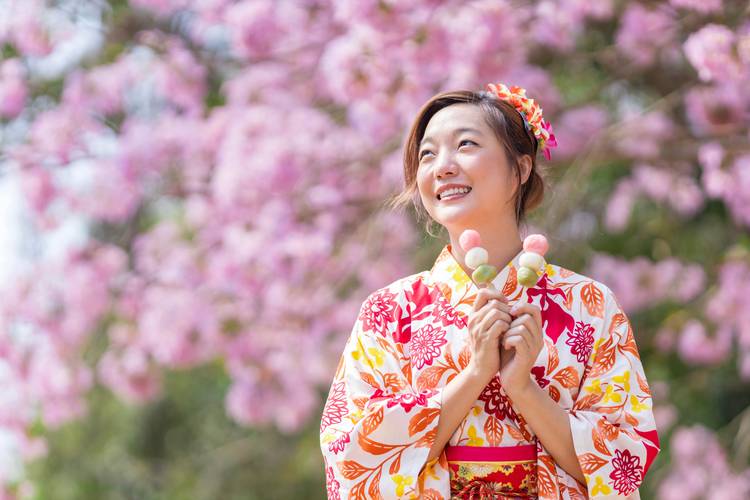
Japan's headline cities cover only part of what the country offers, and seven destinations here mix genuine cultural depth with the kind of places that rarely make a first-timer's itinerary: a contemporary art island, a 7,000-year-old cedar tree, and a desert of sand dunes in a country better known for mountains. Kyoto opens the list as the essential baseline before the truly hidden spots.
Most of these destinations connect through the Kansai region, so flights into Osaka are the practical starting point.
Discover Flights With Traveloka
Fri, 23 Oct 2026

Cebu Pacific
Manila (MNL) to Osaka (KIX)
Start from ₱ 11,641.63
Sun, 4 Oct 2026

Jin Air
Cebu (CEB) to Osaka (KIX)
Start from ₱ 10,970.49
Mon, 19 Oct 2026

Shandong Airlines
Kuala Lumpur (KUL) to Osaka (KIX)
Start from ₱ 11,900.74
1. Kyoto
Japan's ancient capital holds over 1,600 Buddhist temples, 400 Shinto shrines, and 17 UNESCO World Heritage sites, a density unmatched anywhere else in the country. Kinkaku-ji's gold-leaf pavilion and Fushimi Inari Taisha's thousands of vermillion torii gates anchor most first visits, while the Gion district's preserved geisha quarter adds a living cultural thread rather than a purely historical one. It's included here less as a hidden gem and more as the essential reference point the rest of this list builds outward from.
2. Naoshima Island
Set in the Seto Inland Sea, Naoshima has rebuilt its identity around contemporary art, with architect Tadao Ando's museums and outdoor installations scattered across a small island that was, within living memory, a quiet fishing community. Chichu Art Museum, built largely underground, uses natural light rather than electric bulbs to illuminate its collection. The contrast against the island's traditional fishing-village streets is what makes the crossing worthwhile.
3. Takayama
Tucked into the mountainous Hida region, Takayama's Sanmachi Suji district preserves Edo-period wooden merchant houses along narrow streets that have changed remarkably little in appearance for centuries. The biannual Takayama Festival, held in spring and autumn, brings elaborately decorated festival floats through the old town, considered one of Japan's most celebrated festivals. Its proximity to Shirakawa-go, a UNESCO-listed village of steep thatched-roof farmhouses, makes it easy to combine both into a single mountain-region trip.
A hotel in Kyoto keeps this list's foundational stop within reach while day trips and longer excursions branch out from there.
4. Yakushima
An island off Kyushu's southern coast, Yakushima is covered in ancient cedar forest, home to Jomon Sugi, a single tree estimated at over 7,000 years old and among the oldest living things in Japan. The island's moss-covered forest floor and near-constant mist inspired the setting of Studio Ghibli's Princess Mononoke, and walking its trails makes that inspiration immediately obvious. Reaching Jomon Sugi itself requires a genuine full-day hike, so travellers with less time can still experience the forest's atmosphere on shorter surrounding trails.
5. Nagasaki
A historically significant port city on Kyushu's northwest coast, Nagasaki built its identity around centuries of international trade before becoming the site of the second atomic bombing in 1945. Peace Park and the Atomic Bomb Museum address that history directly, while the city's layered trading-port past shows up in a blend of Japanese, Chinese, and Dutch architectural influences found nowhere else in the country. That combination sets Nagasaki apart from Japan's more singularly-themed destinations.
6. Tottori Sand Dunes
Japan's largest sand dunes stretch along the Sea of Japan coastline, an environment that feels almost entirely disconnected from the mountains and forests defining most of the rest of the country. Camel rides and sandboarding both draw visitors specifically for the novelty of desert-style activities in Japan, while the Sand Museum nearby displays remarkably detailed sculptures carved entirely from sand. It's a genuinely odd geographic outlier, worth the detour precisely because it looks like nowhere else in Japan.
7. Okinawa
Japan's southernmost island chain trades the mainland's four distinct seasons for a subtropical climate, with beaches, coral reefs, and a Ryukyu cultural identity shaped by centuries as an independent kingdom before formal incorporation into Japan. Shuri Castle, the former royal seat, and the Okinawa Peace Memorial Park both anchor the island's historical sites, while the surrounding waters draw divers for reef conditions unlike anywhere else in the country. The combination of distinct language, cuisine, and history makes Okinawa feel like a genuinely separate destination within Japan rather than a regional variation.
Building an Itinerary Around These Seven
Grouping by Region
Kyoto, Naoshima, and Takayama all sit within reasonable travel distance of each other in central Japan, making a natural first grouping for a single trip.
Kyushu as a Second Leg
Yakushima and Nagasaki both sit in Kyushu, far enough south that combining them into their own dedicated leg makes more sense than trying to fold them into a central-Japan itinerary.
Tottori and Okinawa as Standalone Trips
Both sit far enough from the other five that a dedicated visit, rather than an add-on, tends to work better given the travel distances involved.
What Ties These Seven Together
Beyond geography, each of these seven destinations offers something the mainland's headline cities don't: Naoshima's art rather than temples, Yakushima's ancient forest rather than manicured gardens, Tottori's dunes rather than mountains. Kyoto's inclusion works because it's the baseline the other six push against, each carving out a distinct identity rather than repeating a formula. Travellers who've already covered Tokyo and Osaka tend to find the most value adding two or three of these rather than all seven at once.
A guided Arashiyama half-day tour, covering the Sagano Romantic Train and a bamboo grove walk, is worth adding through Traveloka's activities listings for travellers based in Kyoto specifically.
Practical Notes for a Multi-Region Trip
Domestic Flights Save Time
Reaching Yakushima, Okinawa, or Tottori from central Japan generally works out faster by domestic flight than by train, given the distances involved.
Book Ferries Ahead for Naoshima
Ferry schedules to Naoshima run limited compared to mainland transport, so checking timetables before finalising an itinerary avoids an unplanned overnight wait.
A car rental suits Tottori and parts of Okinawa where public transport runs thinner than in central Japan, and an airport transfer covers the arrival leg into Kansai smoothly.
Plan Your Japan Trip with Traveloka
Seven destinations spread across the country means careful sequencing before the trip even starts. Hotels, flights, activities, car rental, eSIM, and travel insurance all sit inside one Traveloka search, used by over 100 million travellers across Southeast Asia to plan multi-region routes like this one. Browse current promotions before booking the Kyushu leg especially, then download the app to start.
Tags:
japan


Recommended Articles
Getting Around Sapporo: Trains, Subway, and Trams
Getting Around Nagoya: Trains, Subway, Bus, and Bike
Suica Card for Tourists: How to Get and Use One in Japan
Japan Shinkansen Guide: Routes, Classes, and Booking
Things to Do in Osaka During Spring: A Complete Guide
7 Best Historic Hotels in Tokyo for an Authentic Stay


