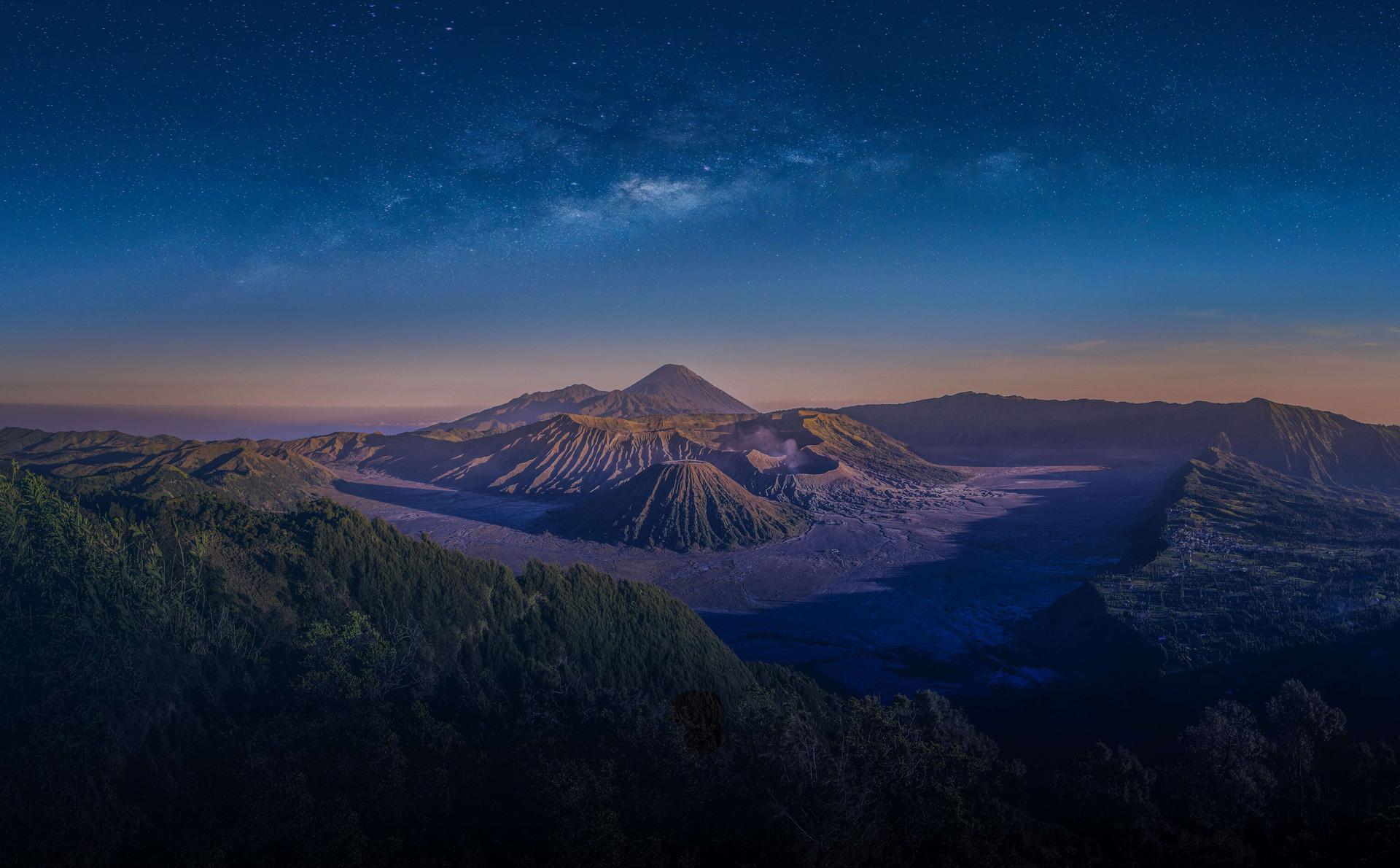
7 Natural Wonders of the World: The Ultimate Travel Guide for 2026



Long before humans built monuments, the earth had already created its own. The Seven Natural Wonders of the World span six continents and represent some of the most extraordinary geological, ecological, and atmospheric phenomena on the planet. From a reef system visible from space to a volcano that rose from a cornfield, each wonder is a reminder of what the natural world produces when given millions — or sometimes just a few — years to work. Whether you are planning one trip or all seven, this guide covers what to see, when to go, and where to stay. Book your flights, hotels, and activities to any of these destinations on Traveloka, Southeast Asia's leading travel platform trusted by over 100 million users.
Discover flight with Traveloka
Mon, 15 Jun 2026

British Airways
Jakarta (CGK) to Keflavik Reykjavík (KEF)
Start from USD 908.52
Sat, 20 Jun 2026

Emirates
Jakarta (CGK) to Keflavik Reykjavík (KEF)
Start from USD 1,310.66
Mon, 15 Jun 2026

Qatar Airways
Jakarta (CGK) to Keflavik Reykjavík (KEF)
Start from USD 1,333.61
1. Aurora Borealis (Northern Lights)

Key Facts
The Aurora Borealis is a natural light display caused by electrically charged particles from the sun colliding with gases in the earth's upper atmosphere, producing curtains and ribbons of colour — most commonly green, but also pink, violet, and red — across the polar night sky. It is visible from high-latitude regions in the northern hemisphere, most reliably from Iceland, northern Norway, northern Finland, Greenland, and northern Canada. Iceland, particularly Reykjavik and the countryside south and east of the capital, is the most accessible base for most international travellers.
What to See and Where
The most intense displays occur during periods of high solar activity. Iceland's south coast, the Snæfellsnes Peninsula, and the area around Lake Myvatn in the north are among the best viewing locations away from city light pollution. Guided tours depart from Reykjavik on evenings when forecast conditions are favourable and relocate to darker areas for optimal visibility. The Golden Circle — combining Thingvellir National Park, the Geysir geothermal area, and Gullfoss waterfall — is a full-day route that can be combined with a Northern Lights evening tour in winter for a complete Iceland experience.
When to Visit
The aurora is visible from September to March, when Icelandic nights are long enough to observe it. December and January offer the longest nights but are also the coldest months. The equinox periods around September and March produce statistically higher aurora activity. No sighting is ever guaranteed — cloud cover and solar activity both play a role. Booking a flexible or refundable Northern Lights tour is strongly recommended so you can reschedule if conditions are poor on your first attempt. Book an airport transfer from Reykjavik-Keflavik Airport on arrival to get into position as quickly as possible.
Reykjavik offers accommodation from cosy guesthouses in the city centre to hotels within easy reach of dark-sky sites along the south coast. Compare the full range on Traveloka and book early for winter travel, when availability is tightest.
2. Grand Canyon, USA
Key Facts
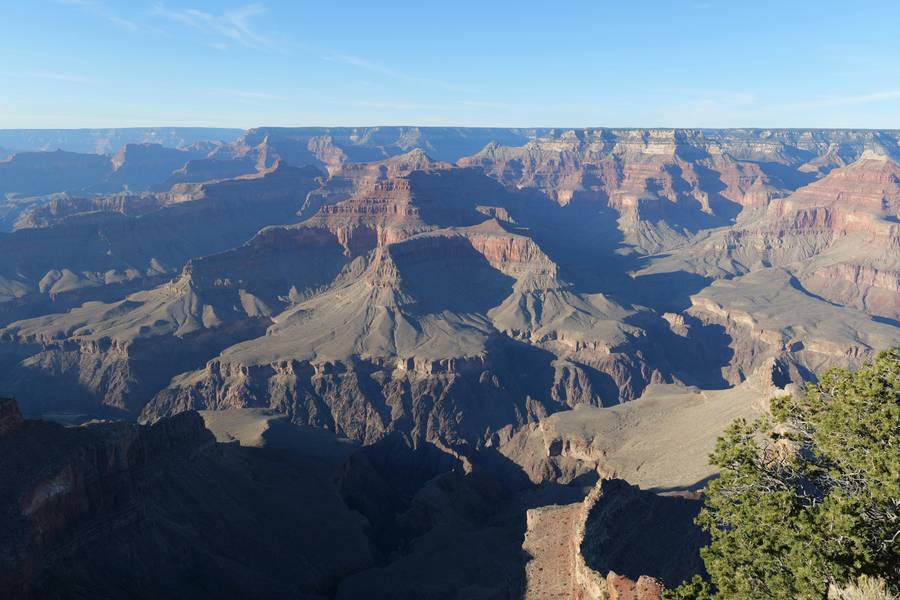
The Grand Canyon in Arizona, USA, is a steep-sided gorge carved by the Colorado River over five to six million years. It stretches 446 kilometres in length, reaches up to 29 kilometres in width, and descends to a depth of over 1.8 kilometres, exposing nearly two billion years of geological history in its layered rock walls. The canyon is located within Grand Canyon National Park and is one of the most visited natural attractions in the United States, welcoming around 6 million visitors per year.
What to See and Do
The South Rim is open year-round and has the most complete visitor facilities — restaurants, lodges, shuttle buses, and the full range of canyon viewpoints including Mather Point and Desert View. The North Rim is open from mid-May to mid-October and is quieter, with a dramatically different forested landscape above the rim. The West Rim, operated separately by the Hualapai Nation, is home to the famous Grand Canyon Skywalk, a glass-bottomed horseshoe bridge extending 21 metres over the canyon edge at a height of over 1,200 metres. Activities across the park include guided hikes to the canyon floor, mule rides, white water rafting on the Colorado River, and helicopter tours over the gorge.
Entry Fees and Getting There
A standard vehicle entry pass costs USD 35 and is valid for seven days. The South Rim is approximately 80 kilometres from the nearest town of Williams, Arizona, and around 360 kilometres from Las Vegas. Day tours from Las Vegas covering the South Rim or West Rim are among the most popular ways to visit without a rental car. The best seasons are spring (March to May) and autumn (September to November), when temperatures at the rim are comfortable and inner canyon hikes are manageable. Summer midday temperatures on the canyon floor regularly exceed 40°C — carry at least four litres of water per person for any inner canyon hike. Use a car rental for the flexibility to explore multiple viewpoints and trailheads at your own pace.
The South Rim has a handful of iconic lodges inside the park, including properties perched directly on the canyon edge. Traveloka lists properties both inside the park and in nearby gateway towns to suit different budgets and preferences.
Grand Canyon tours departing from Las Vegas — covering the South Rim, West Rim with Skywalk, helicopter rides, and multi-day national park itineraries — are all bookable through Traveloka's activities platform.
3. Paricutin Volcano, Mexico

Key Facts
Paricutin is one of the youngest volcanoes on earth. On 20 February 1943, a Purepecha farmer named Dionisio Pulido witnessed fissures opening in his cornfield in the Mexican state of Michoacan and felt the ground shake. Within a week, a cinder cone had risen 9 storeys tall. By the time the eruption ended in 1952, the volcano stood 424 metres above its base, and lava flows had buried the towns of Paricutin and San Juan Parangaricutiro — the latter leaving only the church tower of the Temple of San Juan rising above the hardened lava, one of the most striking geological sights in Mexico.
What to See and Do
The volcano is now dormant and accessible from the indigenous Purepecha village of Angahuan, approximately 8 kilometres from the crater. Horse guides from Angahuan lead visitors through the lava field to the buried church of San Juan Parangaricutiro and further to the volcano base or summit. The return trip to the church takes approximately two to three hours on horseback; a full summit ride takes five to seven hours. The church tower, half-submerged in frozen black lava with the volcano as a backdrop, is one of the most photographed sites in Michoacan. No formal entry ticket is required — you pay the local horse guides directly, with proceeds supporting the community.
Getting There and Base Town
Angahuan is approximately 25 kilometres from the city of Uruapan, which has regular bus connections to Morelia, Michoacan's state capital. Morelia is a well-preserved UNESCO-listed colonial city and makes an excellent base for a Paricutin day trip combined with wider Michoacan sightseeing. The best time to visit is the dry season (November to April), when roads are passable and visibility is clear. Check Traveloka promotions for deals on flights and hotels to Michoacan when planning this off-the-beaten-track wonder.
Morelia is the most comfortable base for visiting Paricutin, offering a range of hotels from boutique colonial-era properties in the historic centre to international business hotels near the main transport links. Browse available options on Traveloka.
Guided tours to Paricutin from Morelia and Uruapan, including transport and local horse guide arrangements, are available through Traveloka's activities platform for the Michoacan region.
4. Harbor of Rio de Janeiro, Brazil

Key Facts
The harbor of Rio de Janeiro — officially Guanabara Bay — is a natural wonder formed by the erosion of granite mountains over millions of years, creating one of the world's largest and most dramatic natural harbors. The bay stretches approximately 31 kilometres from north to south and 28 kilometres from east to west, enclosing an area of around 380 square kilometres. It is framed by iconic granite peaks including Sugarloaf Mountain (Pão de Açúcar, 396 metres) and Corcovado (710 metres), and contains 130 islands within its protected waters. The Tijuca National Park surrounding the bay is the world's largest urban forest.
What to See and Do
The Sugarloaf Mountain cable car is the classic way to experience the harbor from above. A two-stage gondola ascends first to Morro da Urca (215 metres), then to the Sugarloaf summit, with 360-degree views of the bay, the beaches of Ipanema and Copacabana, and the city below. Sunset is the optimal time — the light turns the granite peaks gold and the city begins to illuminate. Boat tours of Guanabara Bay are available from the Marina da Gloria and the Rio de Janeiro Ferry Terminal, offering close-up views of the islands and the famous waterfront. The nearby beaches of Ipanema, Copacabana, Barra da Tijuca, and Prainha are world-class and accessible from most areas of the city.
Getting There and Visitor Tips
Rio de Janeiro is served by two airports: Galeão International Airport (GIG) for international and domestic connections, and Santos Dumont (SDU) for domestic routes closer to the city centre. The Sugarloaf cable car operates from Praia Vermelha in the Urca neighbourhood — book tickets in advance during peak season (December to February and July). Entry to Sugarloaf costs approximately BRL 170 per adult as of recent updates. Rio's urban transport includes metro, bus, and ride services.
Rio de Janeiro has a wide range of accommodation from beachfront hotels on Ipanema and Copacabana to boutique properties near Sugarloaf in the Urca and Botafogo neighbourhoods. Browse and book on Traveloka for the best available rates.
Sugarloaf cable car tickets, Guanabara Bay boat tours, and full-day Rio city experiences are all bookable through Traveloka's activities platform.
5. Victoria Falls, Zimbabwe and Zambia

Key Facts
Victoria Falls sits on the Zambezi River on the border between Zimbabwe and Zambia. At 1,708 metres wide and 108 metres tall, it is the world's largest sheet of falling water by combined width and height — wider than Niagara Falls and taller than Horseshoe Falls. The local name, Mosi-oa-Tunya (The Smoke That Thunders), refers to the spray column that rises up to 400 metres and can be seen from 50 kilometres away. Victoria Falls is a UNESCO World Heritage Site and was one of the first African destinations to be listed.
What to See and Do
The main viewing area on the Zimbabwe side, within Victoria Falls National Park, provides a series of viewpoints along the gorge edge facing the falls directly. The Main Falls, Horseshoe Falls, Rainbow Falls, and Devil's Cataract are the key sections. During peak flow (February to June), the spray saturates visitors within minutes — waterproof clothing is essential. During low water (October to December), the falls can be seen more clearly, and Devil's Pool, a natural rock pool on the lip of the main falls on the Zambian side of Livingstone Island, becomes accessible for guided swims. The Victoria Falls Bridge offers a famous bungee jump of 111 metres over the gorge. Helicopter tours, white water rafting on the Zambezi, and guided sunset cruises round out the activity options.
Entry and Logistics
Entry to Victoria Falls National Park on the Zimbabwe side costs USD 30 per person; the Zambia side (Mosi-oa-Tunya National Park) costs USD 20. A combined UNIVISA for Zimbabwe and Zambia (USD 50) is available at the border and covers both sides. The nearest airports are Victoria Falls Airport (VFA) in Zimbabwe and Harry Mwanga Nkumbula International Airport (LVI) in Livingstone, Zambia. Accommodation in the town of Victoria Falls on the Zimbabwe side is the most popular base.
The town of Victoria Falls has a well-developed hospitality scene with options from safari lodges on the Zambezi riverbank to comfortable guesthouses minutes from the park entrance. Browse the full range of properties on Traveloka.
Victoria Falls helicopter tours, bungee jump experiences, Zambezi sunset cruises, and guided park tours are available through Traveloka's activities platform — check availability and book ahead for peak season.
6. Mount Everest, Nepal

Key Facts
Mount Everest is the highest point on earth at 8,848.86 metres above sea level, on the border of Nepal and the Tibet Autonomous Region of China. First summited on 29 May 1953 by Edmund Hillary of New Zealand and Tenzing Norgay of Nepal, Everest continues to draw hundreds of climbers and tens of thousands of trekkers each year. The mountain is known in Nepali as Sagarmatha (Goddess of the Sky) and in Tibetan as Chomolungma (Mother Goddess of the World). The surrounding Sagarmatha National Park is a UNESCO World Heritage Site.
What to See and Do
Everest Base Camp (5,364 metres) is the most popular trekking destination in Nepal, reached via a 12 to 14-day return trek from Lukla Airport through the Khumbu Valley. The route passes through Sherpa villages, ancient monasteries, and suspension bridges before reaching the base camp on the Khumbu Glacier with close-up views of the Khumbu Icefall. Kala Patthar (5,644 metres), a subsidiary summit above Gorak Shep, is the classic photography spot with unobstructed views of the Everest summit, best at sunrise when the peak catches the first light. For those who cannot commit to a two-week trek, the Everest Mountain Flight from Kathmandu offers a one-hour scenic flight passing within close range of the Everest massif.
Trekking Permits and Best Season
All trekkers entering the Everest region require a Sagarmatha National Park entry permit (NPR 3,000) and a Khumbu Pasang Lhamu Rural Municipality permit (NPR 2,000). Trekkers must be accompanied by a licensed guide. The two best seasons are pre-monsoon (March to May) and post-monsoon (September to November), with October and November offering the clearest skies and most stable weather. The monsoon (June to August) brings rain and reduced visibility; December to February brings extreme cold above 4,000 metres. All trekkers fly into Lukla (LUA) from Kathmandu (KTM) — book the domestic flight well in advance as Lukla is one of the busiest small airports in Nepal.
Kathmandu is the gateway city for all Everest treks and the Everest Mountain Flight. The city offers a broad range of accommodation, from budget hostels in the Thamel backpacker district to mid-range and luxury hotels closer to the airport. Compare options across all categories on Traveloka.
Everest Base Camp treks, Kathmandu heritage tours, and the Everest Mountain Flight are all available to book through Traveloka's activities platform — check permit requirements and availability before your travel dates.
7. Great Barrier Reef, Australia

Key Facts
The Great Barrier Reef is the world's largest coral reef system, stretching over 2,300 kilometres along the northeast coast of Queensland, Australia. It comprises 2,900 individual reefs, 900 islands, and covers an area of approximately 344,400 square kilometres — larger than the United Kingdom, Switzerland, and the Netherlands combined. The reef is home to over 1,500 species of fish, 4,000 species of mollusc, 240 species of birds, and six of the world's seven species of marine turtle. It was listed as a UNESCO World Heritage Site in 1981 and remains the largest living structure visible from space.
What to See and Do
Cairns is the primary gateway city for Great Barrier Reef day trips. Most reef excursions involve a 1.5 to 2-hour catamaran journey from Cairns to pontoon platforms moored above the outer reef, from which visitors snorkel or dive in the coral gardens below. Glass-bottom boat and semi-submersible tours provide underwater views for non-swimmers. For divers, the outer reef offers visibility of 15 to 30 metres in optimal conditions, with opportunities to see reef sharks, manta rays, sea turtles, and vast coral formations. Green Island, a coral cay 27 kilometres offshore from Cairns, is a popular half-day trip combining beach time and reef snorkelling. The Whitsunday Islands, further south, offer world-class liveaboard diving, sailing, and the famous Whitehaven Beach.
When to Visit and Reef Health
The best time to visit the Great Barrier Reef is between June and October (dry season), when water clarity is at its best, sea conditions are calmer, and the risk of tropical cyclones and jellyfish blooms is lowest. Water temperatures range from 23°C to 29°C year-round — suitable for snorkelling without a wetsuit. Reef entry fees are included in most tour packages. The reef has experienced multiple bleaching events from rising sea temperatures — responsible reef operators follow strict guidelines to minimise further impact. Choose tours certified by the Ecotourism Australia or Eye on the Reef programmes where possible.
Cairns has a mature tourism infrastructure with accommodation options from backpacker hostels near the Esplanade to boutique beachfront resorts at Palm Cove, 25 kilometres north of the city. Browse and book on Traveloka for the best available rates across all property types.
Great Barrier Reef snorkel tours, dive trips, Green Island sailing cruises, and Cairns to Whitsundays adventures are all available to book through Traveloka's activities platform. Book ahead in the dry season as tours fill weeks in advance.
Plan Your Trip to the Natural Wonders with Traveloka
The Seven Natural Wonders span six continents and six climate zones — planning them well is half the journey. Traveloka brings flights, hotels, and activities together in one app so you can build every leg of the trip in a single session. Southeast Asia's largest online travel platform, trusted by over 100 million users and available across Asia and beyond — from Indonesia to Japan, Korea, and Australia — Traveloka covers flights, hotels, activities, car rentals, travel insurance, and eSIM all in one place.
For remote natural wonders like Paricutin and Everest Base Camp, having all logistics pre-booked through a single trusted platform removes significant uncertainty. Compare verified hotel options at each wonder's gateway city, secure activity slots before they sell out, and arrange transport through Traveloka's car rental service for destinations where self-drive flexibility matters most.
Download the Traveloka app today, browse the best deals on flights and hotels to the world's natural wonders, and start planning the adventures that the natural world has spent millions of years preparing for you.
In This Article




Activities Mentioned in This Article

Grand Canyon West Ticket

Grand Canyon National Park Tour from Las Vegas

Christ the Redeemer Admission Ticket + Round-Trip Train from Corcovado Adult

Great Barrier Reef Dreamtime Dive & Snorkel Eco Tour from Cairns | Queensland
Recommended Articles

How to Create a Travel Itinerary 2026: A Step-by-Step Guide to Planning the Perfect Trip

How to Plan a Road Trip in Europe 2026: The Complete Guide to Driving Across the Continent

Road Trip Essentials 2026: The Complete Checklist for a Safe, Comfortable, and Enjoyable Drive

Best Street Food Destinations in Asia 2026: A Foodie's Guide to the Continent's Greatest Bites

Indonesian Food Travel Guide 2026: A Culinary Journey Across the Archipelago

Best Surfing Destinations in Asia 2026: From Bali's Barrels to Japan's Cold-Water Breaks
Explore the Best of World

World