10 Famous Landmarks in China That Belong on Every Traveller's Bucket List


China is one of the world's most extraordinary destinations — a vast country where ancient wonders sit alongside modern marvels, and every region tells a different chapter of a civilisation stretching back thousands of years. Whether you are tracing the footsteps of emperors in Beijing, marvelling at terracotta soldiers in Xi'an, or drifting through the karst peaks of Guilin, the famous landmarks in China deliver experiences that are genuinely unlike anything else on earth. This guide brings together the ten most iconic sites across the country, with practical detail to help you plan a trip you will never forget.

Booking flights to China is straightforward from Australia, with direct and one-stop services connecting major Australian cities to Beijing, Shanghai, and other hubs. Once you have landed, securing an airport transfer in advance takes the guesswork out of getting from the terminal to your hotel, so you can start exploring the moment you arrive.
1. Great Wall of China
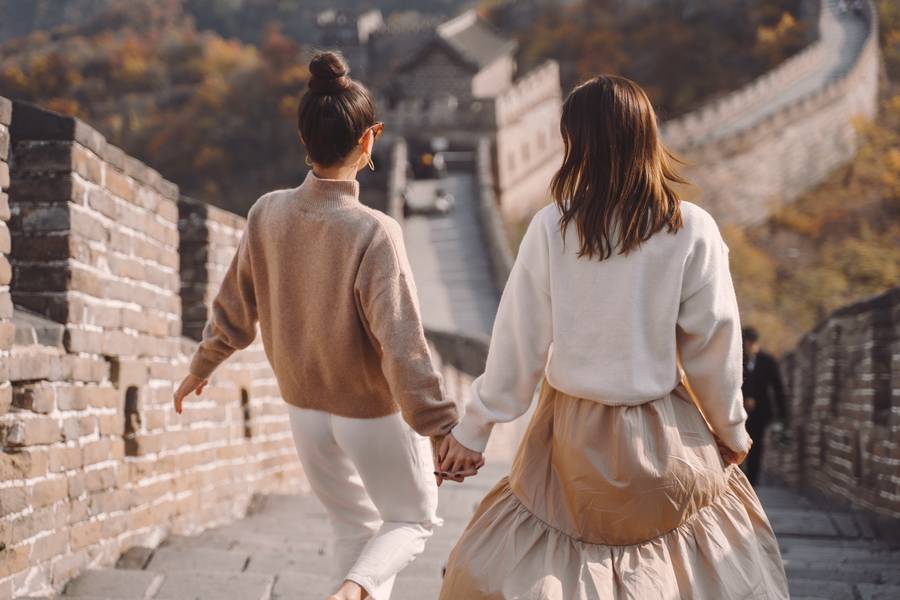
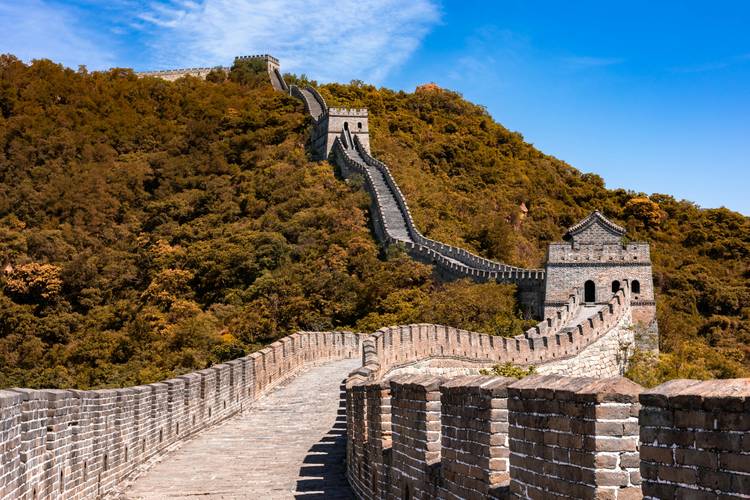
No list of famous landmarks in China would be complete without the Great Wall — arguably the most recognisable structure on the planet. Stretching more than 21,000 kilometres across mountains, valleys, and sweeping plains, the wall was built and rebuilt over centuries as a defensive fortification and has been recognised as one of the New Seven Wonders of the World. The sheer scale of it defies expectation even for travellers who have seen it in photographs countless times. Walking along its battlements, with ridgelines rolling away in every direction, is an experience that stays with you long after you have returned home.
The two most accessible sections from Beijing are Badaling and Mutianyu. Badaling is the most visited and the most fully restored, making it easy to navigate. Mutianyu offers a slightly less crowded atmosphere and the option of a cable car ride up and a thrilling toboggan slide back down — a favourite with families. Most visitors base themselves in Beijing and join a day tour, which can be arranged through your accommodation or booked as an activity in advance. Allow a full day to make the most of whichever section you choose.
Start your trip by browsing the best-value places to stay near the capital. Comfortable hotels in Beijing range from budget guesthouses in historic hutong laneways to five-star properties steps from the city's grandest sights.
2. The Forbidden City

The Forbidden City — known in Chinese as Gùgōng — sits at the very heart of Beijing and served as the imperial palace for 24 emperors across the Ming and Qing dynasties for nearly five centuries. Covering more than 720,000 square metres and comprising close to 9,000 rooms, it is the largest palace complex in the world, and its golden rooftops and crimson walls remain every bit as magnificent today as they were at the height of imperial power. The complex is now a UNESCO World Heritage-listed museum holding one of the world's finest collections of Chinese art and historical artefacts.
Visitors enter from the south through Tiananmen Gate, passing beneath the portrait of Chairman Mao before crossing into the outer courtyard. The pace of exploration is entirely your own — you can follow the central axis to take in the grand ceremonial halls, or wander the quieter wings and garden pavilions at the northeastern corner. An official audio guide is available through the Palace Museum app, which transforms the visit into a richly narrated journey through Chinese history. Tickets must be booked online in advance and are only released 7 days before your visit, so plan accordingly and keep your passport handy at the gate.
After exploring the palace, head north on foot to Jingshan Park, where a hilltop pavilion delivers the single best panoramic view of the Forbidden City's golden rooftop sea — an unmissable perspective that most visitors overlook.
3. Terracotta Army
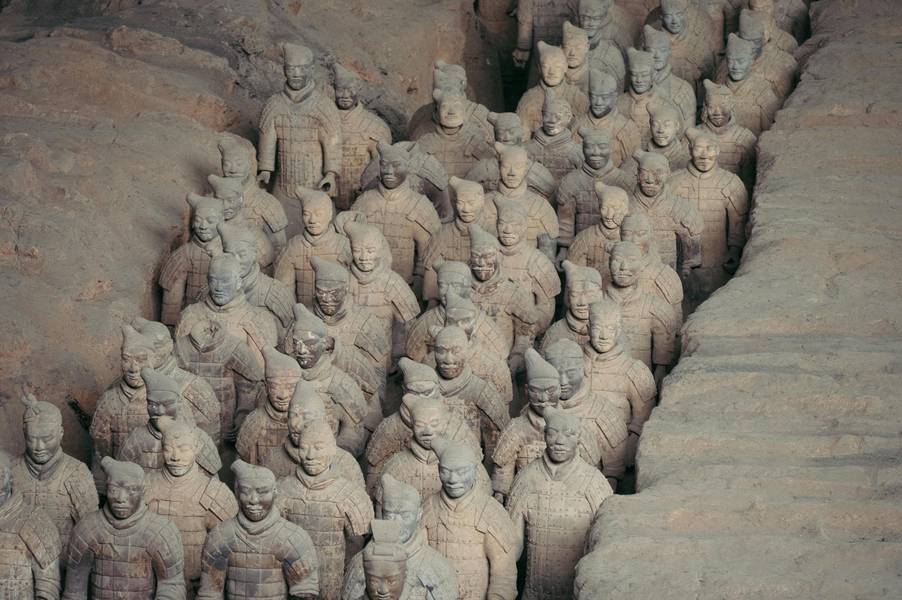
Discovered in 1974 by farmers digging a well near Xi'an, the Terracotta Army is one of the most astonishing archaeological finds in human history. More than 8,000 life-sized clay soldiers, horses, and chariots were created to guard the tomb of Emperor Qin Shi Huang — China's first emperor — in the afterlife, and each figure was crafted with individual facial features, hairstyles, and expressions. The site is divided into three excavation pits, and wandering among the rows of silent soldiers carries a weight of history that is impossible to describe adequately in words.
Xi'an is roughly a two-hour flight from Beijing and makes for a highly rewarding addition to any China itinerary. The city itself is encircled by one of the best-preserved ancient city walls in the world, and its famous Muslim Quarter is one of the best places in China to eat — stalls and restaurants serve dishes like rou jia mo (a slow-braised meat sandwich) and biang biang noodles late into the evening. An English-speaking guide at the Terracotta Army site adds enormous depth to the visit, turning rows of clay figures into a vivid story of ambition, power, and ancient craftsmanship.
From organising Great Wall tickets to booking immersive cultural experiences, China's activities are easy to secure in one place. Lock in your plans before you go so you are not left scrambling at the gate.
4. Zhangjiajie National Forest Park
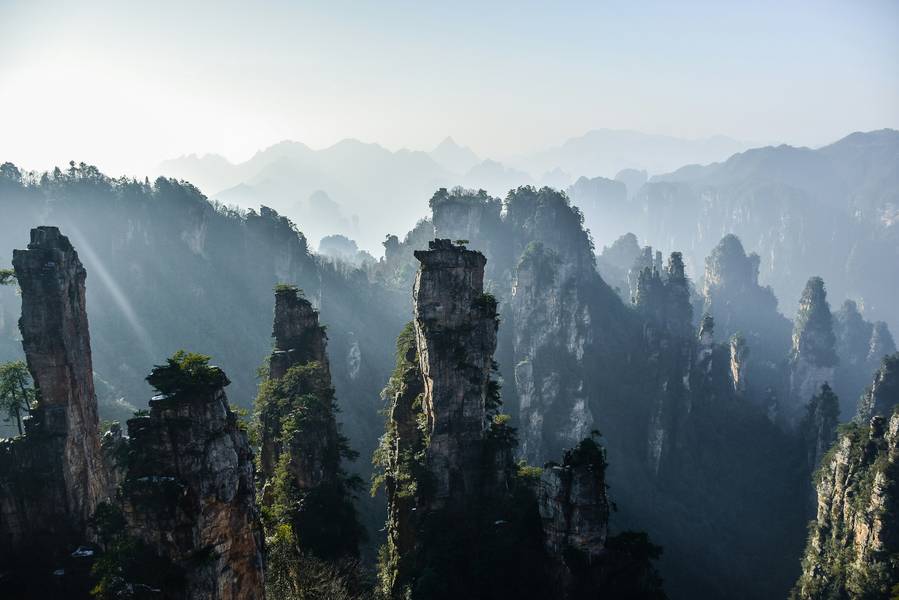
Few landscapes in China are as otherworldly as the towering sandstone pillars of Zhangjiajie National Forest Park in Hunan Province. These extraordinary columns of rock — draped in green vegetation and frequently shrouded in morning mist — inspired the floating Hallelujah Mountains in the film Avatar, and seeing them in person carries that same sense of entering an entirely different world. The park was the first national forest park established in China and covers a dramatic terrain of gorges, peaks, and ancient forest.
The Bailong Elevator — the world's tallest outdoor glass elevator — rises a breathtaking 326 metres up the face of a cliff in just 90 seconds, delivering passengers to the viewing platforms high among the pillars. From there, the glass-floored Zhangjiajie Grand Canyon Bridge offers one of the most exhilarating walks in Asia. Tianzi Mountain and the aptly named First Bridge Under Heaven are further highlights within the park that reward those willing to explore beyond the main attractions. Allow at least two full days to do the park justice.
5. The Bund, Shanghai
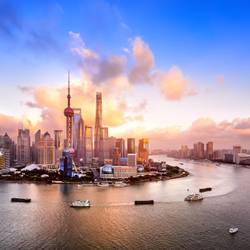
Shanghai's famous Bund waterfront is one of Asia's great urban promenades — a sweeping boulevard lined with grand colonial-era facades on one side and the gleaming futuristic skyline of Pudong on the other. The contrast between the European neoclassical buildings dating from Shanghai's era as an international trading hub and the soaring glass towers across the Huangpu River captures China's extraordinary capacity to hold past and present in the same frame. At sunset, when the city's lights begin to reflect on the water, it is among the most photogenic scenes in the world.
An evening river cruise along the Huangpu is one of the finest ways to appreciate the skyline from the water, with views of the Oriental Pearl Tower and the needle-like Shanghai Tower — the second-tallest building on earth. The streets just behind the Bund open into the maze of the Old Town and the beautifully restored Xintiandi precinct, where excellent restaurants and boutiques fill 19th-century shikumen lane houses. Shanghai is a city that richly rewards those who stay long enough to explore beyond the postcard view.
6. West Lake, Hangzhou
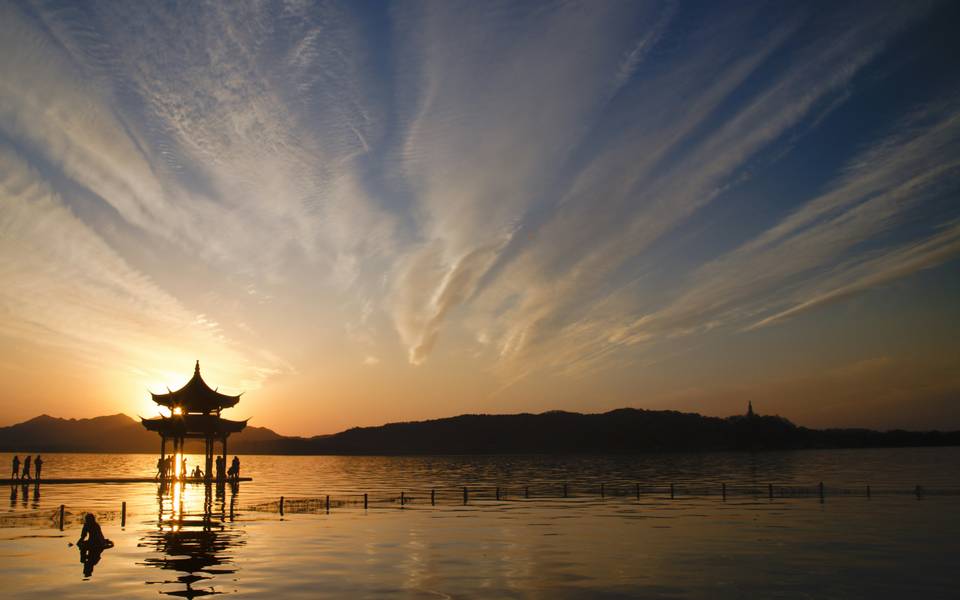
West Lake — Xī Hú — in Hangzhou has inspired Chinese poets, painters, and scholars for more than a thousand years, and a visit makes it immediately clear why. Weeping willows trail into the water, ancient stone bridges arch between islets, lotus blossoms appear in summer, and pagodas punctuate the treeline on all sides. The lake and its surrounding hills were inscribed on the UNESCO World Heritage list in 2011 in recognition of their exceptional cultural and scenic significance. High-speed rail from Shanghai takes less than an hour, making Hangzhou a very natural day trip or overnight extension.
Hiring a bicycle and riding the twin causeways — Su Causeway and Bai Causeway — is one of the most pleasant ways to experience the lake at a relaxed pace. A boat cruise to the small island at the lake's centre allows you to see the iconic Three Pools Mirroring the Moon scene, one of the most reproduced images in Chinese art. The Leifeng Pagoda, rebuilt on the southern shore in 2002 above the foundations of the original thousand-year-old structure, offers elevated views over the entire lake and is well worth the climb.
7. Tiananmen Square

Tiananmen Square in Beijing is one of the largest public squares in the world, covering more than 440,000 square metres in the heart of the capital and flanked by the monumental facades of the Great Hall of the People and the National Museum of China. Entry to the square itself is free, though a reservation and valid passport are required. The space is best experienced early in the morning, when locals gather and the atmosphere is peaceful and reflective. The daily flag-raising ceremony at sunrise draws a large crowd and is considered one of the most patriotically significant rituals in the country.
The square serves as the ceremonial threshold between the modern city and the ancient imperial world — Tiananmen Gate to the north leads directly into the Forbidden City, making these two landmarks natural companions on the same itinerary. The Monument to the People's Heroes stands at the centre of the square, and the Mausoleum of Mao Zedong sits along its southern edge. Most visitors combine Tiananmen Square with a morning at the Forbidden City, arriving early to catch the flag-raising before the palace gates open.
8. Nanshan Temple, Sanya

On the southern tip of Hainan Island, the Nanshan Temple complex in Sanya is one of China's most significant Buddhist sites and home to one of its most dramatic landmarks — a 108-metre statue of Guanyin, the Buddhist Goddess of Mercy, rising from a platform in the sea. The statue, visible from far along the coastline, symbolises peace, compassion, and protection, and draws pilgrims and tourists from across the country. The surrounding temple complex is beautifully maintained, with traditional architecture, manicured gardens, and an atmosphere of genuine tranquillity.
Sanya itself has become one of China's premier beach destinations, offering warm waters and a tropical climate year-round that feels a world away from the cold winters of northern China. Arriving early at Nanshan Temple is recommended to enjoy the site before tour groups arrive and to take in the morning light on the statue and sea. Hainan Island is served by direct flights from major Chinese cities, and combining Nanshan with time on Sanya's beaches makes for a wonderfully varied itinerary. A rented vehicle is useful for getting between sites at your own pace — car rental options are available to book ahead of your arrival.
9. Yangtze River and the Three Gorges
The Yangtze River is the longest river in China and the third longest in the world, flowing more than 6,300 kilometres from the Tibetan Plateau to the East China Sea and carrying with it the weight of Chinese civilisation across millennia. The most celebrated section for travellers is the Three Gorges stretch between Chongqing and Yichang, where sheer limestone cliffs rise dramatically from the water and mist-shrouded peaks frame one of the country's most awe-inspiring natural corridors. A multi-night cruise through this section is one of the classic China travel experiences.
Cruise itineraries typically run between three and five nights, allowing time to dock at smaller towns, visit hanging coffins in the Shennong Stream tributary, and observe the scale of the Three Gorges Dam — the largest hydroelectric structure ever built. Chongqing, the embarkation city for most downstream cruises, is a vibrant metropolis famous for its hotpot cuisine and its clifftop setting above the confluence of two rivers. Arriving a day early to explore the city before boarding adds a lively urban dimension to what is primarily a nature-focused experience.
Discover flight with Traveloka
Tue, 29 Sep 2026

Hainan Airlines
Melbourne (MEL) to Shanghai (PVG)
Start from AU$450.92
Wed, 9 Sep 2026

Hong Kong Airlines
Sydney (SYD) to Shanghai (PVG)
Start from AU$473.96
Sat, 26 Sep 2026

Spring Airlines
Ho Chi Minh City (SGN) to Shanghai (PVG)
Start from AU$85.08
10. Karst Formations of Guilin
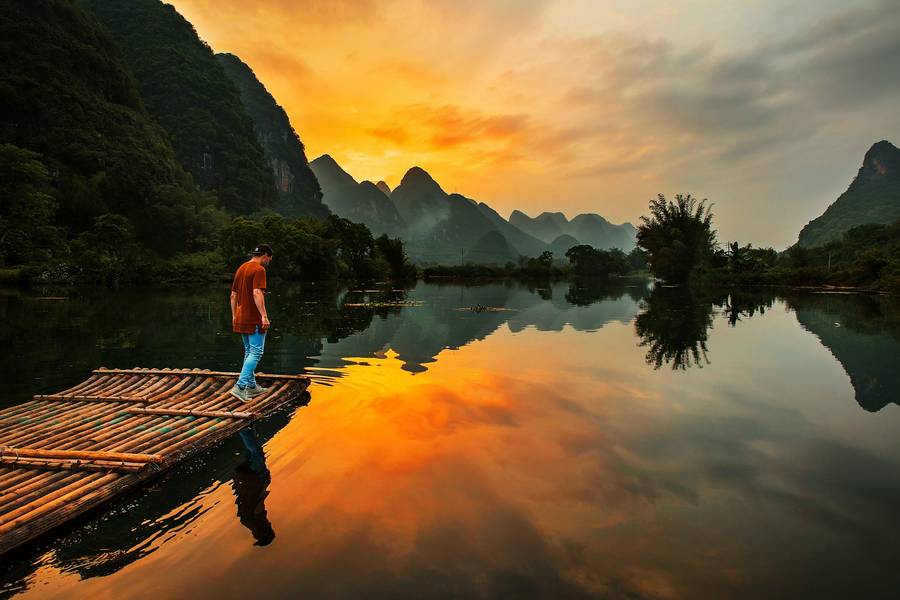
The landscape around Guilin in Guangxi Province is so distinctively beautiful that it appears on the Chinese 20 yuan note — a designation that speaks to how deeply these limestone peaks have been woven into the national imagination. The classic view, with conical karst hills mirrored in the placid surface of the Li River, appears in Chinese paintings and poetry dating back more than a thousand years and continues to draw visitors from around the world who want to see whether the real thing matches its artistic reputation. It does, and then some.
The Li River cruise from Guilin to the village of Yangshuo takes four to five hours and passes some of the most famous individual peaks along the way, including the iconic Elephant Trunk Hill visible from the city. In Yangshuo, the pace slows considerably — hire a bicycle to pedal through rice paddies between jagged peaks, or explore the limestone caves of the surrounding countryside. The Reed Flute Cave near Guilin, illuminated by coloured lights and containing more than 70 ink inscriptions dating back to 792 AD, is a remarkable subterranean detour that rounds out the Guilin experience beautifully.
Plan Your China Trip with Traveloka
Traveloka is Southeast Asia's leading travel platform, trusted by over 100 million users across the region to handle every element of a trip from first click to final check-out. Planning a journey to China involves a lot of moving parts — flights, accommodation, tours, airport logistics — and having all of it in one place makes the process considerably smoother. Whether you are booking a Great Wall tour for the morning after you land or securing a room in a Beijing hutong hotel months in advance, the platform's breadth of inventory ensures there is a suitable option at every price point.
For China travel, Traveloka offers flights connecting Australian cities to Beijing, Shanghai, and Chongqing, along with an extensive range of hotels spanning budget guesthouses to luxury five-star properties in every major destination covered in this guide. The activities catalogue covers must-do experiences including Forbidden City ticket reservations, Mutianyu Great Wall tours, and Li River cruises, so you can lock in your itinerary before you travel. Travel insurance and eSIM data plans round out the offering for travellers who want full coverage and connectivity from the moment they step off the plane.
One of Traveloka's strongest advantages is the ability to compare and filter options at a glance — whether you are searching for a hotel near a specific landmark, an activity that suits a particular budget, or a flight that connects through a preferred hub. Check the Traveloka promotions page regularly for seasonal deals and limited-time discounts on China bookings. Download the app, browse your options, and start building the China adventure that suits your schedule, your interests, and your budget.

Tags:
buildings in china
historical places in china
landmarks in china
Recommended Articles

15 Must-Visit Cities in China That Will Blow Your Mind in 2026

The Best Time to Visit Beijing: A Guide for Every Traveler

7-Day Macau Itinerary: The Ultimate 2026 Guide to Asia's City of Contrasts

7 Best Historical Sites in China: From the Great Wall to the Terracotta Army

10 Best Places to See Shanghai's Skyline in 2026

A Culinary Journey Through Shanghai