


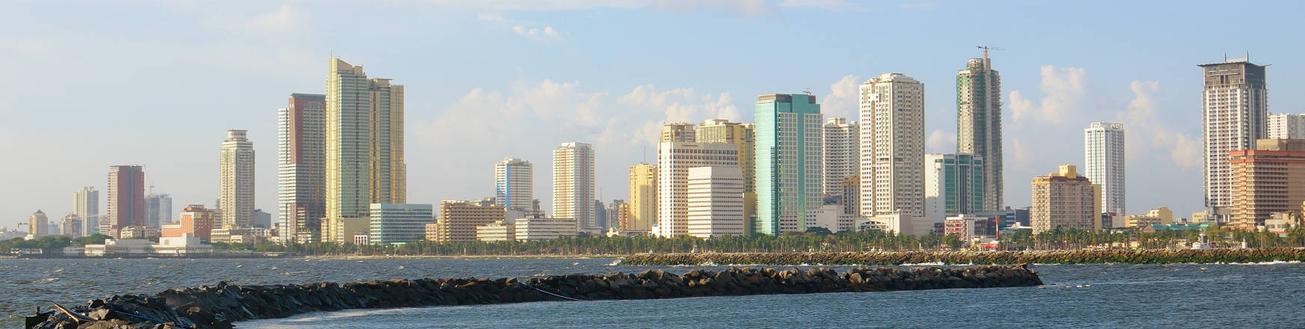
Davao to Manila Flight
Search and book cheap flight tickets from Davao to Manila


What to Know Before You Fly from Davao to Manila
Shortest flight duration
1 hr(s), 45 mins
Davao to Manila Flight Schedule
Airline | Departure Time | Arrival Time | Origin airport | Destination airport | |
|---|---|---|---|---|---|
 Philippine Airlines | 08:45 | 10:30 | Davao (DVO) | Manila (MNL) | Book flight |
 Cebu Pacific | 08:50 | 10:50 | Davao (DVO) | Manila (MNL) | Book flight |
Cebu Pacific | 11:30 | 13:35 | Davao (DVO) | Manila (MNL) | Book flight |
Philippine Airlines | 15:35 | 17:40 | Davao (DVO) | Manila (MNL) | Book flight |
Cebu Pacific | 16:40 | 18:45 | Davao (DVO) | Manila (MNL) | Book flight |
Cebu Pacific | 17:25 | 19:30 | Davao (DVO) | Manila (MNL) | Book flight |
Philippine Airlines | 17:25 | 19:15 | Davao (DVO) | Manila (MNL) | Book flight |
Cebu Pacific | 21:30 | 23:35 | Davao (DVO) | Manila (MNL) | Book flight |
Cebu Pacific | 22:10 | 00:15 (+1 day) | Davao (DVO) | Manila (MNL) | Book flight |
Philippine Airlines | 23:20 | 01:10 (+1 day) | Davao (DVO) | Manila (MNL) | Book flight |
Davao to Manila Fares Month by Month
Davao to Manila Flight FAQ
Davao-Manila flights take around 2 hours 5 minutes, covering roughly 960 kilometers. Every scheduled flight on this route is nonstop.
Cebu Pacific and Philippine Airlines operate nonstop Davao-Manila flights. AirAsia Philippines does not currently fly this route in either direction.
In the days immediately following Kadayawan, held every third week of August, visitors who flew in for the festival head back to Manila and elsewhere, firming up fares on this specific leg.
No — this is a domestic route, so a valid government-issued ID is all that's required at check-in. No passport or visa is needed.
Travelers who spent a weekend in Davao for a family event or holiday tend to book the last flights of Sunday and the first ones of Monday to be back in Manila for the work week, tightening fares on those specific slots.
Yes, a recliner-style business cabin with extra pitch and priority boarding, the same configuration it flies outbound. There's no lie-flat seat on this route. Cebu Pacific flies it as economy-only.
Flights from Davao to Manila
Davao to Manila, Mindanao's Link to the Capital
Medical travel on this leg has shifted in recent years — Davao's own Southern Philippines Medical Center has steadily built up specialty centers of its own, including a dedicated kidney and transplant institute, specifically to cut down on the number of Mindanao patients who previously had no option but to fly to Manila for that level of care. What still routes through this leg today tends to be the rarest, most complex referrals to national specialty centers like the Philippine Heart Center or the National Kidney and Transplant Institute, rather than the routine specialized treatment Davao itself increasingly handles in-house. Undas, the early-November All Saints' long weekend, and the days after Kadayawan in late August both see a reverse version of the same travel pattern — people who came home to Davao for the occasion heading back out again.
Flight Fares from Davao to Manila
Return fares on Traveloka start from ₱ 2,590.98. Fares into Manila tend to firm up on Sunday evenings and Monday mornings specifically, as travelers who spent a weekend in Davao for a family event or holiday head back to the capital ahead of the work week — a pattern that runs opposite to the outbound leg's own peak timing.
How Prices Move Across the Year
The days immediately following Kadayawan, held every third week of August, are this route's clearest seasonal spike, as visitors who flew in for the festival make their way back to Manila and elsewhere. A similar, larger surge follows the Christmas-to-New-Year stretch, driven by Manila-based Davaoenos heading back after the holidays. Outside those two windows, fares track an ordinary pattern without a single standout cheap month.
Daily Departure Patterns
The first flight or two of the morning carry the heaviest same-day-business-trip demand on this leg, as travelers who flew down to Davao and back in a single day cluster around the earliest departure available. Midday and evening flights generally hold more available seats, mirroring the outbound route's own quieter midday stretch.
Airlines on the Davao-Manila Corridor
AirAsia Philippines has never added a nonstop Davao-Manila service on either direction, leaving Mindanao's biggest city-pair route to these two alone.
Nonstop Service and Flying Time
With well over a dozen combined departures a day, this is one of the domestic network's routes where a cancelled flight rarely forces an overnight wait — same-day rebooking onto Cebu Pacific or Philippine Airlines' next available seat is realistic on most days. The flight itself runs 1 hours 45 minutes at its fastest, nonstop only, covering roughly 960 kilometers — enough distance that this ranks among the longer point-to-point hops in the domestic network, not a short hop just because both cities sit within the Philippines.
Flying Out of Davao
Francisco Bangoy International Airport (DVO)
Davao's airport sits about 11 kilometers from downtown, a 20 to 30-minute taxi or Grab ride depending on traffic. Travelers coming from Samal Island should budget the pump-boat crossing back to Sasa Wharf plus the onward ride to the airport as one combined block of time rather than timing the boat and the flight independently. Because this route's earliest morning flights are its most heavily booked, arriving with a standard buffer rather than cutting it close matters more here than on a route with a flatter departure schedule. The terminal building itself dates to a 2003 modernization — a Malay-inspired design roughly four times the size of the original 1980 terminal it replaced — so the check-in and gate areas have more breathing room than some of the Philippines' older provincial airports.
Arriving in Manila
Ninoy Aquino International Airport (MNL)
Onward travel into the city runs by metered taxi or Grab, since there is no dedicated airport train; expect roughly 20 minutes to Makati late at night, stretching well past an hour during the evening rush.
Cabin Classes on This Route
If comfort matters more than price on this leg, Philippine Airlines is the only carrier worth checking — Cebu Pacific doesn't sell anything beyond standard economy. What PAL offers, though, is a step below what the same airline puts on its longer international flights: more pitch and boarding priority up front, yes, but a recliner rather than a bed. Save the expectation of a genuinely flat seat for PAL's long-haul network instead.
Things to Do in Manila
For travelers with a stopover before an onward flight, Intramuros' Spanish-era walls and Fort Santiago sit a short walk from Rizal Park and its adjoining Manila Ocean Park, together forming Manila's densest single cluster of sights. Inside Intramuros, San Agustin Church, completed in 1607 and the oldest stone church in the country, was the only building in the walled city to survive World War II bombing intact and has carried UNESCO World Heritage status since 1993 as one of the Philippines' four Baroque churches. Binondo, the world's oldest Chinatown, adds a food-and-market district within the same general stretch of the city. The Mall of Asia complex, further along Manila Bay, is a common choice for a bayside sunset before a late flight, given how close it sits to NAIA relative to the older city core. For a business trip with almost no free time, even a two-hour gap is enough to see the harbor view from the Mall of Asia grounds without venturing far from the airport corridor.
Festivals and Events
The Feast of the Black Nazarene, every January 9, is Manila's largest annual religious event, with millions joining the Traslación procession from Quirino Grandstand to Quiapo Church. Manila Day, June 24, commemorates the city's 1571 founding as a special non-working holiday. Undas, the All Saints' and All Souls' Day weekend at the start of November, is one of the busiest travel periods on the entire domestic network, Davao-Manila included, as families travel between home provinces and the capital in both directions at once.
Where to Stay in Manila
Makati remains the default for business travelers on a short Manila trip, central and well-connected to the city's corporate district. BGC offers a newer, similarly business-oriented alternative with a stronger dining and nightlife scene, and its distance from the older parts of the city makes it a marginally calmer option if a work trip leaves little time or energy for anything beyond the hotel. Ermita and Malate, near Rizal Park and Manila Bay, suit travelers combining a short business trip with some sightseeing, at a lower price point than either Makati or BGC. Quezon City, further from the airport but with a large hotel selection near its university belt, works best for longer stays where the extra transfer time matters less.
Travel Tips for Davao-Manila Flights
This is a domestic flight, so only a valid government-issued ID is needed at check-in — no passport or visa required. Currency and time zone are identical in both cities. Travelers connecting through Manila onward to an international flight should confirm whether the international leg is ticketed through or booked separately, since that decides how baggage transfer and any rebooking are handled if the Davao-Manila leg runs late. NAIA's four terminals aren't linked by any airside walkway or train, so a self-transfer from the domestic side to the international terminal means exiting through arrivals and getting a taxi or shuttle across airport grounds — worth budgeting at least three hours between flights, more if road traffic between terminals is heavy, rather than assuming a same-airport connection is as simple as walking between gates.
Alternative Routes
If Mindanao is one stop on a broader domestic trip rather than the final destination, Davao to Cebu is a direct alternative that reaches the Visayas without routing back through Manila first. Every other domestic connection out of Davao is listed on Traveloka's Philippines flight page.
Why Book Davao to Manila on Traveloka
Because this leg often gets booked as one part of a longer plan — a connection onward internationally, a medical appointment, a family visit timed around a holiday — Easy Reschedule is worth having active before you commit to a date, since any one of those plans can shift the whole itinerary. A Price Alert still helps narrow the choice between Cebu Pacific and Philippine Airlines without checking fares manually. GCash and over-the-counter payment are both accepted at checkout alongside the standard cards.
Davao to Manila Flight Facts
Flight Duration | 1 hr(s) 45 mins |
Airport in Davao | |
Airport in Manila |
Popular Airline




























Have your dream trip at your fingertips. Get The App.


