


Best Time to Visit Palawan, Philippines: A Season-by-Season Guide


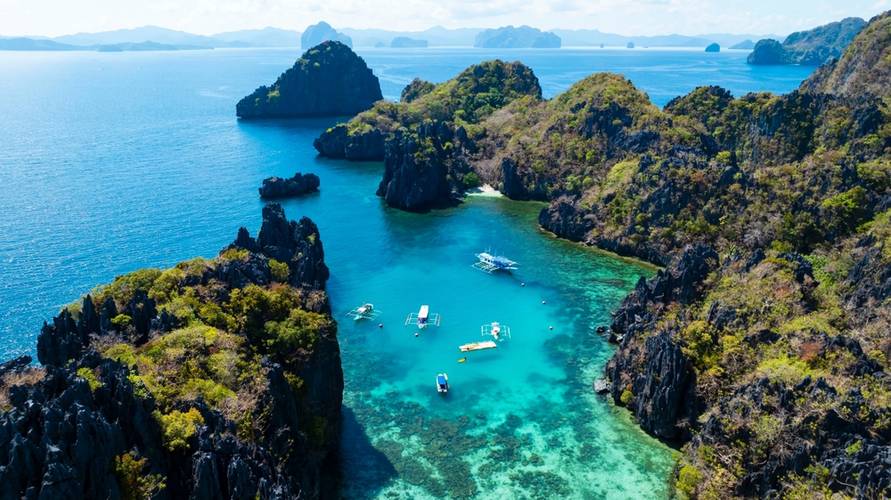
Palawan sits at the western edge of the Philippine archipelago, stretching between the South China Sea and the West Philippine Sea like a long, forested spine fringed with white sand. It is widely regarded as one of the most naturally rich destinations in Southeast Asia, sheltering the UNESCO-listed Puerto Princesa Subterranean River National Park, the limestone-walled lagoons of El Nido, and the legendary shipwreck diving grounds of Coron. With so much on offer across such a large province, timing your visit makes a genuine difference to what you can see, do, and afford.
The short answer is that the dry season — November through April — delivers the calmest seas, clearest skies, and best conditions for snorkelling, island hopping, and open-water diving. But every month has something to recommend it, and understanding the nuances across Palawan's distinct sub-destinations helps you choose the window that suits your style of travel. This guide covers weather patterns, month-by-month conditions, top things to do in each season, and the practical details that make the difference between a good trip and an exceptional one.
Whether you are planning a first visit to Puerto Princesa or returning to explore the more remote corners of Coron and Port Barton, you will find accommodation at every price point across the island through hotels listed on Traveloka, from beachfront resorts to boutique guesthouses inland.
Finding a place to stay that matches your base and budget is one of the first steps in planning a Palawan trip. Here are some well-regarded options across the province that suit different itineraries and price points.
1. Understanding Palawan's Two Main Seasons
Palawan experiences two broadly defined seasons: a dry season running from November to May, and a wet season spanning June to October. Unlike some Philippine destinations where the wet season brings persistent, day-long rain, Palawan during its wetter months more often delivers sunny mornings with afternoon and evening showers, making short trips and morning activities still very much possible. The wettest months of all are September and October, when rainfall is heaviest and some tour operators in El Nido and Coron scale back or suspend operations.
Temperatures remain warm year-round, hovering between 25°C and 32°C regardless of season, so the key variable is not heat but rather sea conditions, rainfall, and tour availability. The dry season brings flat, glass-like water ideal for crossing open channels between islands, while the wet season can see swells that make inter-island boat travel uncomfortable or unsafe on certain routes. For El Nido and Coron in particular, most operators recommend visiting between November and May for the best chance of calm crossings.
Dry Season: November to May
The dry season delivers the conditions Palawan is famous for: crystalline water with visibility sometimes exceeding 20 metres, calm channels for open bangka boats, and long stretches of uninterrupted sunshine. December through February is pleasantly cooler, with temperatures in the mid-to-upper 20s, making it ideal for trekking into Palawan's forests and exploring coastal trails without exhausting heat. March and April bring slightly warmer temperatures and are considered the peak period for underwater visibility at dive sites around Coron and El Nido.
May is a genuine shoulder month: the dry season weather largely holds, crowds begin to thin from the peak holiday rush, and accommodation prices ease slightly before the June rains arrive. It is an excellent time for travellers who want reliable conditions without the school-holiday crowds of December and January.
Wet Season: June to October
June and July are the start of the wet season but still offer decent windows of activity, particularly in the mornings. August through October sees the most consistent rainfall and the occasional typhoon path, so it pays to monitor weather forecasts carefully if you are travelling during these months. Some resorts and tour operators reduce their schedules, but Puerto Princesa — the provincial capital in central Palawan — is more sheltered than the northern areas and generally remains accessible year-round.
The wet season does bring one major advantage for budget-conscious travellers: discounts of 40 to 60 percent on accommodation and tour packages are common from June through August. Travellers who are flexible with their daily plans and comfortable with the possibility of a weather-related cancellation can find the wet season genuinely rewarding, particularly for caving, overland exploration, and cultural visits that do not depend on sea conditions.
2. Month-by-Month Breakdown
Understanding how conditions shift across the calendar year helps you match your travel dates to your priorities — whether that is wreck diving in Coron, island hopping in El Nido, or exploring the underground river near Puerto Princesa.
November to January
November marks the start of the dry season and one of the best overall windows to visit. Seas settle after the wet months, diving visibility improves dramatically, and accommodation availability opens up before the peak Christmas holiday period. December and January bring the heaviest tourist traffic of the year, particularly around El Nido and Coron, as both domestic and international visitors descend during the festive season. Booking accommodation and tours well in advance is essential for these two months, and prices reflect peak demand.
February and March
February and March are widely considered the sweet spot of the Palawan calendar. Rainfall is at its annual low, sea temperatures sit comfortably around 27°C to 28°C, and diving visibility peaks — making these two months the best for exploring Coron's shipwrecks and El Nido's underwater cliffs. Crowds are lighter than December and January but the facilities and tours are fully operational. Temperatures on land are comfortable without the sapping heat of April, making walking tours, forest treks, and overland excursions to remote beaches genuinely pleasant.
April and May
April is the hottest month of the year across Palawan, with temperatures often reaching 33°C to 34°C during the afternoon, so beach and water activities become the natural focus. It remains firmly in the dry season, and sea conditions stay calm, making it excellent for snorkelling, kayaking, and island hopping. May transitions into the shoulder season: the heat eases slightly, tour prices begin to drop, and visitor numbers thin out noticeably. Travellers arriving in late May may encounter the first light rains, but the main dry-season activities remain accessible throughout the month.
June to August
Wet season sets in by June, and while morning tours often still run, afternoon activities are more likely to be affected by rain. June and July tend to be wetter in the north (El Nido and Coron) while Puerto Princesa remains more sheltered. August is when typhoon risk increases, though Palawan sits just south of the most common typhoon tracks and is less frequently impacted than the Visayas or Luzon. The trade-off — lower prices, fewer crowds, and a lush, vivid green landscape — makes the early wet season an attractive option for adventurous travellers who plan flexible itineraries.
September and October
September and October are the wettest months across all of Palawan and the most challenging for travel logistics. Many inter-island boat routes operate at reduced frequency or suspend departures when swells are high, and some beachfront properties close for maintenance or renovations. Those who do visit during this period often focus on Puerto Princesa and its inland attractions, which remain accessible even when northern waters are rough. It is, however, the quietest and most affordable time of year, and the province takes on a wild, untouched character that seasoned travellers find compelling.
3. Top Things to Do in El Nido
El Nido sits at Palawan's northern tip, framed by dramatic limestone karst towers and sheltered by the waters of Bacuit Bay. It is the province's most celebrated destination for island hopping, and visiting during the dry season unlocks the full range of experiences on offer — from paddling through hidden lagoons to snorkelling above shallow coral gardens.
Island Hopping Tour Routes
El Nido's classic island-hopping routes — grouped as Tour A through Tour D — visit different combinations of lagoons, beaches, caves, and snorkelling spots. Tour A is the most popular, covering the Big Lagoon, Secret Lagoon, and Shimizu Island, and is best undertaken on a calm dry-season morning when the boat crossing from El Nido town is smooth and the lagoon water is at its most transparent. Tour C ventures further, reaching the Matinloc Shrine, Secret Beach, and Helicopter Island, and is ideal for March and April when seas are at their flattest and the shallow reefs are in perfect condition for snorkelling.
Boat departures from El Nido town are typically scheduled in the early morning, and most full-day tours include a beach lunch cooked on site by the crew. An environmental fee — currently around PHP 400 per person — is collected at the national park entrance and contributes to reef conservation and marine patrol operations. Travellers who book tours through a reputable local operator generally receive briefings on no-touch snorkelling etiquette and reef protection, which helps preserve the marine environment.
Sea Kayaking the Lagoons
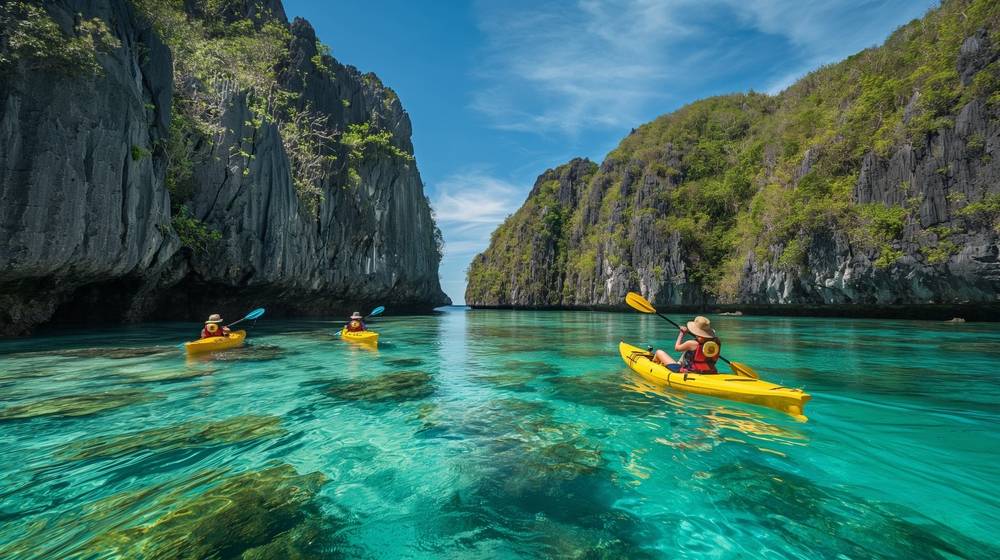
Paddling a sea kayak through El Nido's semi-enclosed lagoons is one of the most serene ways to experience the landscape. The Big Lagoon and Small Lagoon are both accessible by kayak, and in the calmer months of February and March the water inside the lagoons can be completely still, reflecting the encircling limestone walls in remarkable detail. Early mornings before the group tour boats arrive are the quietest time to paddle, with only the sound of dripping water from the limestone overhangs. Kayak rentals are available at the lagoon entrances, and most island-hopping tours include kayak access as part of the itinerary.
Trekking and Viewpoints
El Nido town sits at the base of a series of limestone hills, and short trekking trails lead to elevated viewpoints looking out over Bacuit Bay and the surrounding islands. The Taraw Cliff viewpoint is the most dramatic, requiring a moderately demanding climb that is best attempted in the dry season cool of early morning. November through February is the ideal window for this kind of land-based activity, when temperatures are comfortable and trail conditions are at their most stable. The view from the top — with dozens of island formations stretching out to the horizon — rewards the effort considerably.
4. Exploring Coron and Its Shipwrecks
Coron occupies the northern end of Busuanga Island, separated from El Nido by a stretch of open water. It is renowned worldwide for its WWII Japanese shipwrecks, which were sunk in September 1944 and now lie at depths of 10 to 43 metres throughout Coron Bay. Marine growth has transformed the wrecks into vivid artificial reefs, and they are regularly cited among the best wreck dive sites in all of Asia.
Wreck Diving Season
The wrecks are diveable year-round for experienced divers, but the best visibility — sometimes stretching to 25 metres — occurs between November and April during the dry season. February and March are particularly favoured by technical divers and underwater photographers, when plankton levels are low and natural light penetrates the shallower wreck sections cleanly. Even novice and beginner divers can access several of the shallower wrecks, including the Skeleton Wreck visible through snorkelling from the surface, making Coron a destination for a broad range of experience levels.
Kayangan Lake and Twin Lagoon
Kayangan Lake is consistently ranked among the cleanest lakes in Asia, nestled behind a limestone ridge accessible by a short but steep staircase climb. The effort is well worth it: the upper lake is a vivid turquoise, with a thermocline layer creating distinct temperature zones that divers and freediving enthusiasts find fascinating. Nearby Twin Lagoon connects two bodies of water through a low limestone arch that can be negotiated by swimming or kayak at low tide, and the inner lagoon beyond it is one of the most striking spots in all of Palawan.
Both Kayangan and Twin Lagoon are components of the standard Coron island-hopping tour, which also passes Barracuda Lake and several pristine beaches on the outer islands. The dry season months of December through April bring the flattest boat crossings and the clearest lake conditions. Boat tours from Coron town depart early in the morning and typically return by mid-afternoon, allowing time for an evening meal at one of the town's seafood restaurants.
Maquinit Hot Spring
Maquinit Hot Spring sits on the outskirts of Coron town and is one of the only saltwater hot springs accessible to visitors in the Philippines. Water temperatures sit around 38°C to 40°C, making it a particularly appealing stop after a full day of diving or island hopping when muscles need recovery. It is open year-round and makes a memorable evening excursion in the wet season as well, when the surrounding mangroves are lush and the cooler ambient temperatures make the warm water especially welcome.
Looking for guided experiences around El Nido and Coron that take the planning out of your itinerary? The range of bookable activities across Palawan covers everything from multi-day island-hopping packages to single-day cave and lagoon tours.
5. Puerto Princesa and the Underground River
Puerto Princesa is Palawan's capital and the most accessible entry point to the province, served by the island's main international gateway airport. It sits in the centre of Palawan and enjoys a more sheltered weather pattern than the northern sub-destinations, meaning it remains a viable base for exploration even during the shoulder months of May through July when El Nido and Coron tours are more weather-dependent.
The UNESCO Underground River
The Puerto Princesa Subterranean River National Park is a UNESCO World Heritage Site inscribed in 1999 and one of the New Seven Wonders of Nature. The navigable underground river stretches 8.2 kilometres through a vast limestone cavern system before emptying directly into the sea — a feature virtually unique worldwide. Visitors explore the cave via paddle boat, gliding past cathedral-like chambers up to 120 metres wide and 60 metres high, festooned with stalactites and stalagmites formed over millions of years. The standard boat ride covers roughly 4.5 kilometres of the river and takes approximately 45 minutes.
The park is located about 80 kilometres north of Puerto Princesa city and is most easily reached by van tour arranged through local operators, with the journey including a short bangka crossing to the cave entrance at Sabang. November through May is the optimal window for visiting, when the boat crossing to Sabang is calm and the cave interior is at its most accessible. Permits are required and have limited daily quotas, so booking in advance through a licensed tour operator is strongly recommended regardless of season.
Honda Bay Island Hopping
Honda Bay lies east of Puerto Princesa and offers a gentler introduction to Palawan's island-hopping culture compared to the more dramatic karst scenery of El Nido. A cluster of small coral islands — including Starfish Island, Pandan Island, and Luli Island — can be visited on a half-day or full-day boat tour, with snorkelling over healthy shallow reefs as the main attraction. The bay's sheltered position means it remains accessible for most of the year, making it an excellent option for travellers visiting during the shoulder or wet season. Honda Bay is also significantly less crowded than El Nido's most famous spots, providing a more relaxed and unhurried experience.
6. Port Barton and the Off-the-Beaten-Track Season
Port Barton is a small coastal village on Palawan's west coast, roughly halfway between Puerto Princesa and El Nido. It has become increasingly popular among travellers looking for the natural beauty of El Nido without the corresponding crowds and infrastructure. The road connecting Puerto Princesa to Port Barton has been progressively improved, but sections remain unpaved, and the journey takes four to five hours by shared van.
The best time to visit Port Barton is November through April, when the west-facing bay offers calm waters ideal for kayaking, snorkelling on the outer reef, and day trips to nearby islands including German Island and Exotic Island. The village has a distinctly unhurried atmosphere even during peak season, with a handful of beachfront guesthouses and locally run restaurants serving fresh-caught seafood. During the wet season, the road becomes challenging and the bay can be rough, but June and July often offer tolerable conditions for travellers with flexibility and a spirit for adventure.
Getting to Palawan is straightforward from most major Australian cities with a connection through Manila or Cebu. The main entry point is Puerto Princesa International Airport (IATA: PPS), and securing your flights early is particularly important for the December to February peak window. You can compare routes and fares here.
Discover Flights With Traveloka
Mon, 19 Oct 2026

Cebu Pacific
Manila (MNL) to Puerto Princesa - Palawan (PPS)
Start from 1.335.989 VND
Sun, 18 Oct 2026

Philippine Airlines
Manila (MNL) to Puerto Princesa - Palawan (PPS)
Start from 1.467.488 VND
Thu, 8 Oct 2026
Philippine Airlines
Cebu (CEB) to Puerto Princesa - Palawan (PPS)
Start from 1.054.236 VND
7. Practical Tips for Planning Your Palawan Trip
Getting to Palawan means flying into Puerto Princesa International Airport, which receives direct flights from Manila, Cebu, and several other Philippine domestic hubs. Onward travel to El Nido is available by van shuttle (approximately five to six hours), or by domestic flight from Puerto Princesa to Lio Airport near El Nido — a much faster option that is worth the additional cost during the peak season when road transport is heavily booked. Coron is served by its own airport on Busuanga Island, with flights operating from Manila and Cebu.
Within Palawan's main hubs, getting around is easy by tricycle — the local three-wheeled motorcycle taxi — or by rented motorbike for more independent exploration. For day trips to sites outside of town, renting a private vehicle gives you the flexibility to set your own pace, particularly valuable for reaching lesser-visited beaches and viewpoints before the group tours arrive. A car rental also makes the Puerto Princesa to Port Barton overland journey significantly more comfortable than relying on shared transport.
Getting from the airport to your accommodation is another detail worth sorting in advance, particularly if you are arriving late in the day. Pre-booking an airport transfer removes the need to negotiate with touts on arrival and ensures you have a reliable vehicle waiting regardless of flight delays.
What to Pack by Season
Regardless of when you visit, reef-safe sunscreen, a rash guard, and water shoes are essential for Palawan's beach and snorkelling activities. During the dry season cool months of December through February, a light layer for evenings is worth packing, as breezes can be fresh on the coast after sunset. In the wet season, a compact waterproof jacket and quick-dry clothing make a considerable difference to comfort when afternoon showers arrive unexpectedly. A dry bag is invaluable on any boat tour at any time of year, protecting cameras, phones, and documents from splash and occasional full immersion.
Booking Lead Times by Season
For travel during December, January, and the Easter period (March to April), accommodation and island-hopping tours in El Nido and Coron should be booked at least two to three months in advance. February and March are slightly easier to plan for at four to six weeks ahead, though popular resorts on the smaller islands still fill quickly. The wet season months from June through September require far less lead time, and last-minute bookings at significant discounts are common. Keeping an eye on Traveloka promotions is a practical way to find limited-time deals on accommodation and tour packages throughout the year.
Entry Requirements and Currency
Australian passport holders receive a 30-day visa-free entry to the Philippines, extendable at immigration offices in Puerto Princesa and El Nido. The local currency is the Philippine Peso (PHP), and while ATMs are available in Puerto Princesa and Coron town, El Nido has limited ATM availability and can run short during peak periods. Carrying sufficient cash from Puerto Princesa or Coron before heading to smaller destinations is strongly recommended. Credit cards are accepted at larger resorts but are not universally available at smaller guesthouses and tour operators.
8. Book Your Trip with Traveloka
Traveloka is Southeast Asia's leading travel platform, trusted by over 100 million users to plan and book travel across the region and beyond. Whether you are booking your first Palawan itinerary or adding a new sub-destination to a return visit, the app brings flights, hotels, activities, travel insurance, and eSIM connections together in a single platform, making it straightforward to manage every element of your trip from one place.
For Palawan specifically, the breadth of the app's accommodation listings spans budget guesthouses in Puerto Princesa to luxury overwater villas in El Nido, allowing you to mix and match stays across several bases without switching platforms. Activity bookings for island-hopping tours, cave permits, and multi-day packages can be locked in alongside your flights and hotels, so your schedule is confirmed before you land. The app also carries car rental options for overland travel and travel insurance for unexpected changes — a practical consideration for a destination where weather can shift itineraries quickly.
One standout feature for international travellers is the eSIM service, which delivers a local data connection that activates as soon as you land at Puerto Princesa — useful when you need to confirm accommodation addresses, check tour departure times, or navigate between stops without relying on Wi-Fi. Download the Traveloka app before your trip to compare fares, lock in accommodation across multiple Palawan destinations, and keep all your booking confirmations in one place for a seamless journey from departure to return.
Tags:
visit philippines
Explore the Best of Palawan

Palawan
Puerto Princesa
El Nido

Coron
Recommended Articles
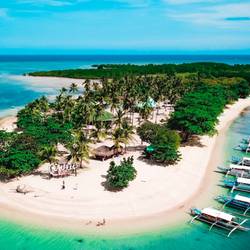
Best Views in Puerto Princesa: 10 Scenic Spots You Cannot Miss in Palawan
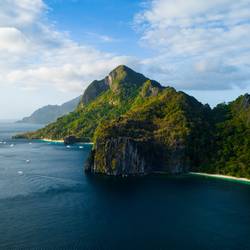
3 Days in El Nido, Palawan: The Complete Itinerary for Island Hopping, Lagoons, and Beaches in 2026

Where to Stay in Da Lat: 10 Best Hotels for Every Type of Traveler

10 Essential Singapore Travel Tips for First-Time Visitors

9 Most Romantic Places in Hanoi That Will Sweep You Off Your Feet

Where to Stay in Seoul: The 7 Best Neighbourhoods for Every Traveller


