


Borneo Travel Guide: Everything Malaysians Should Know Before Visiting Sabah & Sarawak


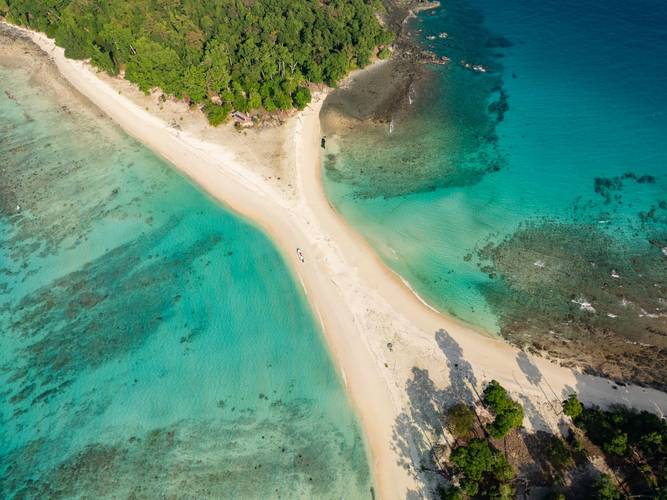
Ask most Malaysians what "going abroad" feels like, and Borneo will rarely come up, even though technically, it kind of is. Flying from KL to Kota Kinabalu or Kuching means crossing 650 kilometres of South China Sea, landing somewhere with its own immigration checkpoint and an entirely different pace of life from the Peninsula.
For a piece of Malaysia, Borneo genuinely feels like its own destination. Ancient rainforest older than the Amazon, orangutans swinging through Kinabatangan's riverbanks, and world-class diving off Sipadan, all under the same flag and currency as the rest of us. Here's everything worth knowing before you go.
Where Exactly Is Borneo?
Borneo is the third-largest island in the world, shared between Malaysia, Indonesia, and Brunei. The Malaysian portion covers two states, Sabah and Sarawak, collectively East Malaysia. Kota Kinabalu ("KK") is Sabah's capital, while Kuching serves as Sarawak's.
Why Visit Borneo?
Borneo's rainforest is estimated to be around 130 million years old, roughly 70 million years older than the Amazon. This is one of only two places on Earth where orangutans still roam wild, alongside proboscis monkeys, pygmy elephants, and the elusive clouded leopard.

Malaysia

Promenade Hotel Kota Kinabalu

8.2/10
•

Kota Kinabalu
RM 233
A few reasons Borneo deserves a spot on your itinerary:
Best Time to Visit Borneo
Borneo has a tropical climate, hot and humid year-round, with temperatures generally between 24°C and 32°C. The driest, most reliable stretch runs roughly March to October, the best window for climbing Mount Kinabalu, diving, and jungle river cruises.
November through February brings the northeast monsoon, with heavier rainfall along the east coast. That said, this period can be good for wildlife spotting along the Kinabatangan, since animals congregate more visibly near the river during drier spells. Peak season lines up with school holidays around June to August and December to February, so expect higher prices if you're travelling then.
Getting There, and a Quirk Worth Knowing
Malaysia Airlines, AirAsia, and Batik Air all operate frequent direct flights from Kuala Lumpur to both Kota Kinabalu and Kuching, with flight times of around 2.5 hours. Direct flights are also available from Penang and Johor Bahru, plus short hops between Kuching and Kota Kinabalu if you're covering both states.
Here's the part that surprises a lot of Peninsular Malaysians: Sabah and Sarawak retain their own immigration control under the terms of their 1963 entry into the Federation, a provision protected under Article 161E of the Federal Constitution. In practice, even Malaysian citizens flying from the Peninsula need to present a passport or MyKad and clear an immigration checkpoint on arrival. It's not a visa and takes only a minute or two, but it's worth knowing so you're not caught off guard at the airport.
Malaysia
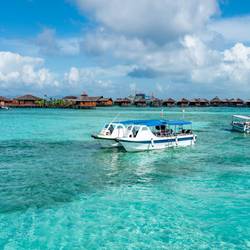
Mataking, Timba-Timba, Pom-Pom Snorkeling & Island Hopping - 8 Hours
8.2/10
Semporna
RM 267
Highlights You Shouldn't Miss
Climb (or Admire) Mount Kinabalu
Summiting Malaysia's highest peak is a two-day undertaking, with a mandatory guide, an overnight bunkhouse stay, and a pre-dawn push for sunrise from the summit. If climbing isn't for you, Kinabalu Park's lower trails and the cool air of Kundasang are worth the visit alone.
Dive Sipadan, Mabul, and Kapalai
Sipadan's access is tightly permit-controlled to protect the reef, so book ahead. Mabul and Kapalai nearby offer equally spectacular macro and muck diving for those who can't secure a slot.
Meet the Orangutans at Sepilok
Sepilok Orangutan Rehabilitation Centre offers a genuine chance to see rescued orangutans at feeding time, alongside sun bears next door.
Cruise the Kinabatangan River
Sabah's longest river winds through forested floodplains where boat safaris regularly spot proboscis monkeys, pygmy elephants, hornbills, and crocodiles, especially at dawn and dusk.
Explore Sarawak's Longhouses and Mulu Caves
Visiting a traditional Iban or Bidayuh longhouse offers a genuinely different cultural experience, while Gunung Mulu National Park, a UNESCO World Heritage Site, holds some of the largest cave chambers on Earth.
Island Hop Around Kota Kinabalu
Tunku Abdul Rahman Marine Park sits just off KK, with islands like Manukan offering easy snorkelling without travelling far from the city.
How Many Days Do You Need?
3 to 4 days is enough for a focused trip to either KK or Kuching, covering the city, a wildlife excursion, and a short island trip.
5 to 7 days allows time to properly tackle Mount Kinabalu or spend nights at a Kinabatangan River lodge without rushing.
10 days or more is ideal if you want to combine both Sabah and Sarawak, since domestic flights between the two make it easy to see both sides of Borneo in one trip.
Where to Stay
Most first-time visitors to Sabah base themselves in Kota Kinabalu, close to the airport, waterfront dining, and Jesselton Point for island ferries. If a beach resort is more your style, Tuaran's Pantai Dalit, about 45 minutes away, is home to some of Sabah's most established resorts.
In Sarawak, Kuching city centre, along the Sarawak River, is the natural base, putting you within easy reach of the Waterfront, Fort Margherita, and day trips to Semenggoh Wildlife Centre and Bako National Park.
A few solid picks to start with:
Shangri-La Rasa Ria, Kota Kinabalu — A five-star beachfront resort in Tuaran set within its own nature reserve.
Malaysia

Shangri La Rasa Ria Kota Kinabalu
9.1/10
•
Tuaran
RM 675
Sabah Oriental Hotel — A reliable, well-located mid-range option in KK city centre, close to the waterfront.
Malaysia

Sabah Oriental Hotel
7.9/10
•
Kota Kinabalu
RM 160
The Palace Hotel Kota Kinabalu — Affordable luxury with easy access to the city's business and dining districts.
Malaysia

The Palace Hotel Kota Kinabalu
8.1/10
•
Kota Kinabalu
RM 244
Pullman Kuching — An upscale stay in the heart of Kuching city centre, a strong base for Sarawak's cultural landmarks.
Malaysia

Pullman Kuching
8.1/10
•
Kuching City Center
RM 426
Puteri Wing, Riverside Majestic Hotel — A riverside stay along the Sarawak River, walking distance from the Waterfront and Fort Margherita.
Malaysia

Puteri Wing, Riverside Majestic Hotel
8.5/10
•
Kuching City Center
RM 362
*Please note that all prices mentioned are subject to change depending on season, availability, and each hotel's policies.
What to Eat in Borneo
Sabah and Sarawak both bring distinct flavours, shaped by Malay, Chinese, and indigenous influences. In Sabah, try Hinava, a Kadazan-Dusun raw fish salad, or Tuaran Mee, a springy noodle dish unique to the region. In Sarawak, Sarawak Laksa is the dish everyone talks about, a rich, spiced coconut broth entirely different from Penang's version, alongside Kolo Mee, found on nearly every corner of Kuching.
Seafood lovers should head to KK's waterfront stalls, where fresh catches are grilled by the water each evening.
Practical Tips Before You Go
Grab operates in both Kota Kinabalu and Kuching, the easiest way to get around either city. For trips further out, particularly to national parks or river lodges, arranging transport through your hotel or a local tour operator is usually more reliable than self-driving.
Pack for humidity and rain regardless of season, a light rain jacket goes a long way, and bring insect repellent for the rainforest or river areas.
Discover Flights With Traveloka
Tue, 20 Oct 2026

AirAsia Berhad (Malaysia)
Kuala Lumpur (KUL) to Kota Kinabalu (BKI)
Start from RM 266.57
Sat, 24 Oct 2026

Batik Air Malaysia
Tawau (TWU) to Kota Kinabalu (BKI)
Start from RM 101.70
Mon, 12 Oct 2026
AirAsia Berhad (Malaysia)
Sandakan (SDK) to Kota Kinabalu (BKI)
Start from RM 88.56
Is Borneo Worth Visiting?
Genuinely, yes. Few places let you climb Malaysia's tallest mountain, dive a world-class reef, and spend an evening in a traditional longhouse, all without a passport stamp from another country. Borneo more than earns a trip of its own.
Let’s Plan Your Trip with Traveloka!
If your dates are set, let Traveloka handle the logistics. Book your flight to Kota Kinabalu or Kuching, arrange an airport transfer, reserve your hotel, arrange a car rental, and add activities like a Sipadan dive trip or Mount Kinabalu climb, all in one app.
As Southeast Asia’s top-ranked, all-in-one travel app, Traveloka makes planning your trips effortless. With over 140 million downloads across nine countries, including Indonesia, Malaysia, Singapore, Thailand, Vietnam, the Philippines, Japan, South Korea, and Australia, it’s the region's most trusted choice for travel booking.

In This Article
Recommended Articles

7 Romantic Dining Restaurants in Penang for Couples
10 Best Tourist Attractions Near the Great Wall of China

Hangzhou to Shanghai: A Complete Transport and Travel Guide
Best Luxury Resorts in Da Nang for an Unforgettable Stay
Lazarus Island: A Complete Hassle-Free Travel Guide
Outdoor Activities in Da Nang: A Complete Guide


