


Flights Manila to Seoul Incheon
Find Cheap Flight Deals from Manila (MNL) to Seoul (ICN)

Cheap Flights Insights: Ticket Prices, Best Months & Duration Manila (MNL) to Seoul (ICN) (Korea, Philippines, Incheon)
Shortest flight duration
3 hr(s), 50 mins
Manila to Seoul Flight Schedule
Airline | Departure Time | Arrival Time | Origin airport | Destination airport | |
|---|---|---|---|---|---|
 Korean Air | 03:10 | 08:20 | Manila (MNL) | Seoul (ICN) | Book flight |
 Asiana Airlines | 03:10 | 08:20 | Manila (MNL) | Seoul (ICN) | Book flight |
Asiana Airlines | 12:05 | 16:55 | Manila (MNL) | Seoul (ICN) | Book flight |
Korean Air | 12:05 | 16:55 | Manila (MNL) | Seoul (ICN) | Book flight |
Korean Air | 12:20 | 17:25 | Manila (MNL) | Seoul (ICN) | Book flight |
 Philippine Airlines | 14:10 | 19:15 | Manila (MNL) | Seoul (ICN) | Book flight |
 Jeju Air | 23:20 | 04:30 (+1 day) | Manila (MNL) | Seoul (ICN) | Book flight |
Korean Air | 23:30 | 04:35 (+1 day) | Manila (MNL) | Seoul (ICN) | Book flight |
Asiana Airlines | 23:55 | 04:50 (+1 day) | Manila (MNL) | Seoul (ICN) | Book flight |
Korean Air | 23:55 | 04:50 (+1 day) | Manila (MNL) | Seoul (ICN) | Book flight |
Manila to Seoul Fares Month by Month
Manila to Seoul Flight FAQ
Return fares on Manila to Seoul Incheon start from USD 112.65. Five airlines compete on this route, so comparing a few carriers and nearby dates genuinely moves the price here.
The shortest scheduled Manila to Seoul flight time is 3h 50m. All five carriers on the route fly it nonstop.
Yes, five airlines fly Manila to Seoul Incheon nonstop: Philippine Airlines, Cebu Pacific, Jeju Air, Korean Air, and Asiana Airlines.
Philippine Airlines and Cebu Pacific fly it as Philippine home-market carriers, Jeju Air adds a Korean budget option, and Korean Air and Asiana Airlines complete the list as Korea's two full-service flag carriers.
With five carriers on the route, Manila-Seoul operates multiple times daily, with a genuine spread of departure times including options that land in Seoul in the evening.
January and February tend to be the softest fares, since Korean winter cools general leisure demand outside ski season. Cherry blossom season in early April and the autumn foliage weeks in October and November are consistently the most expensive.
Yes. Philippine passport holders need a tourist visa arranged in advance for South Korea — there's no visa-free or K-ETA option available, so apply through the Korea Visa Application Center or an accredited travel agency well ahead of your dates.
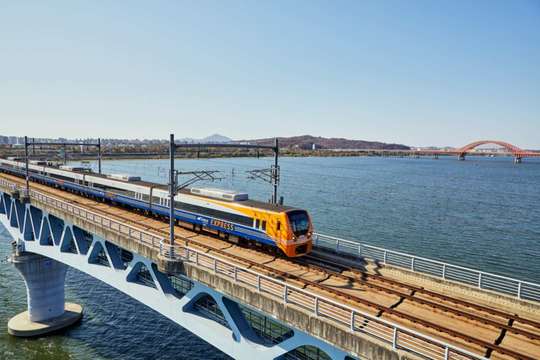
Flights land at Incheon International Airport, about 50 kilometers west of Seoul. The AREX express train reaches Seoul Station in roughly 43 minutes; the all-stops commuter version takes about 66 minutes and costs less.
Yes. Korean Air, Asiana Airlines, and Philippine Airlines each offer a business-class cabin on this route, typically bundled with a stronger baggage allowance and lounge access. Cebu Pacific and Jeju Air sell economy only.
A month or so of lead time works for most of the year. Book closer to two months out around cherry blossom season or the autumn foliage weeks, when both flights and Seoul hotels sell out fastest.
Flights from Manila to Seoul
Manila to Seoul: the most contested route out of NAIA's East Asia bank
Five airlines fly Manila to Seoul Incheon nonstop, split between the two home-market Philippine carriers and three Korean airlines — an unusually deep field for a route just under four hours long. That density exists because Korean travel has become one of the biggest leisure obsessions among Filipino travelers over the past decade, driven by K-drama and K-pop tourism as much as by shopping and food, and the competition keeps fares genuinely comparable across a wide range of schedules and departure times. Few Manila routes of this length see five carriers stacked against each other so evenly, which makes Seoul something of an outlier on Traveloka's East Asia board, and a genuinely good route to check twice before assuming the first fare you see is the best one available.
What a Manila-Seoul ticket costs
Return fares start from USD 112.65. Philippine Airlines and Cebu Pacific price it as a home-market route, while Jeju Air brings a Korean budget option and Korean Air and Asiana Airlines round it out as the two Korean full-service flag carriers. With this much competition on one pair, comparing a few nearby dates and carriers before booking genuinely moves the price, more so than on a route with only two operators. A month or so of lead time works for most of the year, though pushing that closer to two months is worth it around cherry blossom season or the Korean autumn foliage weeks, when both flights and hotels in Seoul book out fastest.
How Manila-Seoul fares move through the year
Korea's cherry blossom season in early April and its autumn foliage weeks in October and November are the two biggest seasonal spikes, both heavily promoted travel periods that draw visitors from across the region at once. Korean school holidays in late July and August add a second peak, and winter brings its own smaller surge around ski season in Gangwon Province. December's holiday weeks are the other reliable high point. Late spring after cherry blossom season clears, and late autumn once the foliage rush passes, tend to be the calmer, cheaper windows. Korean winters run genuinely cold by Philippine standards, which keeps general leisure demand lower outside the ski-season pockets, making January and February a reliably softer stretch for fares too.
Best days and times to fly this route
Midweek departures, particularly Tuesday through Thursday, price below the Friday-to-Sunday leisure surge on this route. With five carriers running the route, there's a genuine spread of departure times across the day, including options that land in Seoul in the evening for travelers who'd rather start sightseeing fresh the next morning.
Airlines flying Manila to Seoul nonstop
Philippine Airlines and Cebu Pacific fly it as Philippine home-market carriers, each with their usual full-service and budget positioning. Jeju Air adds a Korean low-cost option with its own baggage and seat pricing structure. Korean Air and Asiana Airlines complete the list as Korea's two established full-service flag carriers, both offering a stronger baggage allowance and a business-class cabin as part of their standard fare structure on this route. Aircraft on the Korean full-service carriers skew wide-body more often than on the budget end, which is worth checking if seat width matters to you on a flight running close to four hours.
Direct flights and duration
All five carriers fly Manila to Seoul Incheon nonstop — there's no need to connect through another city for this pair. The shortest scheduled flight time is 3h 50m. With five options at similar duration, the deciding factor between carriers on this route usually comes down to price, baggage allowance, and departure time rather than the flight itself, so it's worth sorting Traveloka's results by departure time as well as price when comparing options.
Departing Ninoy Aquino International Airport
Seoul-bound flights leave from Ninoy Aquino International Airport, with Philippine Airlines generally out of Terminal 2 and the other carriers from Terminal 3. As a longer international sector with five carriers' worth of passenger volume, check-in queues can run heavier at peak departure banks, so build in extra time beyond what a short regional hop would need.
Landing at Incheon International Airport
Incheon International Airport sits about 50 kilometers west of Seoul, and the AREX train is the most direct link into the city — the express service reaches Seoul Station in roughly 43 minutes, while the all-stops commuter train takes closer to 66 minutes and costs less. Airport limousine buses run to major hotel districts across the city for travelers who'd rather not change trains with luggage, and metered taxis, while available, cost considerably more than either train option for the same distance and can also run into serious traffic depending on the time of day.
Cabin classes on this route
Korean Air and Asiana Airlines each offer a business-class cabin on their Manila-Seoul service, generally bundled with a stronger baggage allowance, lounge access, and priority boarding as standard on their fare structure. Philippine Airlines also offers a business option on this route. Cebu Pacific and Jeju Air sell economy only, which is what the majority of leisure travelers on this route actually book.
What to see and do in Seoul
Gyeongbokgung Palace, Seoul's largest and most iconic palace complex, hosts a free Royal Guard Changing Ceremony at its main gate several times daily and remains the default first stop for most visitors. Myeongdong combines the city's densest K-beauty shopping strip with a well-known street food scene, while Hongdae carries the youthful, creative side of the city with indie music venues and street art. Bukchon Hanok Village, a preserved traditional neighborhood between two of the city's main palaces, is a popular half-day add-on for travelers wanting a quieter, more visual counterpoint to Myeongdong's crowds. Namsan Seoul Tower, reachable by cable car from Myeongdong, gives a full-city skyline view and has become a well-known spot for couples to leave a padlock on the observation deck's fencing. Itaewon, historically the city's international quarter, offers a wider mix of global cuisine and nightlife than most other neighborhoods for travelers wanting a break from Korean food specifically.
Festivals and seasonal events
Cherry blossom season in early April turns Yeouido and several other riverside parks into the city's most photographed sight of the year, and hotel and flight demand rises to match. Seoul Welcome Week, an early-May program aimed specifically at foreign visitors with AI-guided tours and experiential activities around Myeongdong and Yeouido, has become a useful window for first-time visitors. Autumn foliage, peaking through October and into November, is the other major seasonal draw and the reason fares run high in that window.
Where to stay in Seoul
Myeongdong is the most practical first-timer base, central and walkable to several major sights with the city's deepest shopping and street food concentration. Hongdae suits travelers prioritizing nightlife and a younger crowd, while a stay near Gyeongbokgung puts you closest to the palace circuit and Bukchon's traditional streets. Gangnam, south of the river, carries a more upscale, business-district feel with strong shopping and dining but sits further from the historic palace sights. Yongsan, just north of the river and a short ride from Itaewon, is a quieter middle-ground base with easy AREX access back to Incheon for an early departure, and generally runs cheaper than a comparable room in Myeongdong or Gangnam.
Visa, currency, and other travel tips
Philippine passport holders need a visa arranged before departure for tourist travel to South Korea — there's no visa-free or K-ETA option available to Filipino travelers, so apply for a tourist visa through the Korea Visa Application Center or an accredited travel agency well ahead of your dates, and budget at least a week or two for processing depending on the season. South Korea uses the Korean Won, with ATMs widely available across all of the neighborhoods above. Seoul sits one hour ahead of Manila, a small enough gap that jet lag is rarely an issue on either leg. Pack for the season specifically — Seoul's winters run well below anything Manila sees and summers are hot and humid with a genuine monsoon stretch in July, both a bigger swing than the flight time might suggest, so check the seasonal forecast before packing rather than assuming Manila-style year-round warmth.
Other routes worth considering from Manila
For a broader East Asia itinerary, Manila's nonstop links to Tokyo and Taipei sit in a similar flight-time band and pair naturally with a Seoul leg on a multi-city trip. See Traveloka's South Korea country page for more on entry requirements and other Korean cities.
Why book Manila-Seoul on Traveloka
With five carriers competing on fares and schedules, Traveloka's side-by-side comparison is genuinely useful for finding the best combination of price and departure time on this route. Price Alert flags a drop the moment it appears, Easy Reschedule covers eligible fares if your Korea trip dates shift, and Filipino travelers can check out with local cards, GCash, and other familiar payment methods rather than needing an international card.
Manila to Seoul Flight Facts
Flight Duration | 3 hr(s) 50 mins |
Airport in Manila | |
Airport in Seoul |
For all your unique travel choices, we got you
Popular Routes from Ninoy Aquino International Airport
Popular Routes to Seoul
Popular Airlines
Popular Nearby Airports
Countries in this Route
Flight Status on this Route
Other Popular Destinations
Top International Destination
Top Flight Airport
Popular International Flight Routes
Popular Country

Popular Airline




![[50%OFF] South Korea 5G eSIM | Coverage by SK Telecom/LGU+ | Support All AI & TikTok | DayPass/Total | QR code](https://ik.imgkit.net/tvlk/xpe-asset/GZtqLuOqb-33qvDmG1FcMeN1eFEH7PVvlsdFr2AUBT39jzSxIGG5kZNhhHY-p7nw/3446381513903/-50-OFF-South-Korea-5G-eSIM-Coverage-by-SK-Telecom-LGU-Support-All-AI-amp-TikTok-DayPass-Total-QR-code-a5d33c5f-f0ec-41e5-8ead-f8cf0ca3c47d.jpeg?tr=q-60,c-at_max,w-540,h-960&_src=imagekit)

Always in the know about travel tips, recommendations, and Traveloka’s latest promos.


