


Best Time to Visit China: A Malaysian's Guide to Weather, Costs, and Visa-Free Travel (2026)


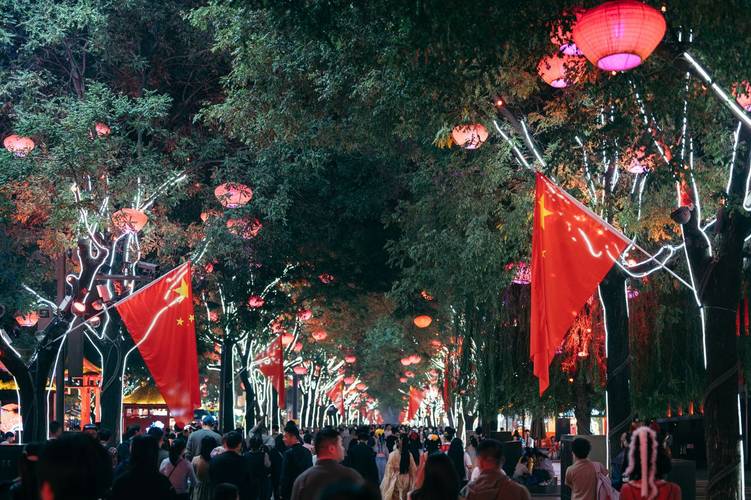
China is massive. We're talking about a country that spans snowy northern plains to steamy southern coastlines, which means "best time to visit" really depends on where you're headed and what you want to do.
If your itinerary covers the classics like Beijing and Xi'an (northern China) or Shanghai, Guangzhou, and new favourite Chengdu (southern China), timing your trip around spring or autumn will save you from both bone-chilling winters and sweltering, rain-soaked summers. Add in the fact that Malaysians can now enter visa-free, and China has genuinely never been easier to plan for.
This guide breaks things down by season so you know exactly what to pack and expect, plus covers the practical stuff Malaysian travellers need. Let's get your China trip sorted.
China's Seasons at a Glance
China's sheer size means weather varies a lot by region, but for popular tourist routes covering Beijing, Xi'an, Shanghai, Guangzhou, and Chengdu, here's the general pattern to expect throughout the year.
Spring (March–May): Mild and warming quickly across the northern and central regions (15°C–23°C). Southern areas warm up faster with pleasant weather, alongside occasional spring showers (20°C–28°C).
Summer (June–August): Hot, humid, and rainy in most regions. Daytime highs average around 30°C to 34°C nationwide, with frequent afternoon thunderstorms and peak rainfall in southern coastal zones.
Autumn (September–November): Cool, crisp, and dry nationwide. Widely considered the single most comfortable season to travel. Daytime averages hover around a pleasant 18°C to 25°C.
Winter (December–February): Freezing in the north (dipping below 0°C at night), chilly and damp in central regions (5°C–10°C), but pleasantly mild and dry down south (13°C–18°C), making southern China a popular winter escape.
Discover Flights With Traveloka
Wed, 30 Sep 2026

Shenzhen Airlines
Kuala Lumpur (KUL) to Beijing (PEK)
Start from RM 488.63
Tue, 29 Sep 2026
Shenzhen Airlines
Singapore (SIN) to Beijing (PEK)
Start from RM 509.43
Wed, 30 Sep 2026

China Eastern Airlines
Penang (PEN) to Beijing (PEK)
Start from RM 564.12
Best Time to Visit China
China genuinely rewards different travellers in different seasons, so here's a closer look at what each stretch of the year offers, plus what it'll cost you.
Spring (March to May) - Best for Blossoms and Sightseeing Without the Heat
Weather: Mild and gradually warming, average highs of 18°C–24°C, though early spring can bring occasional windy, dusty days in the north.
Best places and events to enjoy: Cherry blossoms in Wuhan and Beijing's Yuyuantan Park, peony season in Luoyang (April), the Qingming Festival (early April) for tomb-sweeping traditions, fresh green tea harvesting at West Lake longjing plantations in Hangzhou (late March–April), and the multi-phase Canton Fair in Guangzhou (April–May).
Cost: Moderate. Cheaper than peak autumn, though prices rise closer to the May Day holiday (early May), which sees domestic travel surge.
Summer (June to August) - Best for High-Altitude Escapes and Long Days
Weather: Hot and humid, average highs of 30°C–33°C in Beijing and Shanghai, with frequent afternoon thunderstorms and high rainfall, especially in the south.
Best places and events to enjoy: Late-night street food tours in Chengdu's Jinli Ancient Street, Pearl River evening cruises in Guangzhou, cooler high-altitude nature hikes in Zhangjiajie's National Forest Park, dragon boat races along local rivers during the Dragon Boat Festival (June), and scenic lake cycling around Qinghai Lake (July–August).
Cost: Generally lower for flights and hotels in northern cities, though it overlaps with the school holidays, so family-friendly attractions can get crowded.
Autumn (September to November) - Best for Comfortable Weather and Golden Foliage
Weather: Cool, crisp, and dry, average highs of 20°C–25°C in the north, slightly warmer and still occasionally rainy in southern coastal cities.
Best places and events to enjoy: The Great Wall and Fragrant Hills in Beijing, red maple leaves at Fragrant Hills in Beijing (October–November), terracotta warriors in Xi'an, cycling along the historic Ancient City Wall in Xi'an, mooncake tasting and lantern displays during the Mid-Autumn Festival (September or October, depending on the lunar calendar), and vibrant autumn foliage viewing at Jiuzhaigou Valley in Sichuan (October).
Cost: Highest of the year, particularly around China's National Day "Golden Week" (early October), when both prices and crowds peak significantly.

China

Universal Studios Beijing Tickets

8.0/10
Tongzhou
RM 321
Winter (December to February) - Best for Budget Travel and Festive Atmosphere
Weather: Cold and dry in the north, with Beijing averaging 2°C–4°C by day and dropping below 0°C at night; milder in the south, with Shanghai hovering around 8°C–10°C.
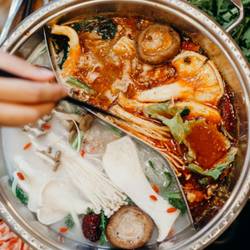
Best places and events to enjoy: Uncrowded morning panda viewing at Dujiangyan Panda Base near Chengdu, Colossal illuminated ice sculptures at the Harbin Ice and Snow Festival (January–February), traditional temple fairs and festive fireworks during Chinese New Year celebrations (late January or February), piping hot Sichuan hot pot dining in Chengdu, sunny coastal strolls in tropical Sanya (Hainan), and visiting outdoor winter flower markets in Guangzhou.
Cost: Lowest of the year outside Chinese New Year week itself, when domestic travel spikes and prices climb sharply for a short period.
Best Time to Visit China (If You Only Visit Once)
If you're only making the trip once, aim for September to November (autumn). The weather is comfortable and dry across most major destinations, the skies are clearer for photos, and you'll catch iconic sights like the Great Wall and Xi'an's ancient sites at their most photogenic. Just try to avoid the first week of October if you can.
Flight from Malaysia to China
Getting to China from Malaysia is easy, with multiple direct routes connecting Kuala Lumpur to major Chinese cities. Here's what to expect when booking your flight.
Flight Duration: Direct flights from Kuala Lumpur range from roughly 4 hours 15 minutes (to southern hubs) up to 6 hours 30 minutes (to northern hubs).
Airlines Serving the Route: Malaysia Airlines, AirAsia X, Batik Air Malaysia, China Southern Airlines, China Eastern Airlines, Air China, Xiamen Airlines, Shanghai Airlines, and Spring Airlines all operate non-stop flights between Kuala Lumpur and various Chinese cities, though AirAsia X is currently the only carrier flying direct to Xi'an.
Flight Frequency: Guangzhou is by far the busiest route, with around 75 direct flights a week (roughly 11 a day), it's typically the cheapest and easiest gateway into China from Malaysia. Chengdu follows with around 28–30 direct flights a week, while Beijing and Shanghai each see closer to 20–25 a week. Xi'an is served far less frequently, with just 3–7 direct flights a week. Booking around six weeks in advance tends to get the best fares, and flying on Tuesdays, Wednesdays, or Saturdays is generally cheaper. September is typically the cheapest month to fly overall, while Chinese New Year and Golden Week (early October) see fares climb noticeably.
Visa and Entry Requirements to China for Malaysian
Malaysians do not need a visa for short trips to China. Under China's unilateral visa-free policy, Malaysian ordinary passport holders can enter for tourism, business, or family visits without applying for a visa in advance, with the policy currently extended until 31 December 2026.
Stay duration: Visa-free entry allows a stay of up to 30 days per visit, provided the total visa-free days within any rolling 180-day period don't exceed 90 days.
Cost: Free. No visa fee applies for eligible short-term visa-free entry.
Requirements: A passport valid for at least six months, a confirmed return or onward ticket, proof of accommodation (hotel booking or invitation letter), and proof of sufficient funds for your stay.
Purpose limits: This visa-free policy covers tourism, business, family visits, and transit. If you're planning to work, study, or stay longer than 30 days, you'll still need to apply for the appropriate visa through the Chinese Embassy or a visa application centre.
Good to note: While the visa itself is no longer required, it's still worth registering your accommodation with local police within 24 hours of arrival if you're staying somewhere other than a hotel, as this is a standard requirement in China.
Always double-check the latest requirements on the Chinese Embassy in Malaysia's official website before you travel, as visa-free policies can be updated with little notice.
Halal Food in China
Most Chinese cities have a historic Hui Muslim quarter, so halal food is easier to find than most travellers expect. Just look for the "清真" (Qingzhen) sign on storefronts and menus.
In Beijing, head to Niujie in Xicheng District, home to the city's oldest mosque and over 100 halal eateries within walking distance of each other. In Shanghai, the Yu Garden and Old City area is the easiest base, since the neighbourhood mosque sits just steps from the city's most-visited sight.
In Guangzhou, Xiaobei Road (nicknamed "Little Arabia") near Xiaobei Metro Station Exit A is the city's Muslim quarter. In Chengdu, look around Huangcheng Mosque on Xiyu Street, where Sichuan Huangcheng Muslim Restaurant serves halal versions of local Sichuan dishes alongside classic Hui cuisine.
In Xi'an, the Muslim Quarter along Huimin Street, right by the Great Mosque and Bell Tower, is unmissable. You can check Lao Sun Jia, serving yangrou paomo (lamb bread soup) since 1898, a short walk from the mosque's main gate.
Best Hotels in China
Whether you're chasing Forbidden City views, want a reliable mid-range base, or just need a clean bed near the sights, China's major cities offer options across every budget. Here are four solid picks to check out on Traveloka Malaysia.
1. Regent Beijing, an IHG Hotel

Set just steps from the Forbidden City in Beijing's historic Wangfujing district, Regent Beijing, an IHG Hotel is a 5-star hotel blends grand, elegant interiors with genuinely attentive service, plus a soaring lobby lounge perfect for afternoon tea. It's an easy choice for travellers wanting a luxurious, centrally located base for sightseeing. Room rates: RM 808 - RM 1,983 per night
China

Regent BEIJING, an IHG Hotel
9.2/10
•

Wangfujing
RM 904
2. Jin Jiang Hotel Shanghai

A storied 5-star property in Shanghai's Jing'an district, Jin Jiang Hotel Shanghai blends heritage charm with modern comforts, complete with an on-site pool, spa, and multiple dining options. Its central location makes it a solid base for exploring Nanjing Road and the Bund. Room rates: RM 392 - RM 2,588 per night.
China

Jin Jiang Hotel Shanghai
8.5/10
•
Huangpu
RM 498
3. Holiday Inn Express Xi'an Bell Tower, an IHG Hotel

Holiday Inn Express Xi'an Bell Tower is a dependable 3-star choice right in the heart of Xi'an, within easy walking distance of the Bell Tower and Muslim Quarter. Expect clean, comfortable rooms, friendly English-speaking staff, and a solid breakfast spread to fuel a day of sightseeing. Room rates: RM 228 - RM 291 per night.
China

Holiday Inn Express XI'AN BELL TOWER by IHG
8.8/10
•
Beilin Qu
RM 187
4. Orange Hotel (Beijing Wangfujing)

Orange Hotel is a highly-rated 3-star budget hotel just steps from Wangfujing Pedestrian Street and a 10-minute walk to Tiananmen Square, with two metro lines (5 and 8) right nearby. Expect the clean, modern rooms, and friendly, English-speaking staff. Room rates: RM 354 - RM 627 per night.
*Please note that all prices mentioned in this article are accurate at the time of publication. Prices are subject to change at any time depending on the season, availability, and the hotel's policies.
Read More: 13 Best Halal Restaurants in Shanghai, China
Find the Best Time to Visit China with Traveloka
Book a flight to China and arrange your hotel, car rental, and activity with Traveloka. Enjoy special deals, hotel discount of up to 25%, free hotel cancellation, and easy flight rescheduling. Terms and conditions apply.
Traveloka is #1 All-in-one Travel App in SEA and #1 in cumulative downloads (2014 to 2025) among Travel Booking services apps (Source: SensorTower | All-in-one Travel App), with over 140M app downloads across 9 countries in Indonesia, Vietnam, Thailand, Malaysia, Singapore, Philippines, Japan, South Korea, and Australia. Book flights, hotels, and activities with 300+ Airline partners, Best Price Guarantee, 24/7 live agent support, and access to 2M+ hotels, over 2K Car Rentals & Airport Transfer providers in more than 50 countries, and 90K+ activities in one app. Download the Traveloka app on Google Play and the App Store.

In This Article


Recommended Articles
7 Best Historical Sites in China: From the Great Wall to the Terracotta Army
Best Time to Visit Tibet for Clear Mountain Views & Festivals
Best Time to Visit Shanghai: The Perfect Season for Every Adventure
14 Best Things to Do in Hangzhou for a Scenic China Getaway
13 Best Things to Do in Chongqing for an Unforgettable China Trip
Chengdu Food Guide: 10 Iconic Dishes Every Visitor Must Try


