Waikiki Beach: What It's Actually Like Before You Book


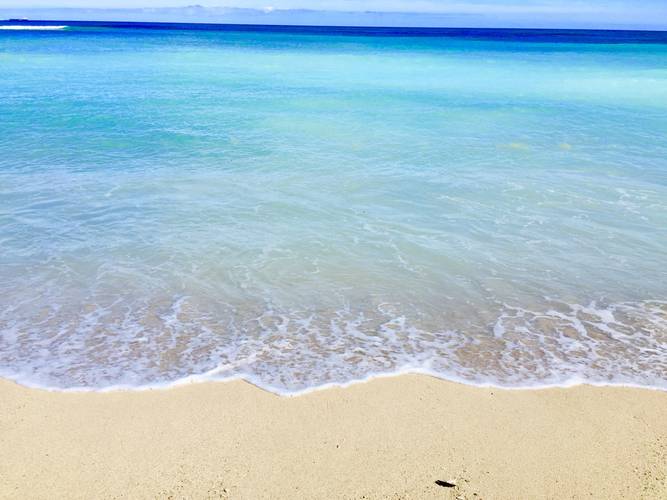
Waikiki Beach sits in Honolulu, on the south shore of Oahu, Hawaii, USA — not to be confused with the smaller, unrelated Waikiki Beach in Waikiki, Western Australia, or the Waikiki Beach at Cape Disappointment in Washington State. It's one of the most famous beaches in the world, but it's an urban resort strip, not a quiet tropical escape: expect calm, swimmable water in the central sections on a good day, real crowds, water that's often murky rather than clear, and a genuine risk of unsafe conditions after heavy rain.

Discover flight with Traveloka
Wed, 23 Sep 2026

AirAsia Berhad (Malaysia)
Kuala Lumpur (KUL) to Singapore (SIN)
Start from RM 112.32
Wed, 16 Sep 2026
AirAsia Berhad (Malaysia)
Penang (PEN) to Singapore (SIN)
Start from RM 126.63
Thu, 24 Sep 2026
AirAsia Berhad (Malaysia)
Kuching (KCH) to Singapore (SIN)
Start from RM 127.18
What Waikiki Beach Is Actually Like
The first thing to know: "Waikiki Beach" isn't one beach. It's a roughly 2.4km chain of adjoining sections along Kalakaua Avenue — Fort DeRussy Beach, Gray's Beach, Royal-Moana Beach, Kuhio Beach, Queen's Surf Beach, and Sans Souci Beach — each with slightly different conditions. The busiest, most-photographed stretch (Royal-Moana, fronting the big hotels) is also the one most reviewers call overcrowded, and finding towel space there on a normal day is genuinely difficult.
On water clarity, be prepared to recalibrate: a nearshore reef and breakwall make the central section calm, almost pool-like, but many visitors describe the water as murky rather than the clear turquoise associated with Caribbean or Southeast Asian island beaches. That's partly high swimmer volume kicking up sand and partly the reef sitting close to shore — it's not a defect, just not what the postcards imply.
The more serious caveat is the Ala Wai Canal, a century-old drainage canal that empties near the beach's western end. After heavy rain, runoff and bacteria levels spike, and Hawaii's Department of Health recommends staying out of the water for about 72 hours — even if it still looks clear. The western end near Hilton Hawaiian Village is the highest-risk zone; the eastern end toward Queen's Surf, Sans Souci, and Diamond Head clears faster and is generally the cleaner choice. One myth worth debunking: the sand is not imported from Australia, despite what you'll read in visitor forums — it's periodically renourished with sand sourced from nearby offshore deposits. Day-to-day, the beach itself is municipally maintained and not littered, but it is intensely developed, with high-rises, malls, and bars lining the shore directly, so expect constant ambient noise rather than a secluded feel. Unattended belongings are a real theft risk.
Getting There
There's no direct flight from Singapore to Honolulu, and the total journey is one of the longer hauls in commercial travel — realistically 18 to 24 hours door to door. The two practical routings are via the US West Coast (Singapore Airlines flies SIN–LAX or SIN–SFO nonstop, then a roughly 5–5.5 hour connection to Honolulu on Hawaiian, United, Delta, American, or Alaska) or via Tokyo (a roughly 7-hour SIN–NRT/HND leg, then a separate ~7-hour trans-Pacific leg to Honolulu). Great-circle distance is about 10,789km, so this is genuinely a long-haul, multi-leg trip — set expectations before book flight tickets.
Once you land at Honolulu International Airport (HNL), Waikiki itself is a manageable last leg — the airport is on the opposite side of the city, and it's about 20–30 minutes by car via the H-1 freeway in normal traffic. Taxi or rideshare is the easiest option for groups; an airport shuttle runs from around US$12 per person; or take city Bus #20 for about US$3 (roughly every half hour, with luggage restrictions).
What You Can (and Can't) Do Here
Waikiki's genuine signature activity is beginner surfing — the gentle, rolling breaks at spots like Canoes and Queen's Surf are widely regarded as ideal first-timer waves, with on-beach instructors everywhere. Swimming works well in the calmer, lifeguarded central and family sections (Kuhio Beach, Sans Souci) in normal dry conditions, and outrigger canoe rides, stand-up paddleboarding, and sunset catamaran cruises are all easy to arrange on-site. The nightly torch-lighting and hula show at Kuhio Beach is a genuinely popular free sunset activity, and the shoreline itself is good for an evening walk and people-watching.
What doesn't work as well: this is not a premier snorkeling or diving destination. Light snorkeling exists near Fort DeRussy and Queen's Surf's reef, but for real reef life, Hanauma Bay elsewhere on Oahu is far better. Beyond the reef breakwalls there are real rip currents and channels, so it's not uniformly safe everywhere — stay within lifeguarded zones. Swimming right after rain is a genuine no, given the runoff issue above. And if you're picturing a beach-park barbecue, Waikiki isn't it — there are no grilling pits on this beach; that's more the domain of Ala Moana or Kailua elsewhere on Oahu.
Best Time to Visit
Early morning, before around 9am, is the best window for fewer crowds, calmer water, and better light for photos. Late afternoon into sunset (roughly 5:30–7pm depending on season) is the other good window, timed around the free Kuhio Beach torch-lighting ceremony. Seasonally, Hawaii is tropical year-round, but the drier months (roughly April–October) mean fewer heavy-rain events — directly relevant here since rain is what triggers the Ala Wai Canal water-quality problem. Regardless of season, check for posted brown-water advisories and skip swimming for about 72 hours after any significant rain. Waikiki's own surf season, driven by South Pacific swells on Oahu's South Shore, runs roughly May–September — the opposite pattern from Oahu's North Shore winter big-wave season; winter brings calmer water here but more rain.
Is Waikiki Beach Worth Visiting?
Waikiki earns its fame for energy, convenience, and beginner-friendly activities — not for pristine water or tranquility. It's a solid fit if you want a first surf lesson, an easy walkable strip of hotels, restaurants, and nightlife right on the sand, or a free nightly sunset show. It's a poor fit if you're chasing crystal-clear snorkeling water or a quiet, uncrowded beach day — experienced Oahu visitors and locals will point you instead to Lanikai, Kailua, Waimanalo, or Sunset Beach for better water quality and fewer people.
There's no entrance fee to the beach itself; you only pay for extras like chair rentals, lessons, watersports, or parking. Given the long journey from Singapore, it's worth pairing Waikiki with a wider Oahu itinerary rather than treating it as the whole trip — book hotels in or near Waikiki for convenience, and browse things to do to fill out the rest of Oahu.
Frequently Asked Questions
Is Waikiki Beach clean?
Day-to-day it's municipally maintained and not littered, but water clarity is often described as murky rather than crystal-clear, and it can turn genuinely unsafe after heavy rain due to runoff from the adjacent Ala Wai Canal — avoid swimming for about 72 hours after significant rainfall, no matter how the water looks.
Can you swim at Waikiki Beach?
Yes — the reef-protected central sections like Kuhio Beach are calm and lifeguarded, suitable for casual swimming and beginner surf lessons in normal dry conditions. Skip it during or right after rain, and be aware of stronger currents in the channel breaks outside the protected zones.
Is there an entrance fee for Waikiki Beach?
No — it's a free public beach. You only pay for optional extras like chair or umbrella rental, surf lessons, watersports, or parking.
Is the Waikiki Beach in Hawaii the same as other beaches called "Waikiki"?
No. The famous Waikiki Beach is in Honolulu, Oahu, Hawaii. There's also an unrelated suburb beach called Waikiki in Western Australia near Perth, and a separate small Waikiki Beach at Cape Disappointment in Washington State — neither is connected to the Hawaii beach, so double-check when researching or booking.
Discover flight with Traveloka
Wed, 23 Sep 2026

Batik Air Malaysia
Kuala Lumpur (KUL) to Bali / Denpasar (DPS)
Start from RM 362.21
Sat, 29 Aug 2026

Sriwijaya Air
Jakarta (CGK) to Bali / Denpasar (DPS)
Start from RM 242.66
Tue, 22 Sep 2026

Jetstar
Singapore (SIN) to Bali / Denpasar (DPS)
Start from RM 412.61

In This Article
Recommended Articles

12 Best Things to Do in Hawaii for an Unforgettable Family Vacation

Payang Beach, Lahad Datu: What It's Actually Like Before You Go

Melawi Beach: What It's Actually Like (and Why It's Really Called Melawai)
Deerfield Beach: What It's Actually Like Before You Book the Flight

Miri Beach: What It's Actually Like Before You Go

Sematan Beach: What It's Actually Like Before You Drive Down
Explore the Best of Hawaii

Hawaii

Honolulu

Maui

Hawaii