


Deepavali — also known as Diwali — is the festival of lights, celebrated each year between October and November by Hindu communities across India, Malaysia, Singapore, and the wider diaspora. The public celebration is well-known: oil lamps, rangoli, fireworks, and the Serangoon Road light-up in Singapore's Little India. Less written-about but equally central to the occasion is the food. Deepavali snacks are a distinct category of festive cooking — many prepared weeks in advance, exchanged between households as gifts, and eaten throughout the fifteen-day celebration. Here are twelve worth knowing.
1. Murukku
Murukku is the defining Deepavali snack — a spiral-shaped fried savoury made from rice flour and urad dal (black gram), seasoned with sesame seeds and spices. The texture should be properly crisp without being hard, and the flavour sits somewhere between savoury and subtly nutty. Different regions make murukku differently — the South Indian version tends to be thinner and crispier, while other variants are thicker and more densely seasoned. A Deepavali snack platter without murukku is incomplete.
Discover flight with Traveloka
Sun, 13 Sep 2026

Scoot
Singapore (SIN) to Bali / Denpasar (DPS)
Start from S$141.72
Tue, 25 Aug 2026

Citilink
Jakarta (CGK) to Bali / Denpasar (DPS)
Start from S$84.81
Sun, 6 Sep 2026

AirAsia Berhad (Malaysia)
Kuala Lumpur (KUL) to Bali / Denpasar (DPS)
Start from S$117.07
2. Chevda (Chivda)
Chevda is a light, crunchy snack mix of puffed rice, roasted peanuts, fried lentils, and curry leaves, seasoned with turmeric, chilli powder, and mustard seeds. It's the kind of snack that disappears steadily over the course of an evening — not dramatic enough to be the centrepiece, but consistently satisfying. Particularly common in Gujarati households during Diwali, though you'll find versions of it across most communities that celebrate the festival.
3. Adhirasam
Adhirasam is a South Indian sweet that requires more patience than most Deepavali snacks — the dough of rice flour and jaggery must ferment for at least a day before shaping and frying. The result is a dense, chewy disc with a caramel-like flavour from the jaggery and a warmth from the cardamom. It keeps well for several days, which makes it practical for gifting. A staple in Tamil households during Karthigai Deepam and Diwali.
4. Samosa
Samosas need little introduction — the triangular fried pastry filled with spiced potato, peas, or occasionally meat is one of the most globally recognisable Indian snacks. During Deepavali they appear in larger volumes and sometimes in more elaborate forms than the everyday version. Served with mint chutney or tamarind chutney, they function well as a savoury counterbalance to the sweeter items on the platter.
5. Paneer Tikka
Cubes of paneer (fresh Indian cottage cheese) marinated in spiced yoghurt and grilled until charred at the edges. The marinade typically includes cumin, garam masala, turmeric, and chilli — the result is smoky, savoury, and works well as a starter at a Deepavali gathering. A reliable vegetarian option that holds its own alongside the fried snacks.
6. Dal Pakora
Dal pakoras are fritters made from soaked and ground lentils, mixed with onion, chilli, ginger, and spices, then fried until golden. The texture contrast — crunchy crust, soft and yielding inside — makes them particularly good eaten fresh and hot. Best paired with tamarind chutney. A common sight at festive gatherings where they're made in batches throughout the evening.
7. Kheer
Kheer is the standard festive dessert across most of India — a slow-cooked rice pudding with whole milk, sugar, cardamom, and saffron, garnished with pistachios or cashews. The long cooking process reduces the milk and concentrates the flavour into something rich and aromatic. Served warm in winter and chilled in warmer climates. In Singapore, kheer at Deepavali often signals that the formal part of the visit is drawing to a close — it's the dessert that marks the end of the meal.
8. Vegetable Pakora
A broader category than dal pakora — vegetables including potato, onion, spinach, cauliflower, and chilli dipped in spiced chickpea flour batter and deep-fried. The chickpea flour (besan) gives the batter a characteristic flavour and a crunch that holds up reasonably well even as the pakoras cool. Good for large gatherings where they can be made in continuous batches.
9. Coconut Burfi
Burfi is the generic term for Indian milk-based sweets set into squares or diamonds, and coconut burfi is one of the most accessible versions — grated coconut, sugar, and milk cooked together until set, flavoured with cardamom and sometimes coloured with food colouring. The texture is soft and slightly chewy rather than crumbly. Easy to make in large quantities, easy to cut into neat pieces, and widely popular. The type of sweet most likely to be found in gift boxes exchanged between households during Deepavali.
10. Mysore Pak
Mysore pak originated in the royal kitchens of Mysore and remains one of South India's most celebrated sweets. Made from gram flour (besan), large quantities of ghee, and sugar, the resulting texture can range from a dense, fudge-like block to a more crumbly, melt-in-mouth version depending on the ghee-to-flour ratio. The deep yellow colour and intensely buttery flavour make it immediately recognisable. A staple at Deepavali celebrations across Tamil and Kannada households.
11. Dahi Papdi Chaat
Chaat is a category of Indian street food defined by the combination of multiple contrasting flavours — sweet, sour, spicy, and cooling — in a single dish. Dahi papdi chaat assembles crispy fried wheat crackers (papdi), boiled potatoes, chickpeas, cool yoghurt (dahi), tamarind chutney, and green mint chutney, topped with sev (fried chickpea noodles) and fresh coriander. It's refreshing in a way that balances the richer fried items on the Deepavali spread, and the assembly can be done just before serving to keep the papdi crisp.
12. Gulab Jamun
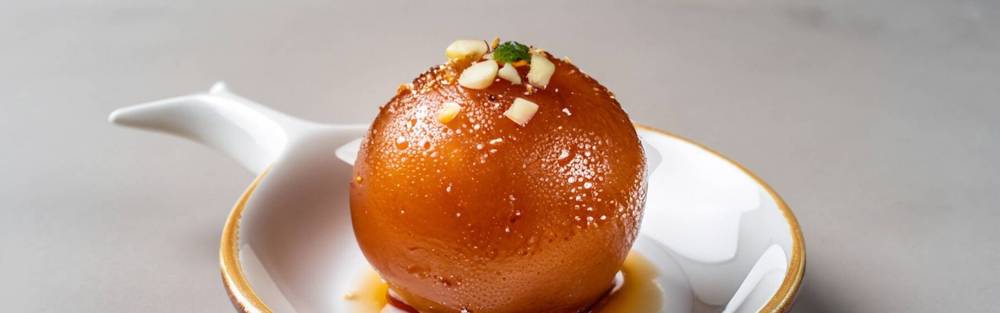
Gulab jamun are soft, spongy dumplings made from khoya (reduced milk solids) or milk powder, fried until deep brown, and then soaked in sugar syrup flavoured with rose water, cardamom, and saffron. The soaking process is what makes them — properly done, the syrup penetrates the entire dumpling rather than just coating the outside. Served warm, they're one of the most indulgent items in the Indian sweet repertoire. Virtually every Deepavali gathering in Singapore ends with gulab jamun on the table.
Where to Find Deepavali Snacks in Singapore
Little India is the centre of Deepavali celebrations in Singapore. Serangoon Road and its side streets fill with stalls selling murukku, burfi, kheer, and all the other festive items in the weeks leading up to the festival. Mustafa Centre stocks a wide range of Indian snacks year-round. For something more elevated, several South Indian restaurants in the area produce excellent versions of the traditional sweets and savouries during the festive season.
If you're visiting Singapore specifically for Deepavali, the Serangoon Road light-up is free and one of the best festive displays in the city. Book your flights and hotel through Traveloka — Little India hotels fill up quickly during festival season, and having things to do booked alongside your accommodation in one place simplifies the planning considerably.

Tags:
deepavali snacks
diwali
Recommended Articles

9 Cool Outdoor Activities for Kids in Singapore: Best Water Play & Family Adventures

12 Fun Museums for Kids in Singapore You Should Check Out

13 Free Family Activities You Can Enjoy in Singapore

12 Best Kids Friendly Hotels in Singapore for a Fun Family Stay

Explore Ubin Thai Temple, A Hidden Cultural Gem in Singapore

Best Buddhist Temple Singapore Guide for First-Time Visitors