7 Best Historical Sites in Indonesia: From Borobudur to Uluwatu


Indonesia's historical landscape is one of the most varied in Southeast Asia, spanning Buddhist temples from the 8th century, towering Hindu compounds, the ruins of a once-mighty empire, and a living tradition of sacred architecture that continues to shape daily life across the archipelago. With over 17,000 islands and a history shaped by the Majapahit Empire, Javanese kingdoms, and centuries of maritime trade, the country holds an extraordinary depth of heritage concentrated in a relatively compact travel circuit.
This guide covers seven of Indonesia's most significant historical sites, from the temple-dense heartland of Central Java to the clifftop sanctuaries of Bali and the colonial fortifications of Sulawesi. Each site can be visited independently or combined into a multi-destination itinerary that spans the length of the archipelago.
1. Borobudur Temple, Central Java
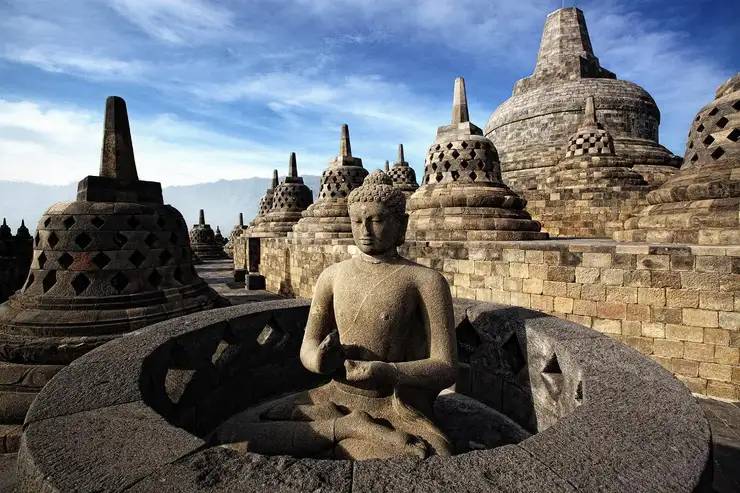
Borobudur is the world's largest Buddhist monument and one of the greatest archaeological sites in Southeast Asia. Built between approximately 780 and 840 AD during the reign of the Syailendra Dynasty, the temple rises in nine stacked platforms above the surrounding Kedu Plain, with the volcanic peaks of Merapi and Merbabu visible on the horizon on a clear morning. The structure was abandoned sometime after the 14th century, buried under volcanic ash and jungle, and rediscovered by a British colonial surveyor in 1814. UNESCO recognised it as a World Heritage Site, and decades of restoration work have returned it to a condition that conveys something close to its original grandeur.
Buddhist Cosmology in Stone
The architecture of Borobudur is a three-dimensional representation of the Buddhist universe. The square lower terraces represent the realm of desire, the circular upper terraces represent the realm of formlessness, and the journey from the base to the summit is understood as a symbolic pilgrimage towards enlightenment. The walls of the lower galleries carry over 2,500 relief panels depicting scenes from Buddhist teaching, the life of the historical Buddha, and the Jataka tales of his previous incarnations. Pilgrims and visitors traditionally walk the galleries clockwise, reading the narrative from bottom to top.
The Upper Terraces and 72 Stupas
The three circular upper terraces hold 72 latticed stone stupas, each containing a seated Buddha figure visible through the decorative openwork. At the very summit stands the main stupa, a large undecorated dome that represents the ultimate state of nirvana beyond form and description. The view from the upper terraces encompasses rice paddies, coconut groves, and distant volcanic peaks in every direction. Arriving for the sunrise viewing option — available through a separate booking — gives the experience an atmosphere that the midday crowds cannot replicate.
Entry and Getting There
General admission to the Borobudur temple grounds costs IDR 455,000 for international visitors, which includes access to the upper temple structure. The site is open daily and is located approximately 42 kilometres northwest of Yogyakarta city, making it a practical day trip or a comfortable overnight stay in the adjacent village of Borobudur. The drive from Yogyakarta takes around one hour by private vehicle.
Yogyakarta is the main gateway to Borobudur and Prambanan — compare flights to Adisutjipto or Yogyakarta International Airport to find the best connections from your departure city.
Discover flight with Traveloka
Sun, 11 Oct 2026

FlyJaya
Jakarta (HLP) to Yogyakarta (JOG)
Start from S$91.98
Sun, 20 Sep 2026

Citilink
Jakarta (HLP) to Yogyakarta (JOG)
Start from S$96.81
Mon, 14 Sep 2026
FlyJaya
Banjarmasin (BDJ) to Yogyakarta (JOG)
Start from S$241.74
2. Prambanan Temple Compound, Yogyakarta

Prambanan is the largest Hindu temple compound in Indonesia and one of the finest examples of classical Hindu architecture in Southeast Asia. Built in the 9th century and dedicated to the Trimurti — the Hindu trinity of Brahma, Vishnu, and Shiva — the compound originally comprised over 500 temples arranged in three concentric squares. The central Shiva temple, known as Candi Loro Jonggrang, rises 47 metres and is decorated with intricate carvings of the Ramayana epic that wrap around the gallery walls. UNESCO inscribed the Prambanan Temple Compounds as a World Heritage Site in recognition of their outstanding architectural and cultural significance.
Visiting Prambanan in the late afternoon, when the light turns warm and the stone glows against the blue sky, is a particularly rewarding experience. The Sendratari Ramayana ballet, performed against the backdrop of the floodlit Loro Jonggrang temple on selected evenings, is one of the most celebrated cultural performances in Java and well worth planning around. Entry to the compound costs IDR 400,000 for international visitors; a combined ticket covering Borobudur's temple grounds and Prambanan costs IDR 750,000 and represents the best value for travellers visiting both sites in the same trip.
3. Trowulan Archaeological Site, East Java
Trowulan is the only surviving city-scale site from the Hindu-Buddhist classical age in Indonesia, believed to be the capital of the Majapahit Empire, one of the most powerful maritime empires in Southeast Asian history. Covering approximately 100 square kilometres in Mojokerto Regency, East Java, the site contains a scattered collection of temple ruins, bathing pools, ceremonial gates, and reservoirs that together give a sense of the enormous scale of the 14th-century Majapahit capital. It is the only such site of its kind on the UNESCO tentative list for Indonesia.
Key structures include the Candi Bajang Ratu, a well-preserved split-gate tower used for royal ceremonies, and Candi Tikus, a sunken bathing complex whose name means "rat temple." The Wringin Lawang gate, built from red brick with a base of 13 by 11 metres and standing 15.5 metres tall, is one of the oldest and largest surviving candi bentar split-gate structures from the Majapahit era. Because the structures are spread across a wide area, hiring a car rental or private driver for the day is the most practical way to cover the main sites without spending most of your time walking between them on unmarked rural roads.
Yogyakarta is the natural base for exploring Java's historical sites — from boutique heritage hotels near Malioboro Street to modern resort properties with easy access to Borobudur, the city's accommodation range suits every travel style. Book your hotels in Yogyakarta early to secure your preferred location and price.
4. Keraton Yogyakarta
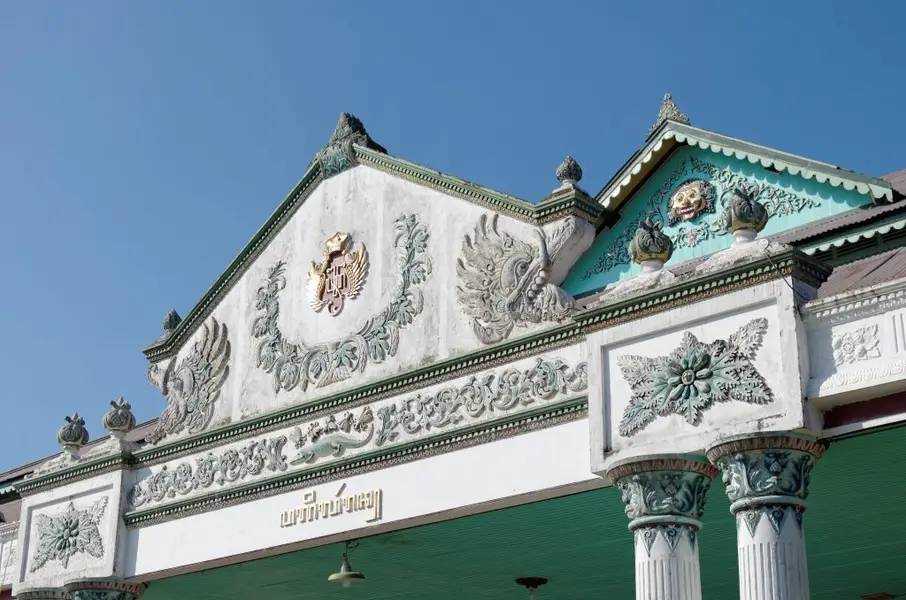
The Keraton, or royal palace, of Yogyakarta is one of the best-preserved examples of traditional Javanese court architecture in Indonesia and remains an active royal residence. Founded in 1755 by Sultan Hamengkubuwono I after the division of the Mataram Sultanate, the complex covers roughly 14,000 square metres within a larger walled city that once housed the entire court. The central throne hall, audience pavilions, and ceremonial courtyards are open to visitors and give a vivid sense of the spatial logic of Javanese royal life, where the placement of every building relative to the cosmic axis of Mount Merapi and the southern sea was considered of spiritual significance.
The palace museum holds a collection of royal regalia, traditional Javanese weapons, wayang puppets, and gamelan instruments that document over two and a half centuries of Sultanate history. Cultural performances of classical Javanese dance take place in the palace courtyards on specific mornings each week, and the surrounding neighbourhood of the kraton district contains workshops producing batik, silver jewellery, and traditional crafts that have been part of the palace economy for centuries. Entry is affordable, and the palace is within easy walking distance of Malioboro Street, making it a natural first stop on a Yogyakarta itinerary.
5. Uluwatu Temple, Bali

Pura Uluwatu is one of Bali's nine directional temples, known collectively as the kahyangan jagat, which are considered the spiritual pillars that maintain the balance of the island. Built on a sheer limestone promontory above the Indian Ocean on the Bukit Peninsula in the south of Bali, the temple's location combines spiritual gravity with one of the most dramatic coastal views in Indonesia. The six-tiered meru tower at the temple's highest point is framed against open sky and sea, visible from the clifftop path long before you reach the entrance gates.
The most popular time to visit Uluwatu is late afternoon, both for the quality of the light and for the kecak fire dance performance staged at sunset on a circular clifftop stage with the ocean as a backdrop. The kecak is a uniquely Balinese art form that retells episodes from the Ramayana using a large chorus of performers whose interlocking vocal patterns replace the gamelan orchestra. The temple complex is open daily, entry is affordable, and the journey from Seminyak or Kuta takes approximately one hour by private vehicle.
6. Besakih Temple, Bali
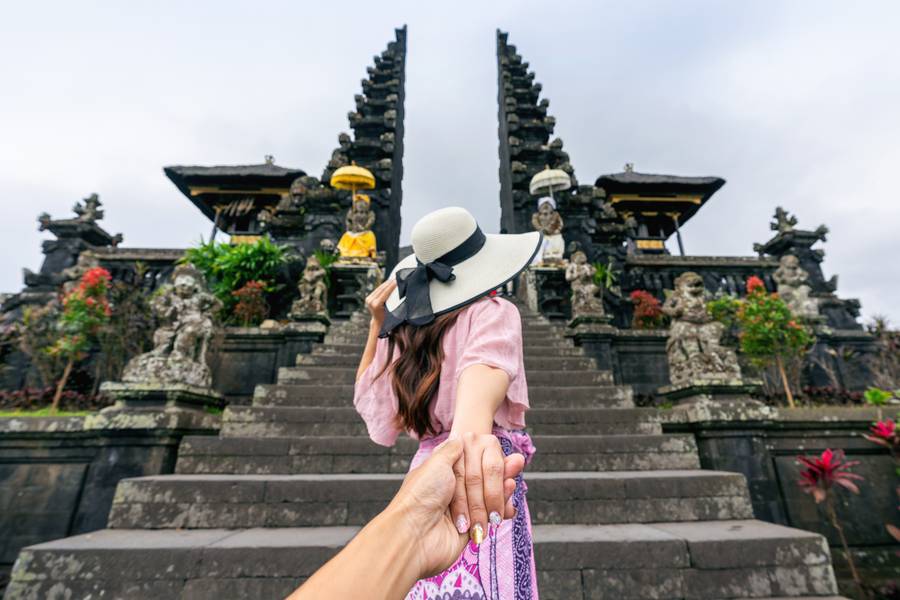
Pura Besakih is Bali's largest and most sacred temple complex, often called the "Mother Temple" of the island, and serves as the spiritual centre of Balinese Hinduism. Located on the southwestern slopes of Mount Agung at an elevation of around 950 metres, the complex comprises 23 separate temples spread across six levels connected by steep stone staircases. The main temple, Pura Penataran Agung, contains shrines dedicated to the Hindu trinity and serves as the focus for the most important island-wide ceremonies in the Balinese calendar.
The mountain setting gives Besakih an atmosphere that no lowland temple can match. On clear mornings, the mist rises from the surrounding forests as the sun lifts above the ridge, and the multi-tiered meru towers appear to emerge directly from the cloud. The temple is an active place of worship and receives large numbers of Balinese pilgrims throughout the year, particularly during the Eka Dasa Rudra ceremony, the most important ritual in Balinese Hinduism, which takes place once every hundred years. Visitors are welcome and a temple sash must be worn; local guides are available at the entrance and help greatly in understanding the complex layout and religious significance of the different shrines.
Yogyakarta's wealth of heritage experiences — from climbing Borobudur's upper terraces to watching the Ramayana ballet at Prambanan — can all be booked in advance. Browse activities across Java and Bali to secure tickets for the experiences most likely to sell out.
7. Fort Rotterdam, Makassar, Sulawesi
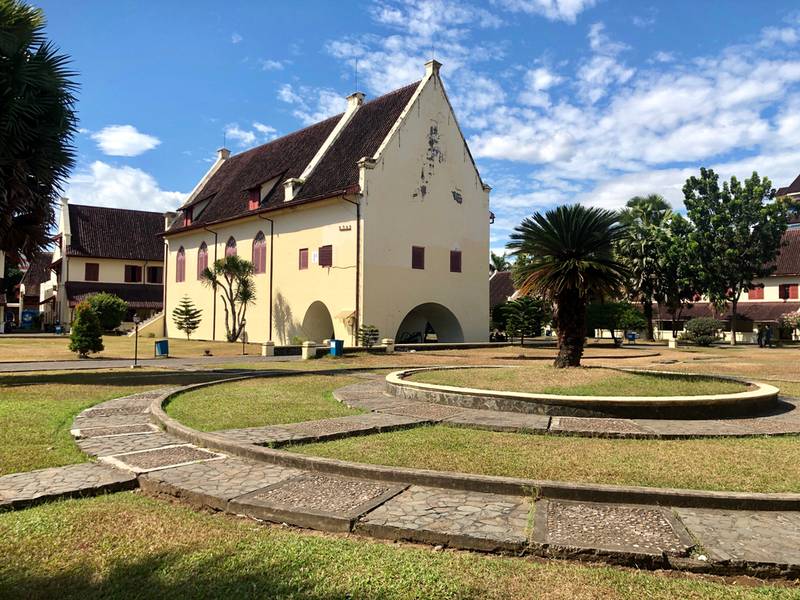
Fort Rotterdam is the best-preserved Dutch colonial fortification in Indonesia and one of the most significant historical landmarks in eastern Indonesia. The site has roots that predate Dutch colonialism — the original fort was built in 1545 by the rulers of the Gowa Kingdom as a traditional Makassar stronghold called Benteng Jumpandang. After the Dutch East India Company (VOC) captured the city in 1667, the structure was rebuilt in the Dutch architectural style and renamed after the city of Rotterdam in the Netherlands. The resulting complex, with its thick star-shaped walls and interior colonial-era buildings, is an unusually complete example of 17th-century European military architecture in Southeast Asia.
Today, Fort Rotterdam houses the La Galigo Museum, which contains one of the finest collections of artefacts related to the history and culture of South Sulawesi, including traditional Bugis sailing vessels, royal regalia, and ethnographic objects from across the region. The fort's interior courtyard and shaded colonnaded walkways are pleasant to explore at any time of day, and the institution is well signposted for self-guided visits. Makassar's position as a gateway to eastern Indonesia makes it a natural addition to a broader Indonesian itinerary; arranging an airport transfer on arrival at Sultan Hasanuddin International Airport ensures a smooth start before heading into the city.
Book Your Trip with Traveloka
Indonesia's historical sites span the length of the archipelago, and planning a multi-destination trip is far more manageable when your bookings are in one place. Traveloka, Southeast Asia's leading travel platform trusted by over 100 million users, covers flights between Indonesian cities, hotels from Yogyakarta to Makassar, guided tours of Borobudur and Prambanan, car rentals for exploring East Java's rural temple sites, eSIM data plans, and travel insurance — all within a single app. Compare hundreds of flight and hotel options across the archipelago and find the itinerary that covers the sites you most want to see.
Keep an eye on Traveloka promotions for deals on flights and hotels across Indonesia. The Traveloka app is top-rated on the Google Play Store and Apple App Store across Southeast Asia — download it to start planning your Indonesian heritage journey today.

In This Article
Recommended Articles

Dubai in Summer 2026: What the Weather Is Really Like and How to Make the Most of It

Paris in Winter: Your Complete Weather and Travel Guide for 2026

Paris in Spring: What the Weather Really Feels Like (And Why It's Worth It)

Seoul in Autumn: Your Complete Guide to the City's Most Spectacular Season

London Summer Guide: Weather, Festivals, and the Best Things to Do in June, July & August
Osaka in Spring: Cherry Blossoms, Warm Walks, and Perfect Weather for Exploring