


Tenryu-ji Temple: Kyoto's Zen Sanctuary in the Heart of Arashiyama


When Singaporeans think of Kyoto, the usual suspects come to mind - Fushimi Inari, Kinkaku-ji, Gion. But if you want one destination that captures the quieter, more contemplative side of Japan, Tenryu-ji Temple in Arashiyama belongs right at the top of your list.
Ranked first among Kyoto's five great Zen temples and listed as a UNESCO World Heritage Site since 1994, Tenryu-ji is the kind of place that rewards you for slowing down. Its legendary garden has barely changed in over 700 years, its Cloud Dragon ceiling painting is one of the most striking works of art in the country, and its location in the Arashiyama district means you're steps away from one of Japan's most iconic bamboo groves. Here's everything you need to know before your visit.
The Story Behind Tenryu-ji Temple
Tenryu-ji was founded in 1339 by the ruling shogun Ashikaga Takauji, built in honour of Emperor Go-Daigo who had recently passed away. Takauji entrusted the design of the temple to Muso Soseki, a celebrated Zen monk and master garden designer whose influence can still be felt across Japan.
The temple's name translates to 'Temple of the Heavenly Dragon' - a nod to a dream in which a golden dragon was said to have risen from the nearby Oi River. Over the centuries, the main buildings were ravaged by eight major fires and rebuilt, but through it all, the Sogenchi Garden survived almost entirely intact. That garden remains today as Muso Soseki originally conceived it, making it one of the oldest and most revered landscape gardens in Japan.
In 1994, Tenryu-ji was designated a UNESCO World Heritage Site as part of the Historic Monuments of Ancient Kyoto - a recognition that places it among the most culturally significant sites not just in Japan, but in the world.

Japan

Kadensho, Arashiyama Onsen, Kyoto - Kyoritsu Resort

9.1/10
•

Arashiyama
S$462
Entrance Fee & Opening Hours
Tenryu-ji uses a tiered ticketing system depending on which areas you'd like to explore:
Things to Do at Tenryu-ji Temple
1. Stroll Through the Sogenchi Garden
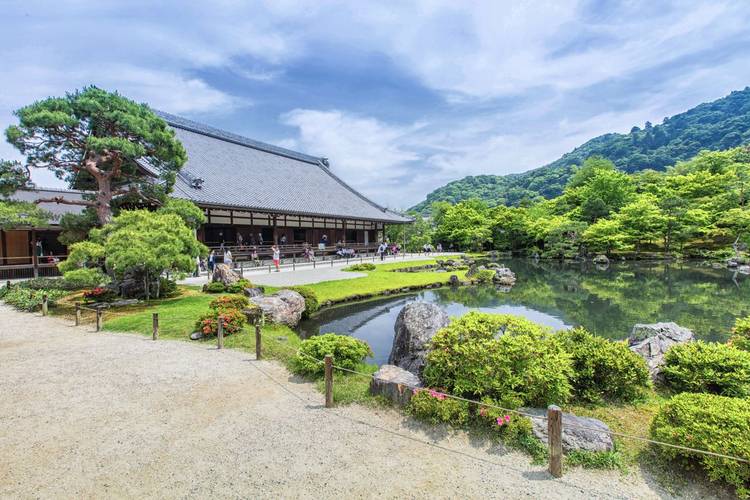
The crown jewel of Tenryu-ji is undoubtedly the Sogenchi Garden - Japan's first designated historical and scenic site, and one of the finest surviving examples of Muromachi-period Zen garden design. At its centre is a tranquil pond ringed by white stones, pine trees, and carefully placed rocks, all framed against the forested slopes of Arashiyama in the background.
The garden is beautiful in every season: cherry blossoms in late March and April, fresh green in summer, blazing autumn foliage from mid-November, and a quiet stillness in winter. If you have time, find a bench on the veranda of the main hall, sit with the garden spread out before you, and simply take it in. That's the way this place is meant to be experienced.
2. Look Up at the Cloud Dragon Painting
Inside the Hatto (Dharma Hall), the ceiling is dominated by a massive circular painting of a dragon racing through the clouds - known as the Unryuzu, or Cloud Dragon Painting. Created in 1997 by the celebrated Japanese artist Kayama Matazo, the dragon spans roughly 9 metres in diameter and has a remarkable quality: wherever you stand in the hall, the dragon's eyes seem to follow you.
Photography is not permitted inside the Hatto, so this is one you'll need to experience in person - which, honestly, makes it all the more memorable. The painting is open on weekends and during special periods; check the temple's schedule before your visit.
3. Visit the Daihojo Main Hall
From the tatami-floored interior of the Daihojo, the main hall, the Sogenchi Garden unfolds like a living painting. The hall is home to the principal statue of Shakyamuni Buddha - a figure that predates the temple itself by several centuries and miraculously survived all eight fires that destroyed the surrounding buildings. The fusuma (sliding door) paintings here, depicting Japanese seasons and nature, are worth a slow, unhurried look.
Japan
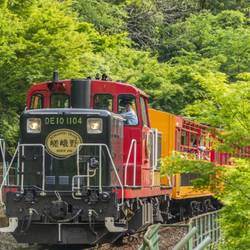
Arashiyama Half-Day Tour: Sagano Romantic Train, Hozugawa River Cruise & Horse Carriage Ride | Kyoto, Japan
9.1/10
Arashiyama
S$89
4. Exit Through the Bamboo Grove
One of the best-kept logistical secrets at Tenryu-ji: the north gate leads directly into the Arashiyama Bamboo Grove, just a 5-minute walk away. If you're planning to visit the bamboo grove anyway - and you should - this sequencing makes the whole experience feel like one seamless journey rather than two separate stops. The transition from Zen garden to towering green bamboo is genuinely striking.
5. Have Lunch at Shigetsu
Within the temple grounds sits Shigetsu, a Zen vegetarian restaurant serving shojin ryori - the centuries-old plant-based cuisine developed by Buddhist monks. The restaurant earned a Michelin Bib Gourmand designation, which is no small thing for a temple dining room. Set meals are available from around 3,000 to 7,000 yen per person and are served in tatami-floored rooms with garden views. Open daily from 11:00 a.m. to 2:00 p.m. - reservations are recommended.
Travel Tips for Visiting Tenryu-ji
Where to Stay Near Tenryu-ji Temple
Staying in the Arashiyama area means you can visit Tenryu-ji and the bamboo grove early in the morning before day-trippers arrive - a genuine advantage. Here are some well-regarded options to check on Traveloka:
1. Kadensho, Arashiyama Onsen, Kyoto
Kadensho, Arashiyama Onsen, Kyoto is a five-star ryokan-style property close to the Sagano Scenic Railway. Kadensho combines traditional Japanese aesthetics with modern luxury. Its onsen facilities and river-facing rooms make it the kind of place you'll find yourself reluctant to leave - even with Tenryu-ji just down the road.
2. Muni Kyoto
A five-star boutique hotel perched in the Arashiyama hills, Muni Kyoto offers stunning views over the treetops toward the Hozu River gorge below. It's particularly popular with design-conscious travellers from Singapore looking for something intimate and visually distinctive. Tenryu-ji and Kokedera (the Moss Garden) are both within easy reach.
Discover Flights With Traveloka
Wed, 28 Oct 2026

All Nippon Airways
Sapporo (CTS) to Osaka (ITM)
Start from S$96.17
Wed, 28 Oct 2026

Peach Airline
Sapporo (CTS) to Osaka (ITM)
Start from S$139.61
Fri, 30 Oct 2026
All Nippon Airways
Tokyo (HND) to Osaka (ITM)
Start from S$83.60
3. Hotel Binario Saga Arashiyama
For a more budget-friendly option without sacrificing location, Hotel Binario Saga Arashiyama is steps from both JR Saga-Arashiyama Station and Torokko Saga Station. It features a restaurant, a cafe, and public baths - a comfortable, no-frills base for exploring the area.
4. Ryotei Rangetsu
A classic Japanese inn set along the Arashiyama riverside, Ryotei Rangetsu is one of the most atmospheric stays in the area. Traditional rooms, kaiseki dining, and views of the Oi River make this a memorable choice for travellers who want the full Arashiyama experience in one place.
Start Planning Your Kyoto Trip with Traveloka
Tenryu-ji is the kind of destination that stays with you. Whether it's the stillness of the Sogenchi Garden on a quiet morning, the dragon on the ceiling of the Hatto that seems to watch you from every angle, or the simple pleasure of walking from the temple grounds straight into a bamboo forest - there's a lot packed into one visit.
Ready to make Kyoto your next holiday destination? Use the Traveloka app to book your flights, find the right hotel in Arashiyama, and plan your activities all in one place. Start exploring now with Traveloka!

In This Article
Explore the Best of Arashiyama

Arashiyama
Recommended Articles

7 Romantic Dining Restaurants in Penang for Couples
10 Best Tourist Attractions Near the Great Wall of China

Hangzhou to Shanghai: A Complete Transport and Travel Guide
Best Luxury Resorts in Da Nang for an Unforgettable Stay
Lazarus Island: A Complete Hassle-Free Travel Guide
Outdoor Activities in Da Nang: A Complete Guide


