Your Complete Guide to Flight Delay Compensation in Singapore


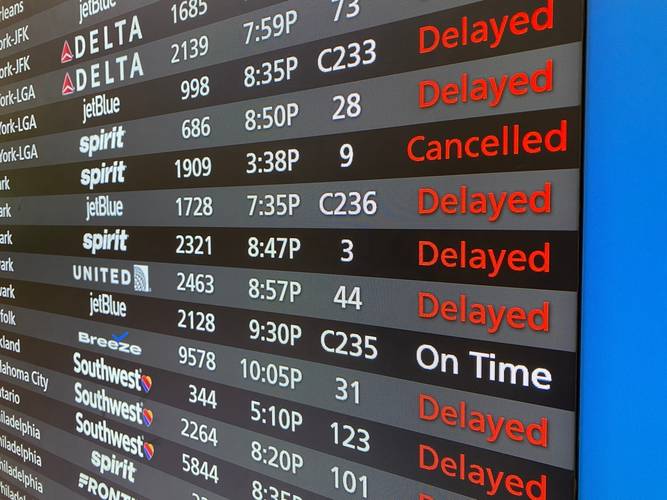
A flight delay is one of those travel experiences that can test even the most patient traveler, but knowing your rights — and the steps to assert them — transforms a frustrating situation into one you can navigate with confidence. Singapore travellers occupy an interesting position: the country lacks a single unified regulation mandating automatic compensation the way the European Union's rules do, but that does not mean your options are limited. Airlines operating through Changi Airport carry contractual obligations to their passengers, and understanding how those obligations translate into practical compensation is the key to a successful claim.
This guide covers everything you need to know about flight delay compensation in Singapore — from what legally qualifies as a compensable delay, to the documents you need, the steps to follow, and the realistic outcomes you can expect. Whether you are dealing with a delay right now or preparing yourself for future journeys, the information below will help you travel with greater confidence. Book your next trip through Traveloka and start with flights from Singapore Changi.
Discover flight with Traveloka
Thu, 13 Aug 2026

Citilink
Singapore (SIN) to Jakarta (CGK)
Start from S$143.27
Fri, 31 Jul 2026

Super Air Jet
Batam (BTH) to Jakarta (CGK)
Start from S$83.32
Fri, 31 Jul 2026

AirAsia Indonesia
Bali / Denpasar (DPS) to Jakarta (CGK)
Start from S$93.01
What Counts as a Flight Delay?
A flight delay is defined as a postponement of the scheduled departure or arrival time caused by factors including adverse weather, technical issues with the aircraft, crew availability problems, air traffic control restrictions, or operational decisions by the airline. Most airlines — and most compensation frameworks globally — consider a delay of three hours or more to the final arrival time as the threshold at which passengers gain meaningful entitlements. It is the arrival time, not the departure time, that typically determines compensation eligibility: if your plane departs two hours late but makes up time in the air and arrives within the original window, compensation is generally not applicable.
The cause of the delay matters significantly. Delays categorised as resulting from extraordinary circumstances — a term that typically covers severe weather events, air traffic control strikes, security alerts, and certain safety-critical technical failures — generally exempt airlines from paying financial compensation under their own policies. Delays caused by factors within the airline's operational control, such as late aircraft turnaround, crew rostering failures, or maintenance issues discovered at routine inspection, are generally more likely to result in a successful compensation claim. Understanding this distinction before you file a claim will help you set realistic expectations and strengthen the way you document your case.
Singapore's Legal Framework for Compensation
Unlike passengers flying within or from the European Union — who benefit from EC Regulation 261/2004, which mandates fixed compensation of up to EUR 600 for significant delays — Singapore travellers do not have access to a government-mandated compensation scheme that applies uniformly across all airlines. Instead, your entitlements are primarily determined by the Conditions of Carriage published by the individual airline, the terms and conditions of your booking, and Singapore's Consumer Protection (Fair Trading) Act where applicable. This means the compensation landscape varies significantly depending on which airline you are flying with and what their published policies say.
Many international airlines operating through Changi do have meaningful delay compensation provisions in their conditions of carriage, and some voluntarily apply standards comparable to EU regulations on certain routes. Familiarising yourself with the specific terms of your airline before travel is one of the most effective steps any Singapore-based traveller can take. The Civil Aviation Authority of Singapore (CAAS) oversees aviation standards in the country and handles systemic complaints about airline conduct, though individual compensation claims are typically managed directly with the airline in question. Travel insurance that includes trip delay cover is a reliable way to supplement whatever the airline itself offers.
Looking for your next flight out of Singapore? Find the best fares on Traveloka and browse hotels at your destination for a complete booking experience.
What You Are Entitled to During a Delay
Even where financial compensation is not guaranteed, passengers delayed at Changi Airport are generally entitled to a standard package of care from their airline once the delay reaches a certain threshold. Most major carriers provide meal vouchers for delays exceeding two to three hours, and many offer hotel accommodation for delays that push overnight. Communication entitlements — meaning the right to call or message to notify your travel companions — are also typically offered, though the specifics vary by airline. It is entirely appropriate to approach the airline's ground staff at the airport and ask directly what care entitlements apply to your situation.
Changi Airport itself provides a comfortable environment for waiting passengers, with extensive dining options, rest zones, free Wi-Fi, and transit hotel facilities available at a fee for longer waits. The airport's Jewel complex is particularly well-suited for extended layovers, offering dining, retail, and indoor attractions that make a delay significantly more bearable. Keep all receipts for any meals, transport, or accommodation expenses you incur as a direct result of the delay, as these out-of-pocket costs form the basis of any expense reimbursement claim you subsequently file with the airline. Document everything — photographs, screenshots of notifications, and timestamps are all useful evidence.
How to File a Compensation Claim: Step by Step
Filing a delay compensation claim successfully depends on following a clear, documented process. Acting methodically from the moment the delay is announced significantly increases your chances of a positive outcome.
Step 1: Confirm the Delay Reason
As soon as a delay is announced, approach the airline's ground staff and ask directly for the stated reason. Request that this reason be provided in writing if possible — many airlines have delay notification forms available at the gate or will confirm the reason via SMS or email. Knowing the stated cause from the outset allows you to assess whether extraordinary circumstances are being claimed and to begin building your documentation accordingly. If the stated reason changes between announcements, note both versions with timestamps, as inconsistencies can be relevant in a subsequent dispute.
Step 2: Gather Your Documentation
The foundation of any successful compensation claim is a complete evidence file. This should include your original booking confirmation, your boarding pass or digital equivalent, the airline's delay notification (written or digital), and all receipts for expenses incurred as a direct result of the delay — meals, refreshments, transport, and accommodation if applicable. If you have travel insurance, locate your policy number and the insurer's claims contact details before you need them. A clear record of your actual arrival time versus the scheduled arrival time is also important — apps, airline SMS notifications, and flight tracking services all provide verifiable timestamps for this purpose.
Step 3: Review the Airline's Compensation Policy
Before filing your claim, read the relevant sections of the airline's Conditions of Carriage — typically available on their website under legal or terms sections. Identify what delay threshold triggers compensation, what forms of compensation are offered (vouchers, miles, cash equivalent, or direct payment), and what the exclusion clauses say about extraordinary circumstances. Some airlines have dedicated compensation request forms on their websites, while others require claims to be submitted via customer service email or through the airline's app. Knowing the correct channel before you write saves time and avoids your claim being lost in the wrong inbox.
Step 4: Submit Your Claim Promptly
Most airlines impose a time limit on delay compensation claims — typically between 30 days and two years from the date of the affected flight, depending on jurisdiction and carrier policy. Submitting your claim as soon as possible after the flight, while the details are fresh and documentation is complete, is always the most effective approach. Write your claim letter clearly and factually, state the delay duration and the impact it had on your travel plans, reference the relevant section of the airline's conditions of carriage, and attach all supporting documents. Avoid emotional language and focus on the factual record — a well-documented, professionally framed claim is far more likely to receive a prompt and positive response.
Explore Singapore's best activities and plan your next adventure from Changi Airport with exclusive Traveloka promotions on flights, hotels, and experiences.
Tips to Strengthen Your Claim
Beyond following the formal process, several practical habits significantly improve your chances of a successful outcome. Booking early morning flights wherever possible reduces your exposure to delays caused by the cascading effect of late inbound aircraft from overnight rotations — the earlier your flight, the less accumulated disruption it is likely to inherit. Keeping digital copies of all travel documents in cloud storage means you can access them even if your phone battery dies at the airport. Taking screenshots of delay notifications the moment they arrive, with screen timestamps visible, creates a clear and unambiguous record.
If your initial claim is rejected, do not simply accept the decision. Many airlines have a formal appeals or escalation process, and a percentage of initially rejected claims are ultimately resolved in the passenger's favour on review. Consumer advocacy organisations in Singapore — including the Consumers Association of Singapore (CASE) — offer guidance and mediation support for travel-related disputes. Arranging an airport transfer in advance also ensures that however the delay resolves, your ground transport home is already secured and you are not left scrambling for a ride after a long wait. For future trips, a car rental can add flexibility to your plans and reduce dependence on scheduled connections.
Book Your Trip with Traveloka
The best way to protect yourself against disruption is to travel with a platform that keeps everything organised in one place. Traveloka is Southeast Asia's leading travel platform, trusted by over 100 million users, offering flights from Singapore Changi to hundreds of destinations, a comprehensive range of hotels, and bookable activities at every destination. Protect your journey with travel insurance, stay connected with an eSIM, and complete your ground logistics with airport transfers and car rental — all manageable through a single app. Check Traveloka promotions for current deals and download the app today.

Tags:
guide to flight delay
Recommended Articles

10 Romantic Things to Do in Bangkok Every Couple Will Love

The Complete Guide to Singapore's East West MRT Line

Your Complete Guide to Singapore's Green Line MRT (East-West Line)

Singapore ERP Explained: The Complete Driver's Guide to Electronic Road Pricing

The Complete Guide to Singapore's Circle Line MRT: 30 Stations, Endless Discoveries

Top 10 Pasar Malam in Singapore for Food, Culture, and Unforgettable Nights