


Faroe Islands: Denmark's Wildest Territory Isn't Actually in the EU


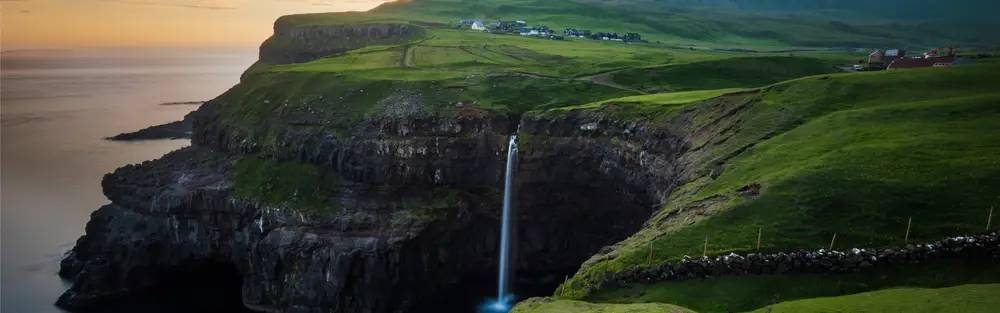
Somewhere between Iceland and Norway, scattered across the North Atlantic, sits an archipelago that looks like it was designed for a fantasy film set, grass-roofed cottages tucked into fjords, sheep grazing on cliff edges, and waterfalls that appear to fall straight into the sea. That's the Faroe Islands, technically part of the Kingdom of Denmark, but genuinely its own world.
For Malaysians, the Faroe Islands sit firmly in bucket-list territory, dramatic, remote, and still refreshingly free of the crowds that have overtaken Iceland's most photographed spots. It's also a place with a genuinely unusual quirk in how you're allowed to enter it, more on that shortly.
Where Are the Faroe Islands, Exactly?
The Faroe Islands are a self-governing archipelago of 18 volcanic islands in the North Atlantic, roughly halfway between Norway and Iceland. While they're formally part of the Kingdom of Denmark, they have their own government, currency (pegged to the Danish krone), language, and, crucially, their own immigration rules separate from mainland Denmark. The capital, Tórshavn, sits on the island of Streymoy and is home to most of the archipelago's hotels and restaurants.
Why Visit the Faroe Islands?
Landscapes that genuinely don't look real. Sheer sea cliffs, plunging waterfalls, and impossibly green valleys packed into a tiny land area barely bigger than Langkawi and Penang combined.
A sense of remoteness that's getting harder to find in Europe. With a population of around 55,000, the Faroes still feel wonderfully uncrowded, even compared to neighbouring Iceland.
Genuinely dramatic hiking. Trails here range from gentle coastal walks to serious ridge hikes, most rewarding you with views that look edited even when they're not.
A culture built around the sea. Fishing has shaped Faroese life for centuries, and it still shows in the food, the villages, and the pace of daily life here.
The Visa Situation: A Genuine Quirk Worth Understanding
Here's the part that trips up a lot of travellers, including many Europeans. The Faroe Islands are not part of the EU or the Schengen Area, even though they belong to the Kingdom of Denmark. That means a Schengen visa, or a Danish visa, does not automatically let you into the Faroe Islands, they're governed by entirely separate entry rules.
The good news for Malaysians: since Malaysia is already on the list of nationalities exempt from needing a visa for short Schengen stays, that same exemption extends to the Faroe Islands. In practice, this means Malaysian passport holders can visit the Faroe Islands visa-free for stays of up to 90 days, without needing to apply for a separate Faroe-specific visa the way travellers from visa-required countries do. You'll still need a passport valid well beyond your travel dates (generally at least three months past your planned departure), and it's worth noting that flights routing through Denmark or another Schengen country involve standard Schengen entry procedures on that leg of the journey, including the EU's newer digital Entry/Exit System for non-EU travellers.
As always with visa policy, it's worth double-checking current requirements on the official Danish Ministry of Foreign Affairs site close to your travel date, since rules can be updated.
Getting There from Malaysia
There are no direct flights from Malaysia to the Faroe Islands, and no domestic flights within the Faroes themselves, so this is a proper multi-leg journey. The standard route involves flying to Copenhagen (via a Middle Eastern or European hub, since there's no direct KL-Copenhagen service either), then connecting onward to Vágar Airport, the Faroes' only airport, via Atlantic Airways or Scandinavian Airlines. That final leg from Copenhagen takes just over two hours, with several flights running daily, more frequently in summer.
From Vágar Airport, it's roughly a 45 to 50 minute drive to Tórshavn, the natural base for most visitors.
Best Time to Visit
The Faroe Islands are famous for changeable weather, locals joke that you can experience all four seasons in a single afternoon, so packing layers matters regardless of when you go. That said, June to August is genuinely the best window for most visitors, bringing the mildest temperatures, up to 19 hours of daylight, and the return of nesting seabirds, including puffins on islands like Mykines. This is also peak season, so book accommodation and any Mykines boat trips well ahead.
November to March brings Atlantic storms, shorter days, and a much quieter, moodier version of the islands, appealing if you're after a dramatic winter escape rather than long summer daylight.
Highlights You Shouldn't Miss
Múlafossur Waterfall, Gásadalur
Arguably the most photographed spot in the Faroe Islands, a waterfall dropping directly off a cliff edge into the ocean, framed by the tiny village of Gásadalur.
Trælanípa and Lake Sørvágsvatn
A dramatic clifftop hike leads to a viewpoint where the lake appears to hover directly above the ocean, one of the most striking optical illusions in the islands.
Puffins on Mykines
The remote island of Mykines is the best spot in the Faroes to see nesting puffins up close, typically visitable by boat from May to early September.
Saksun and Its Tidal Lagoon
A stunningly located village built around a natural harbour that transforms into a tidal lagoon, ringed by steep green mountains.
Tinganes, Tórshavn's Old Town
The historic seat of Faroese government, lined with turf-roofed wooden buildings dating back centuries, right in the heart of the capital.
Where to Stay in Tórshavn
Nearly all Faroese accommodation is concentrated in and around Tórshavn, making it the natural base for exploring the rest of the islands by rental car or day tour.
62N Hotel — A comfortable, centrally located hotel in Tórshavn, just minutes from shops, dining, and the harbour.
Hotel Tórshavn — A seaside city-centre hotel with harbour views, within easy walking distance of restaurants and the ferry terminal.
Hotel Djurhuus — A well-reviewed option near Fort Skansin, close to the main shopping and dining district.
*Please note that all prices mentioned are subject to change depending on season, availability, and each hotel's policies.
What to Eat
Faroese cuisine is built around the sea and the land in equal measure. Expect plenty of fresh fish, lamb, and traditional preparations like skerpikjøt, wind-dried mutton aged for months in open-air sheds, an acquired taste but a genuinely distinctive one. Tórshavn's restaurant scene has grown considerably in recent years, ranging from cosy harbourside cafés to New Nordic fine dining that draws food travellers from across Europe.
Practical Tips Before You Go
Rent a car if you can, public transport exists but a rental gives you far more flexibility for chasing good weather between the scattered highlights. Pack proper waterproof layers regardless of season, the Faroese weather genuinely doesn't care what month it is. And keep your itinerary flexible, boat trips to islands like Mykines are weather-dependent and can be cancelled at short notice.
Worth the Long Journey?
Genuinely, yes, if dramatic scenery and a slower, wilder pace of travel appeal to you. The Faroe Islands ask a lot logistically, multiple flight legs, unpredictable weather, and a fair amount of advance planning, but very few places in Europe still feel this untouched.
Once your dates are set and your Schengen leg is sorted, let Traveloka handle the rest. Book your flight via Copenhagen, reserve your hotel in Tórshavn, and arrange a car rental for exploring the islands, all in one convenient app, backed by a Best Price Guarantee and 24/7 live agent support.

In This Article
Explore the Best of Faroe Islands

Tórshavn
Faroe Islands
Fugloy
Hvannasund
Recommended Articles

Best Food in Subang USJ: Where the Locals Actually Eat

7 Romantic Dining Restaurants in Penang for Couples
10 Best Tourist Attractions Near the Great Wall of China
Hangzhou to Shanghai: A Complete Transport and Travel Guide
Best Luxury Resorts in Da Nang for an Unforgettable Stay
Lazarus Island: A Complete Hassle-Free Travel Guide


