


The Best Skylines in the World: 7 Cities to See From Above


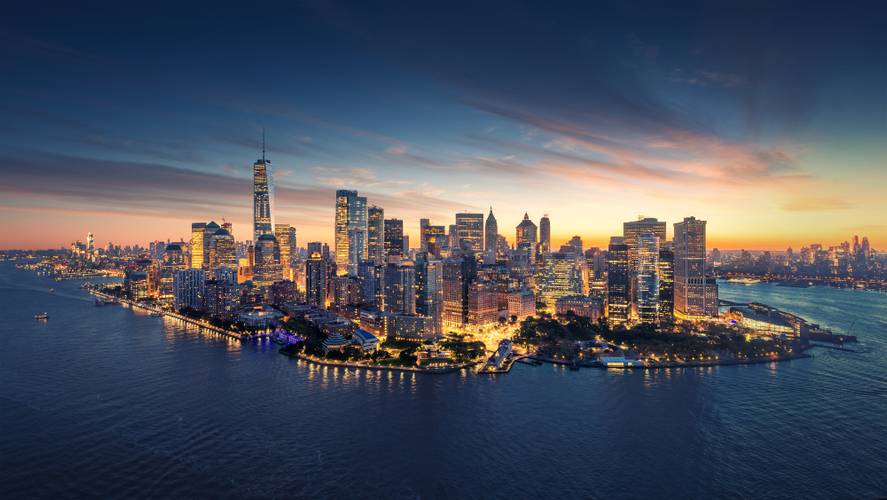
A great skyline tells a city's story in silhouette, and the best skylines in the world each carry a distinct shape built from decades of architectural ambition and competing landmark projects. From Hong Kong's dense wall of towers to Dubai's single record-breaking spire, these seven cities each reward a trip up to their best available viewpoints. Booking flights into any of these cities usually puts at least one great viewing deck within a short taxi ride of the airport.
Discover Flights With Traveloka
Sun, 18 Oct 2026

TransNusa
Jakarta (CGK) to Singapore (SIN)
Start from Rp 1.004.500
Sat, 31 Oct 2026

Scoot
Surabaya (SUB) to Singapore (SIN)
Start from Rp 1.390.500
Sat, 17 Oct 2026
Scoot
Bali / Denpasar (DPS) to Singapore (SIN)
Start from Rp 1.391.780
1. New York City
The Big Apple's skyline layers decades of ambition into one view, from the Empire State Building and Chrysler Building's Art Deco spires to One World Trade Center's modern glass profile. The Empire State Building's Main Deck runs from 44 dollars, with a combined Main and Top Deck ticket from 79 dollars for the higher 102nd-floor vantage point. Edge, the observation deck at Hudson Yards, offers a more contemporary alternative starting from 42 dollars for visitors who want a newer angle on the same skyline. Evening visits tend to reward patience, since the skyline lights up gradually as the sun sets rather than all at once.
2. Hong Kong
Hong Kong now holds the title of the world's most skyscraper-dense city, with 569 buildings over 150 metres tall, well ahead of Shenzhen and New York in second and third place. Victoria Peak remains the classic vantage point, with a Peak Tram round trip combined with Sky Terrace 428 access running around 110 Hong Kong dollars for adults. The International Commerce Centre's Sky100 deck, another popular Hong Kong viewpoint, has been closed for renovation since mid-2025, so Victoria Peak is the more reliable option for now. Evening visits are especially worthwhile here, since the sheer density of towers means the light show below the Peak rarely looks the same twice.
3. Dubai
Dubai's skyline centres on the Burj Khalifa, still the world's tallest building at 828 metres despite years of rival projects elsewhere. Standard "At the Top" tickets run from 173 UAE dirhams during non-prime hours, rising to 250 dirhams for the popular 4pm to 7pm sunset slot, with a SKY Level 148 upgrade available from 400 dirhams. The recently opened Ciel Dubai Marina, now the world's tallest hotel, has added a fresh landmark to the Marina skyline for anyone viewing the city from the water, adding yet another record to a city that already holds several.
4. Shanghai
Shanghai's skyline pairs the retro-futuristic Oriental Pearl Tower with the twisting form of the Shanghai Tower, the taller and more recent of the two. The Shanghai Tower Observation Deck, on the 118th floor at 546 metres, charges around 180 yuan for standard admission. Viewing both towers together from across the Huangpu River at the Bund gives the clearest sense of how the skyline has evolved over the past three decades, with the historic riverfront buildings on one bank framing the futuristic towers on the other.
5. Sydney
Sydney's skyline reads more low-rise than the others on this list, which makes its two best viewpoints, Mrs Macquarie's Chair and Sydney Tower Eye, complement each other well. Mrs Macquarie's Chair offers a free, ground-level view framing the Opera House and Harbour Bridge together, while Sydney Tower Eye charges from 29 Australian dollars for advance online tickets, rising to 42 dollars at the gate. Adding the Skywalk experience brings the total closer to 84 to 99 dollars for visitors who want an open-air platform above the enclosed deck.
6. Tokyo
Tokyo runs two competing towers rather than one dominant structure. Tokyo Tower, standing since 1957 at 333 metres, sells its Main and Top Decks as separate tickets, while Tokyo Skytree, Japan's tallest structure at 634 metres, now uses dynamic pricing that starts around 1,800 to 2,100 yen for the lower Tembo Deck. Choosing between the two often comes down to whether the classic red-and-white Tokyo Tower silhouette or Skytree's taller vantage point matters more for the view.
7. Singapore
Singapore's skyline leans into greenery as much as height, with Marina Bay Sands and the Supertree Grove at Gardens by the Bay defining the city's modern look. The Marina Bay Sands SkyPark Observation Deck, 200 metres up on the 57th floor, charges from around 27 to 30 US dollars depending on the time slot. The Singapore Flyer, one of the world's largest observation wheels, offers a slower, seated alternative at around 40 Singapore dollars per ride.
Planning a Multi-City Skyline Trip
Stacking two or three of these cities into one itinerary works well given how well-connected most of them are by air, particularly across the Hong Kong, Singapore, and Tokyo corridor. Arranging an airport transfer into each city keeps arrival day simple, especially when a tight schedule means heading straight to a viewing deck the same evening. A car rental makes more sense in car-dependent cities like Sydney, where the best viewpoints spread further apart, than in denser cities like Hong Kong or Singapore where public transport reaches almost everywhere on this list. Timing each city's visit around golden hour or a clear evening forecast makes a real difference to how the skyline actually looks from the top.
Book Your Trip with Traveloka
Traveloka is Southeast Asia's leading travel platform, trusted by over 100 million users planning trips across Asia and beyond, from Singapore to destinations like Hong Kong, Tokyo, and Dubai. Through the Traveloka app, travellers can compare flights, book hotels close to the best viewpoints, and reserve observation deck activities ahead of a busy sunset slot. Checking Traveloka promotions before booking flights between skyline cities helps keep a multi-stop trip within budget. Download the app to start planning a trip built around the view that matters most.
Tags:
japan
skylines
sydney
new york
Explore the Best of World
World
Recommended Articles
Tokyo to Kyoto: The Ultimate Guide
How to Get from Kansai International Airport to Kyoto in 2024
Tokyo to Kyoto: Transportation Options, Costs, and Travel Tips

Public Transportation Options to Disneyland
How to travel from Tokyo to Osaka

6 Japanese Table Manners You Need to Master Before Visiting Japan


