Vietnam Digital Arrival Card: The new pre-arrival requirement every traveler must know in 2026


Planning a trip to Vietnam? There is a new step you need to complete before boarding your flight. Since April 15, 2026, most international travelers arriving at Ho Chi Minh City's Tan Son Nhat International Airport (SGN) must submit a Vietnam Digital Arrival Card online before they can clear immigration. The new system replaces the old paper arrival slip with a free electronic declaration that generates a QR code to speed up border processing.
Whether you are visiting Vietnam for the first time or returning after years away, understanding this new pre arrival registration process will help you avoid delays, missed connections, and stressful moments at the airport. In this guide, you will find everything you need to know about the Vietnam Digital Arrival Card in 2026 — from who needs to apply to how long it takes and what to do after you land.
What is the Vietnam Digital Arrival Card?
The Vietnam Digital Arrival Card is an online pre-arrival declaration introduced by the Vietnam Immigration Department. It captures the details that travelers previously wrote on a paper arrival card at the border — your passport information, flight number, purpose of visit, and where you will be staying — and sends them to immigration electronically in advance. Once your form is validated, the system produces a QR code that immigration officers scan when you arrive at the airport.

Key facts about the Vietnam pre-arrival card at a glance
Is the Vietnam arrival card the same as a visa or e-visa?
No. The Vietnam Digital Arrival Card does not replace any visa requirement. If your nationality requires an e-visa, visa on arrival, visa exemption certificate, or any other entry permit, you must still obtain it separately. The pre arrival immigration Vietnam form is a registration step that runs alongside your visa — not instead of it. Think of it as a digital equivalent of the paper arrival card that has been used at borders for decades.
When did Vietnam's pre-arrival registration take effect?
The mandatory pre arrival registration took effect on April 15, 2026. It was rolled out as part of Vietnam's broader effort to modernize border management and ease congestion at one of Southeast Asia's busiest entry points.
The April 15, 2026 rollout at Tan Son Nhat (SGN)
Tan Son Nhat handles most foreign arrivals into Vietnam, and in recent years the airport has become known for long immigration lines — with some travelers reporting queues of 500 people or more during evening peaks, and waits of one to two hours. Vietnamese authorities are positioning the new Vietnam Digital Arrival Card as a way to speed things up by letting officers retrieve passenger information electronically rather than entering it manually at the counter.
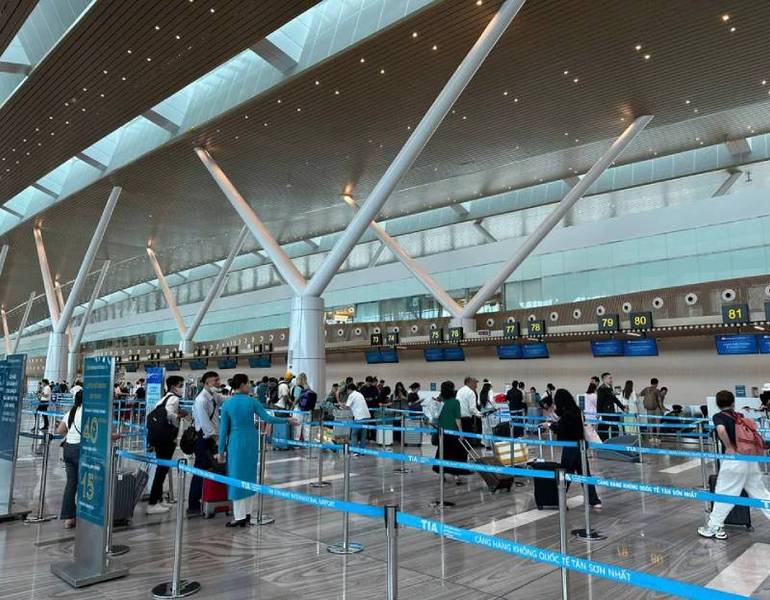
Will Hanoi (HAN) and Da Nang (DAD) require it next?
For now, the requirement applies only to travelers arriving at Tan Son Nhat in Ho Chi Minh City. Noi Bai International Airport in Hanoi and Da Nang International Airport are not yet included. That said, the official portal already includes fields for multiple points of entry and modes of transport — air, land, and sea — which suggests a nationwide rollout is being prepared. No official timeline has been announced, so if you are flying into Hanoi or Da Nang in the coming months, check the portal before your trip in case the rules expand.
Who needs to submit the Vietnam Digital Arrival Card?
Understanding whether the form applies to you is the first step. The requirement currently covers a broad range of travelers arriving at SGN.
Travelers required to complete the form
The Vietnam pre arrival card is mandatory for:
This means visitors from the United States, United Kingdom, Australia, South Korea, Japan, Singapore, Malaysia, the Philippines, and every other country with travelers heading to Ho Chi Minh City need to submit the form. Even travelers from countries that currently enjoy visa exemption to Vietnam are required to complete the pre arrival registration.
Who is exempt from pre-arrival immigration Vietnam rules
The following groups do not need to submit the Vietnam arrival card:
If you are connecting through SGN to another domestic destination in Vietnam such as Hoi An, Phu Quoc, or Nha Trang, you will still need the form. That is because you have to clear immigration in Ho Chi Minh City before boarding your onward domestic flight.
When can you submit the Vietnam pre-arrival form?
Timing matters with the Vietnam Digital Arrival Card. The system does not accept submissions earlier than a specific window before your arrival.
The 72-hour submission window explained
You can submit the pre arrival registration on the day of your arrival or up to two days before. The portal's arrival-date selector will not let you pick any date further in advance. For example, if your flight lands in Ho Chi Minh City on April 25, you can start the submission any time after midnight on April 23.
For travelers crossing multiple time zones, this window is tight but manageable. The best practice is to fill out the form the moment it becomes available — ideally while you are at home, have stable internet, and can carefully type in your passport number, visa details, and hotel address without rushing.
What happens if you forget to submit before your flight
If you land in Ho Chi Minh City without having submitted the form, you can still complete it at the airport. A QR code linking to the Vietnam Digital Arrival Card portal is displayed in the arrival area at SGN, allowing you to fill it in on your phone after disembarking. However, doing so adds time to your arrival process and may leave you stuck in the queue while other passengers breeze past. Authorities strongly recommend submitting the declaration before you fly.
What information you'll need before filling the form
Gather everything in advance so you do not have to pause mid-form to hunt down a passport number or flight code.
Personal & passport details
Flight, visa & accommodation details
How to fill out the Vietnam Digital Arrival Card: 4-step guide
The official portal at prearrival.immigration.gov.vn walks you through four straightforward steps. The entire process takes most travelers under five minutes if they have their documents ready.
Step 1 – Enter your passenger information
Select your expected arrival date (today or within the next two days only). Optionally upload a passport photo to pre-fill fields such as name, date of birth, and passport number. Fill in gender, nationality, phone, and email. Then add the details of your visa or entry document.

Step 2 – Provide your travel information
Enter your country of departure, purpose of travel, mode of transport, and flight number. Select Tan Son Nhat as your point of entry. Add your accommodation details — hotel name, city, district, and full address. If you are traveling for work, include workplace information. Finally, input your planned departure date from Vietnam.
Step 3 – Review & verify with OTP
Carefully review all information on the summary screen. Errors at this stage are easier to fix than after submission. When you are ready, request a six-digit OTP code sent to the email address you entered in Step 1. Enter the code to confirm the declaration.
Step 4 – Download your QR code confirmation
Once verified, the system assigns a file number and generates a downloadable confirmation containing your QR code. Save this confirmation to your phone, email it to yourself, or print it out. The QR code is what you present to immigration officers when you arrive at SGN.
What to do after you receive your QR code
The QR code is the only thing you need at the airport, but small preparation steps can save you major headaches.
Save, back up & screenshot your confirmation
Take a screenshot and store it in your phone's photo library. Save the PDF confirmation to your email inbox and to a cloud drive such as Google Drive. Print a paper copy if you have access to a printer. If your phone runs out of battery during a long flight or you lose signal in the arrival terminal, a printed backup will keep the process moving.
Present the QR code to immigration officers on arrival
At the immigration counter, hand over your passport and show the QR code on your screen or printout. The officer scans it, pulls up your pre-submitted details, and processes your entry. In theory this should be faster than manual data entry, though as with any new system, expect some early friction while staff and passengers adjust.
Common mistakes to avoid with Vietnam pre-arrival registration
A few small errors trip up travelers most often:
How Vietnam's Digital Arrival Card compares across Asia
Vietnam is the latest country in the region to introduce a mandatory digital arrival card. Thailand launched its Thailand Digital Arrival Card (TDAC) in April 2025, Indonesia followed with its own system in September 2025, and Taiwan rolled out a similar mandatory pre-arrival declaration in October 2025. The trend reflects a broader regional shift toward paperless border processing, which governments say will shorten queues and improve data accuracy.
For travelers planning a multi-country Asia trip in 2026, it is worth remembering that each country's form is separate. Submitting a Thailand TDAC does not carry over to Vietnam, and vice versa. Build time into your pre-departure checklist to complete each declaration before every border crossing.
Tips for a smooth arrival in Vietnam
Beyond the arrival card itself, a little planning goes a long way toward a stress-free start in Vietnam.
Book your flights to Vietnam in advance
Ho Chi Minh City is served by dozens of international carriers and is typically the most affordable gateway into Vietnam. Booking early gives you the best fares and lets you avoid peak-hour arrivals when immigration queues are longest. You can browse flights to Ho Chi Minh City on Traveloka and compare schedules across multiple airlines in one place.
Flights to Ho Chi Minh City
Wed, 7 Oct 2026

Scoot
Singapore (SIN) to Ho Chi Minh City (SGN)
Start from Rp 1.387.083
Tue, 6 Oct 2026
Scoot
Singapore (SIN) to Ho Chi Minh City (SGN)
Start from Rp 1.396.349
Tue, 29 Sep 2026

VietJet Air
Singapore (SIN) to Ho Chi Minh City (SGN)
Start from Rp 1.487.805
Reserve your hotels in Ho Chi Minh City & beyond
Entering an exact accommodation address on the Vietnam Digital Arrival Card is required, which means you need to have your hotel confirmed before submitting the form. Book early to lock in a good location — central District 1 is popular for first-time visitors thanks to its proximity to landmarks like Ben Thanh Market, the Saigon Opera House, and Nguyen Hue Walking Street. Explore hotels in Ho Chi Minh City on Traveloka to find options across every budget.
Plan tours & activities before you land
Save time queuing for tickets at major attractions by pre-booking the highlights of your trip. From Mekong Delta day tours and Cu Chi Tunnels experiences to food walks and theme park tickets, lining up the best things to do in Vietnam before you land means you walk off your flight straight into a ready-made itinerary — with curated experiences available across the country on Traveloka.
Frequently asked questions about the Vietnam Digital Arrival Card
1. Is the Vietnam Digital Arrival Card free?
Yes. The official pre arrival registration through prearrival.immigration.gov.vn is completely free of charge. Be wary of any third-party websites that claim to charge a fee for the service.
2. How long does it take to complete the Vietnam pre-arrival card?
Most travelers finish the form in three to five minutes if they have their passport, visa, flight, and hotel details ready. Uploading a passport photo to auto-fill fields can make it even faster.
3. What happens if my flight is delayed or rescheduled?
If your arrival date changes, your QR code may no longer match your travel. In that case, resubmit the form with the updated flight and arrival date once the new schedule falls within the 72-hour window.
4. Do children and infants need their own Vietnam arrival card?
Yes. Every foreign traveler who passes through immigration needs their own declaration, regardless of age. Parents or guardians can complete the form on behalf of children using the child's passport and travel details.
5. Can I still enter Vietnam through Hanoi or Da Nang without submitting the form?
Currently, pre arrival registration is mandatory only at Tan Son Nhat International Airport in Ho Chi Minh City. If you arrive at Noi Bai (Hanoi) or Da Nang, the form is not yet required — though this may change as the system expands. Always check the official portal before your trip to confirm the current rules at your point of entry.
Tags:
du lich viet nam
vn blog dom
cam nang du lich sai gon
du lich sai gon
In This Article
Explore the Best of Vietnam

Ho Chi Minh City

Tan Binh District

Hanoi

Da Nang
Recommended Articles

4 Public Transport in Vietnam: A Complete Guide for Every Traveler

8 Tempat Wisata di Ho Chi Minh City yang Wajib Dikunjungi Selama di Vietnam!

Event: Perfume Pagoda Festival in Vietnam

Event: Tet Festival in Vietnam

Khám phá Dinh Cậu Phú Quốc - Địa điểm du lịch tín ngưỡng tâm linh
Khám phá Dinh Cậu Phú Quốc - Địa điểm du lịch tín ngưỡng tâm linh