


ตั๋วเครื่องบินราคาถูกไป ออสเตรีย
สิ่งที่ควรรู้ก่อนเดินทางไป ออสเตรีย
ระยะเวลาบินสั้นที่สุด
1 ชั่วโมง, 55 นาที
จองตั๋วเครื่องบินในประเทศราคาถูกกับ Traveloka














จองตั๋วราคาถูกด้วยคูปองส่วนลดจาก Traveloka
ส่วนลดเที่ยวบิน
ข้อเสนอเที่ยวบินจากประเทศไทยไปยังจุดหมายปลายทางยอดนิยม
ขอนแก่น
อุบลราชธานี
พิษณุโลก
อุดรธานี
สุราษฎร์ธานี
นครศรีธรรมราช
ชุมพร
น่าน
สกลนคร
กระบี่
นครพนม
เชียงใหม่
เชียงราย
ภูเก็ต
ตรัง
หาดใหญ่
สุโขทัย
ส่วนลดเที่ยวบิน
รหัส:TRAVELOKA
ตารางเที่ยวบินไปยัง ออสเตรีย
สายการบิน | เวลาออกเดินทาง | เวลาถึง | สนามบินต้นทาง | สนามบินปลายทาง | |
|---|---|---|---|---|---|
 Austrian Airlines | 08:00 | 09:05 | มิวนิค (MUC) | เวียนนา (VIE) | จองเที่ยวบิน |
Austrian Airlines | 11:30 | 12:35 | มิวนิค (MUC) | เวียนนา (VIE) | จองเที่ยวบิน |
Austrian Airlines | 15:30 | 16:35 | มิวนิค (MUC) | เวียนนา (VIE) | จองเที่ยวบิน |
 Air France | 15:35 | 17:35 | ปารีส (CDG) | เวียนนา (VIE) | จองเที่ยวบิน |
Austrian Airlines | 15:55 | 17:50 | ปารีส (CDG) | เวียนนา (VIE) | จองเที่ยวบิน |
Austrian Airlines | 19:25 | 20:30 | มิวนิค (MUC) | เวียนนา (VIE) | จองเที่ยวบิน |
Austrian Airlines | 20:15 | 22:10 | ปารีส (CDG) | เวียนนา (VIE) | จองเที่ยวบิน |
Air France | 20:45 | 22:45 | ปารีส (CDG) | เวียนนา (VIE) | จองเที่ยวบิน |
Austrian Airlines | 21:40 | 22:45 | มิวนิค (MUC) | เวียนนา (VIE) | จองเที่ยวบิน |
Austrian Airlines | 23:40 | 05:35 (+1 days) | กรุงเทพ (BKK) | เวียนนา (VIE) | จองเที่ยวบิน |
สายการบินตรงไปยัง ออสเตรีย





















ตั๋วเครื่องบินไปออสเตรีย
Austria sits at the crossroads of Central Europe, and Vienna International Airport (VIE) handles the lion's share of arrivals from around the world. Around sixty-nine airlines connect Vienna with more than two hundred destinations, so reaching the country from almost any major hub is straightforward. Whether you are heading for the imperial palaces of the capital, the baroque streets of Salzburg or the peaks of the Tyrolean Alps, your journey almost always begins at Schwechat.
Flying to Austria from around the world
Vienna is the country's primary gateway and a genuine European hub. From within Europe, frequent short-haul services connect Austria with London, Frankfurt, Amsterdam, Paris, Zurich, Istanbul and dozens of other cities, often several times a day. Long-haul travellers usually arrive on a one-stop itinerary via a major European hub, while a smaller number of direct intercontinental routes link Vienna with North America, the Gulf and parts of Asia. Travellers from Southeast Asia, Australia and the Americas typically connect through Frankfurt, Munich, Istanbul, Doha or Dubai before the final leg into VIE. The breadth of connections means you can usually find an itinerary that matches both your budget and your preferred travel time. Because Vienna feeds so many alliance networks, travellers also benefit from competitive pricing and a genuine choice of routings, rather than being tied to a single carrier or hub. If your final destination is the Alps, it is often worth comparing an arrival into Vienna against a regional airport such as Salzburg or Innsbruck, since the right entry point can save several hours of onward travel.
Ticket prices for flights to Austria
Fares to Austria vary widely depending on where you depart, how far ahead you book and the season. Within Europe, low-cost carriers such as Ryanair, Wizz Air and easyJet tend to sit at the lower end of the range, while full-service airlines like Austrian Airlines, Lufthansa and Swiss price higher but include checked baggage and connections. Long-haul fares depend heavily on the connecting hub and the alliance you choose, and an itinerary through a Gulf carrier can sometimes undercut a one-stop European routing on the same dates. Booking several weeks in advance generally gives you more room to manoeuvre, and prices climb as the departure date approaches, especially on weekends and around public holidays. Travellers with flexible dates can often find better value by shifting departure by a day or two, and by comparing a non-stop fare against a connecting option. On Traveloka you can line up carriers and routings side by side, and our Best Price Guarantee gives you confidence in the fare you choose. Set a Price Alert so you are notified the moment fares move on your chosen route.
Price patterns throughout the year
Demand for flights to Austria follows a clear seasonal rhythm. Summer, from June to August, brings city sightseeing and Alpine hiking, so fares to Vienna and Salzburg tend to firm up. The winter ski season, roughly December to March, pushes demand toward Innsbruck and Salzburg as travellers head for the slopes, with a noticeable spike around Christmas and New Year. The quieter shoulder months in spring and late autumn often present better-value windows for flexible travellers. Because pricing shifts constantly, use Traveloka's Price Alert to track your route rather than relying on a single best month.
Flight schedules and duration to Austria
Short-haul European routes into Vienna are frequent, with many city pairs offering multiple daily departures spread across morning and evening banks. Flying time from Western Europe is typically one to three hours, which makes Austria an easy add-on to a wider European trip. From the Gulf hubs, the final leg into Vienna runs around five to six hours, while connecting itineraries from Southeast Asia, East Asia, Australia or the Americas usually total anywhere from twelve to well over twenty hours including the layover. Direct long-haul options exist on selected routes but are limited, so most intercontinental travellers should plan for one connection and allow comfortable transfer time at the hub. When you build a connecting itinerary, leave a sensible buffer for immigration and security at the transfer airport, particularly during peak summer and the Christmas period when European hubs are at their busiest. Morning arrivals into Vienna give you a full first day in the city, while late departures suit travellers heading home after a final evening in town.
Airlines serving flights to Austria
A wide mix of carriers serves Austria across all three global alliances. Austrian Airlines (OS) is the flag carrier and by far the largest operator at Vienna, running roughly eleven hundred weekly departures and feeding a dense Star Alliance network. Lufthansa (LH) connects Austria through its Frankfurt and Munich hubs, while Turkish Airlines (TK) links Vienna to a vast network via Istanbul. Among the low-cost carriers, Ryanair (FR) is the second-busiest operator at Vienna by routes, and Wizz Air (W6) adds extensive Central and Eastern European coverage. Choose a full-service carrier for connections and baggage included, or a low-cost airline for point-to-point European hops.
Main airports in Austria
Austria has several international gateways, but the overwhelming majority of long-haul and intercontinental traffic flows through Vienna. Regional airports in Salzburg, Innsbruck, Graz and Klagenfurt round out the network and are especially useful for travellers heading to the Alps.
Vienna International Airport (VIE)
Vienna International Airport, located in Schwechat about twenty kilometres southeast of the city centre, is the country's main hub. The fastest link into town is the City Airport Train (CAT), which reaches Wien Mitte in around sixteen minutes; the S7 suburban line covers the same trip in roughly twenty-three minutes at a lower fare. The airport has two main passenger terminals and serves as the home base for Austrian Airlines, making it the natural arrival point for most international visitors.
Salzburg Airport (SZG)
Salzburg Airport sits just four kilometres west of the historic centre, making it one of the most convenient gateways in the country. City buses reach the old town in around fifteen minutes. It is a popular winter entry point for the surrounding ski regions and a gateway to the lakes of the Salzkammergut.
Innsbruck Airport (INN)
Innsbruck Airport lies close to the city in the heart of the Tyrolean Alps and is heavily seasonal, with extra winter capacity for skiers bound for resorts such as St. Anton and Kitzbühel. Its short approach over the mountains makes it one of Europe's more scenic landings.
Entry requirements and travel documents for Austria
Austria is part of the Schengen Area, so a single short-stay arrangement covers tourism and business visits of up to ninety days within any one-hundred-and-eighty-day period. Whether you need a visa in advance depends entirely on your nationality: many passport holders enter visa-free for short stays, while others must apply for a Schengen visa before travelling. Your passport should generally be valid for at least three months beyond your planned departure from the Schengen Area, contain at least two blank pages and have been issued within the previous ten years. From late 2026, visa-exempt travellers will also need an approved ETIAS authorisation before boarding, a quick online registration completed ahead of travel. Visa applicants are typically asked for proof of accommodation, sufficient funds and travel health insurance valid across the Schengen Area. Because rules differ by nationality and change over time, always confirm the current requirements with an Austrian embassy or consulate before you book, and keep a printed or digital copy of your onward travel details handy on arrival.
Popular cities and travel destinations in Austria
Vienna is the obvious starting point, with the Hofburg, Schönbrunn Palace, St. Stephen's Cathedral and a coffee-house culture that defines the city. Its concert halls and museums make it a magnet for music and art lovers, and the festive Christmas markets draw crowds each winter. Salzburg, the birthplace of Mozart, pairs a UNESCO-listed old town with sweeping fortress views and is the gateway to the Sound of Music landscapes. Innsbruck offers an Alpine capital ringed by ski resorts and is ideal for both summer hiking and winter sports, with the Nordkette range rising dramatically above the rooftops. Graz, in the southeast, is a relaxed university city with a striking medieval core and a lively food scene, while Hallstatt's lakeside cottages draw photographers from around the world. For mountain scenery, the Tyrol and the Salzkammergut lake district reward travellers who venture beyond the cities, and the wine regions of Lower Austria and Styria offer a gentler, slower side of the country.
Accommodation options in Austria
Austria caters to every style of traveller. In Vienna, the central districts around the Ringstrasse and Innere Stadt put the major sights within walking distance and suit first-time visitors who want to stay close to the landmarks, while neighbourhoods such as Neubau and Leopoldstadt offer a more local feel with independent cafes and quieter streets. Salzburg's compact old town keeps everything close at hand, so you can walk to the fortress, the river and the main squares in minutes. Alpine towns like Innsbruck, Kitzbühel and Zell am See provide ski-in lodges and chalets in winter, then switch to hiking-base guesthouses in summer. From grand historic hotels and design-led city stays to family-run pensions and modern serviced apartments, you will find options to suit a range of plans and budgets across the country. Booking ahead is wise during the summer festival season and over the winter holidays, when the most central properties fill quickly.
Cabin classes and onboard service
On flights to Austria you can usually choose between economy, premium economy and business class, though availability depends on the carrier and aircraft. Full-service airlines such as Austrian Airlines, Lufthansa, Swiss and Turkish Airlines offer business class on long-haul routes, typically with lie-flat seats, priority boarding and lounge access on widebody aircraft. Premium economy, where offered, adds extra legroom and an upgraded meal for a fraction of the business-class fare and is worth considering on longer sectors. Short European hops are generally single-cabin or economy-led, with a flexible business fare on some routes that mainly buys a blocked middle seat and a faster check-in. Low-cost carriers operate a single economy cabin with optional paid extras for seats, baggage and priority boarding, so factor those add-ons into your comparison when weighing a budget fare against a full-service ticket.
Travel tips for Austria
Austria uses the euro, and card payments are widely accepted, though carrying some cash is handy for smaller cafes and rural areas. German is the official language, but English is broadly understood in cities and tourist areas. The country runs on Central European Time. Public transport is excellent: trains and trams are punctual, and a rail pass can be worthwhile if you plan to move between cities. Pack layers whatever the season, as Alpine weather changes quickly, and remember that many museums close one day a week, so check opening hours before you set out.
Getting around Austria after you land
Austria's compact size and excellent rail network make onward travel simple. From Vienna, fast intercity trains reach Salzburg in around two and a half hours and link to Graz, Linz and Innsbruck, as well as neighbouring countries such as Germany, the Czech Republic and Italy. Within the cities, trams, buses and metro lines are punctual and easy to navigate, and a single ticket often covers multiple modes. In the Alpine regions, regional trains and ski-resort shuttles connect the airports with the slopes, so you rarely need a car. If you do plan a road trip through the Tyrol or the lake district, remember that a motorway vignette is required to use the autobahn. Whichever way you travel, it is worth checking schedules in advance, especially for early-morning connections to catch a flight home.
Why book your flights to Austria on Traveloka
Traveloka makes booking flights to Austria simple and reliable. Compare carriers, routings and fares in one place, lock in value with our Best Price Guarantee, and set a Price Alert to catch the right moment to buy. If your plans shift, Easy Reschedule lets you adjust your booking with minimal fuss, and our 24/7 customer support is on hand whenever you need it. With a wide choice of payment methods and a clear, secure checkout, you can plan your trip to Vienna, Salzburg or the Alps with confidence from start to finish.


คำถามที่พบบ่อย
Booking a few weeks ahead usually gives you the widest choice of fares, and prices tend to rise as the departure date nears. Demand climbs in summer and around the winter ski season, so plan early for those periods. Set a Price Alert on Traveloka to track your route.
Fares depend on your departure point, the season and how far ahead you book. Within Europe, low-cost carriers sit at the lower end while full-service airlines price higher with baggage included. Long-haul itineraries vary with the connecting hub. Compare options on Traveloka and use Price Alert to follow your route.
Austria is part of the Schengen Area, so short stays of up to ninety days are allowed within any one-hundred-and-eighty-day period. Whether you need a visa in advance depends on your nationality: many travellers enter visa-free, while others must apply for a Schengen visa first. Confirm the rules for your passport before booking.
You will need a passport that is generally valid for at least three months beyond your departure from the Schengen Area, with at least two blank pages and issued within the last ten years. Visa nationals must also carry their Schengen visa. From late 2026, visa-exempt travellers need an approved ETIAS authorisation.
Yes. Vienna International Airport has frequent direct services from across Europe and a smaller number of direct long-haul routes from selected intercontinental hubs. Travellers from farther afield usually connect once through a major European or Gulf hub. Search your departure city on Traveloka to see which direct and connecting options are available.
Around sixty-nine airlines serve Vienna. Austrian Airlines is the flag carrier and largest operator, supported by Lufthansa, Swiss and Turkish Airlines among full-service carriers, and Ryanair, Wizz Air and easyJet among low-cost airlines. Your best choice depends on whether you want connections and baggage included or a cheaper point-to-point fare.
Vienna International Airport lies about twenty kilometres southeast of the city centre in Schwechat. The City Airport Train (CAT) reaches Wien Mitte in around sixteen minutes, while the S7 suburban line covers the same journey in roughly twenty-three minutes at a lower fare. Taxis and ride-hailing services are also available around the clock.
Many tickets can be changed, though the rules and any fees depend on the airline and fare type you choose. With Traveloka you can use Easy Reschedule to adjust eligible bookings, and our 24/7 customer support team is available to help whenever you have a question. Review the fare conditions before you confirm your booking.
สายการบินพันธมิตร












































ช่องทางการชำระเงินยอดนิยม







สำหรับทุกตัวเลือกการเดินทางของคุณ, เราพร้อมดูแลคุณเสมอ
เส้นทางยอดนิยม
จุดหมายปลายทางยอดนิยม
สายการบินและจุดหมายปลายทางยอดนิยม
สนามบินยอดนิยม
สายการบินยอดนิยม



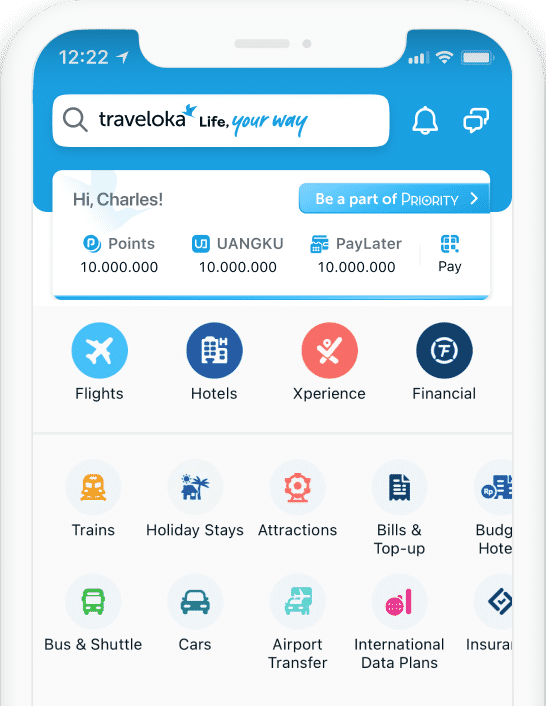
ให้ทริปในฝันของคุณอยู่ใกล้แค่เอื้อม ดาวน์โหลดแอป


